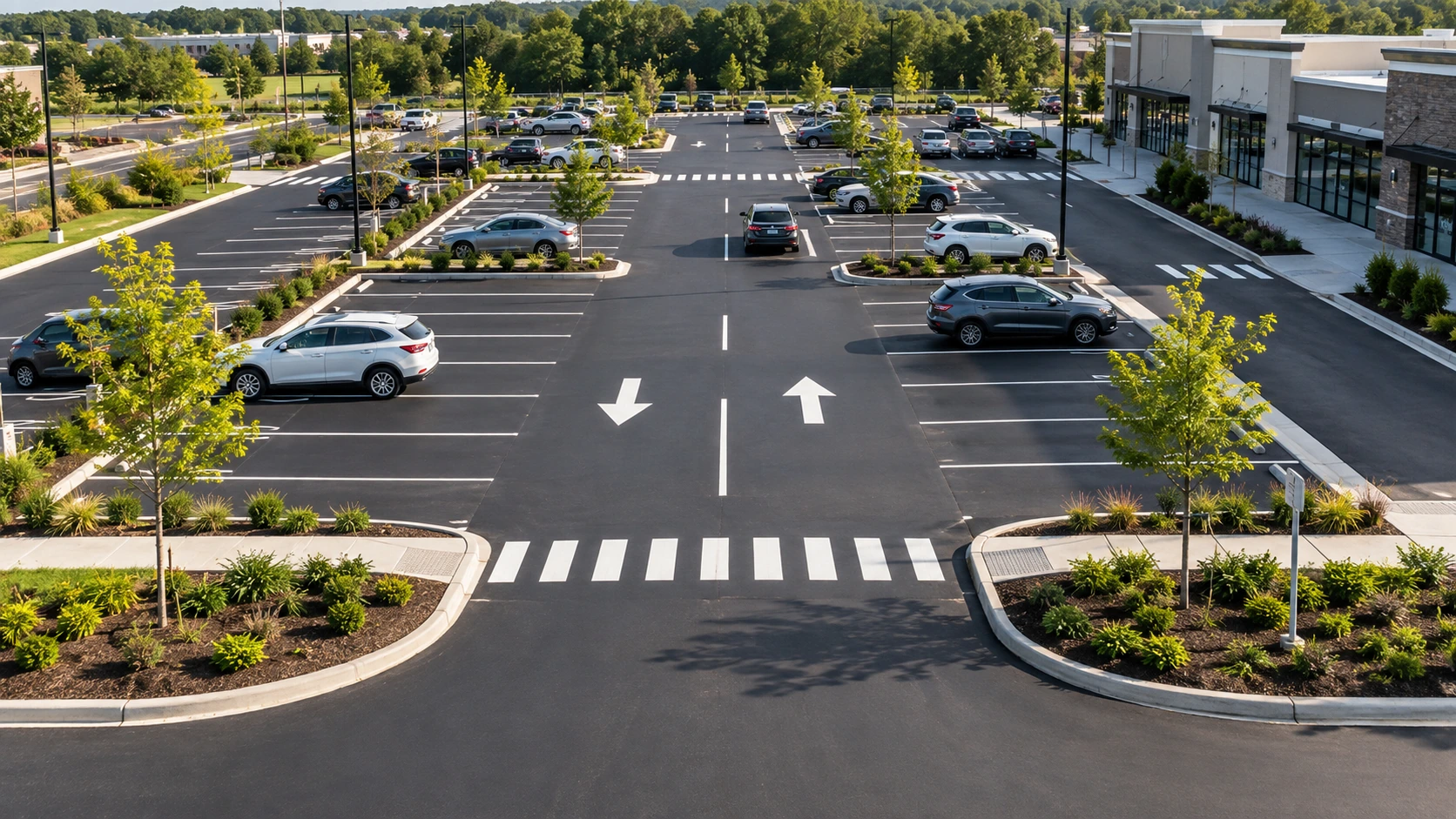
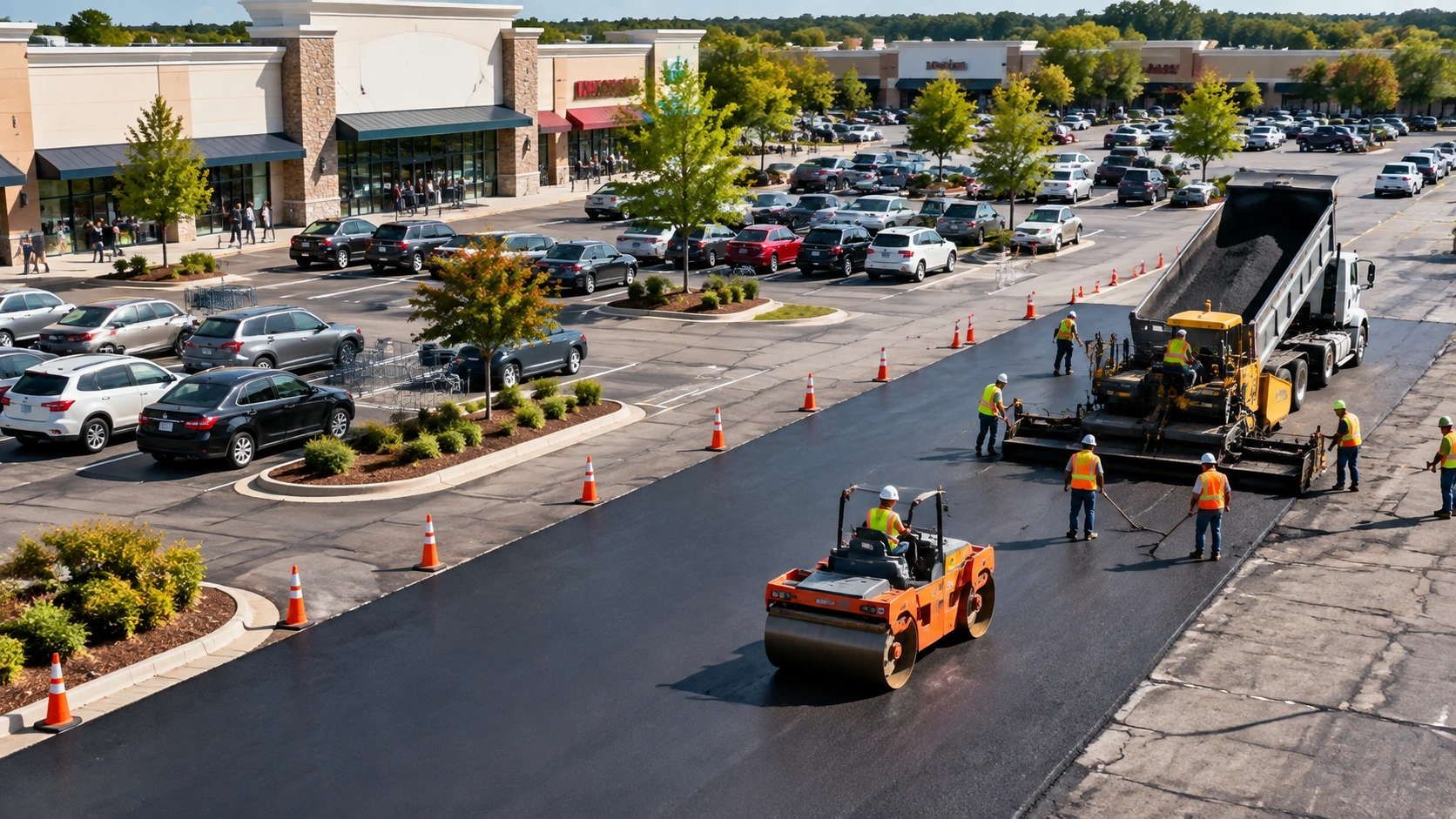
A shopping center parking lot rarely gets to sit empty long enough for construction crews to work without an audience. Between morning deliveries, lunch-rush shoppers, and evening foot traffic, there’s almost no hour of the day when the lot is truly quiet. That reality is exactly why scheduling matters more in retail paving projects than in almost any other commercial setting.
Property managers who have worked with Adams Asphalt & Construction on a repaving project before usually describe the same lesson: the paving itself is rarely the hard part. Coordinating around tenants, trucks, and customers is what determines whether the project feels smooth or chaotic. A contractor can lay flawless asphalt and still leave a shopping center with frustrated tenants and lost sales if the schedule wasn’t built around how the property actually operates.
This guide walks through the planning decisions in the order they typically need to happen, from understanding the project itself through the final walk-through once paving is done.
Why Scheduling Matters More on Retail Properties Than Other Commercial Sites
An office building empties out at 6 p.m. and stays that way until the next morning. A warehouse might only need clear access during a single shift, with the rest of the day available for site work. A retail center, especially one with a grocery anchor or a restaurant tenant, can have meaningful traffic from early morning through late evening, seven days a week, with almost no true downtime.

That constant activity changes how a paving contractor has to think about the job. Instead of asking “when can we get on-site,” the better question is “which parts of the site can we occupy without shutting down the businesses that depend on it.” Answering that question well is what separates a parking lot project that goes smoothly from one that generates tenant complaints for weeks. It’s also why Adams Asphalt & Construction treats the scheduling conversation as its own planning phase rather than an afterthought tacked onto the technical scope of the job.
Retail properties also tend to have more stakeholders involved in a single decision than other commercial sites. An office building might have one facilities manager to coordinate with. A shopping center can involve a property management company, individual tenant leases, a leasing office, and sometimes a homeowners’ or business association if the center is part of a larger commercial development. Each of those parties may have a different opinion about when work should happen, which is exactly why the planning conversation needs to start early.
Imagine a shopping center schedules full-lot closure during a Saturday afternoon without notifying tenants in advance. Customers arrive, find no parking, and simply leave. Tenants lose a day of sales they can’t recover, and the property management team spends the following week fielding complaints instead of moving on to the next project phase. That scenario is avoidable, and avoiding it starts with the very first planning step.
Recognizing What Kind of Project You’re Actually Planning
Before any schedule gets built, it helps to know exactly what kind of work is being done. A full lot replacement, a resurfacing project, and a set of targeted repairs all carry very different timelines and access requirements, and confusing them at the planning stage tends to produce a schedule that doesn’t match reality.

Full Repaving vs Resurfacing vs Targeted Repairs
A complete asphalt paving project involving removal and replacement of the surface will require more consecutive closed days than most retail centers can absorb in one continuous stretch. This type of project usually involves milling out the old surface, addressing any base or subgrade issues underneath, and installing new asphalt in multiple lifts, each of which needs time to cool and cure before the next step.
An asphalt overlay, which adds a new layer over existing pavement rather than tearing it out, typically moves faster and disrupts fewer parking spaces at once. This approach works well when the underlying base is still structurally sound and the main issue is surface wear, cracking, or general deterioration rather than deeper structural failure.
In many cases, the lot doesn’t need a full replacement at all. Isolated potholes, alligator cracking near entrances, or drainage-related deterioration in specific sections can often be addressed through asphalt paving repair or crack filling instead of a lot-wide project. Scoping this correctly at the start prevents scheduling more downtime than the property actually needs, and it can also make a meaningful difference in budget, since targeted repairs cost less than a full-lot approach. This is usually the first thing an Adams Asphalt & Construction estimator will help sort out during an initial site visit, since the right scope changes everything downstream about the schedule.
How Site Size Affects the Timeline
A single-tenant retail pad with a small lot might be paved in a day or two with minimal disruption. A multi-anchor shopping center with hundreds of spaces and several loading docks is a different undertaking entirely, and larger sites usually require the work to be broken into phases rather than completed all at once.
The number of access points into the property also matters more than it might seem at first. A center with a single entrance has fewer options for routing customers around a closed section than one with entrances on two or three different streets. Reviewing the site’s access points early in the planning process helps identify realistic detour routes before the schedule gets finalized.
Understanding Your Property’s Traffic Rhythm Before Setting Dates
Every retail center has its own rhythm. A center anchored by a grocery store sees steady traffic most of the week, with weekends being noticeably busier. A center built around restaurants or entertainment tenants might see its heaviest demand in the evenings and on weekends. A strip center with mostly daytime service businesses, by contrast, may actually be quietest on Saturdays and Sundays.

Before a schedule gets finalized, it’s worth mapping out which days and hours matter most to each tenant. A florist near a peak holiday might need their storefront access untouched for two weeks straight, while a nearby office supply store might not mind a Tuesday morning closure at all. Treating every tenant as though they have identical traffic patterns is one of the more common planning mistakes on multi-tenant properties.
Seasonality deserves its own consideration beyond the weekly pattern. Retail centers near schools may see sharp traffic increases around the start and end of the school year. Centers with seasonal tenants, holiday pop-up stores, or a garden center that only operates in spring, carry timing constraints that a generic paving schedule wouldn’t account for. Asking each tenant directly whether any particular week or month is off-limits, rather than assuming a slow season based on the property type alone, tends to surface constraints that wouldn’t otherwise come up.
Bringing Tenants Into the Conversation Early
What Tenants Need to Know Upfront
Tenants generally want answers to a short list of practical questions: which days will their customer parking be affected, will their loading dock remain accessible, and how will customers be directed to alternate parking during the closure. Giving tenants this information weeks ahead of the project, rather than days, gives them time to adjust staffing, notify regular customers, or plan around slower expected traffic.
It also helps to give tenants a way to flag concerns before the schedule is locked in, rather than presenting it as a finished decision. A restaurant tenant might know that a particular Friday coincides with a private event they’ve already booked. A retail tenant might be planning a promotional weekend that would be badly undercut by a parking closure. These are details property management often can’t anticipate without asking directly.
Checking Lease Terms Before Committing to Dates
Lease agreements sometimes include language about parking availability or common area maintenance that property managers need to review before committing to a schedule. Some leases specify a minimum number of available parking spaces or guaranteed access hours, and a paving schedule that conflicts with those terms can create a legal issue on top of a logistical one.
Bringing the leasing and property management teams into the planning conversation early avoids a situation where a paving schedule gets finalized and then has to be renegotiated because it conflicts with a tenant’s contractual rights.
Protecting Delivery Access Throughout the Project
Customer parking closures get most of the attention in retail paving discussions, but delivery access often causes more scheduling friction. A grocery anchor may receive multiple truck deliveries a day, and a blocked loading dock can shut down restocking entirely, not just inconvenience it. A restaurant that can’t receive a produce delivery may have to change its menu for the day, and a pharmacy that misses a scheduled delivery could face a more serious operational problem.

Mapping delivery schedules before paving begins helps identify which sections of the lot absolutely cannot be closed during certain hours. In many centers, early morning deliveries happen before the store opens, which can actually create a useful window for paving crews to work in high-traffic zones before customer volume picks up.
When a loading zone does need to be temporarily inaccessible, coordinating directly with delivery vendors, rather than leaving tenants to relay the message, tends to produce better results. Vendors who know in advance that a dock will be closed on a specific day can reroute or reschedule deliveries instead of arriving to find the area blocked. This is especially important for tenants who don’t control their own delivery schedules directly, such as chain retailers whose distribution is managed centrally.
Choosing Between Daytime, Night, and Weekend Work
The Case for Off-Hours Paving
Paving during overnight hours or on a center’s lowest-traffic day can significantly reduce the impact on customers and tenants. Fresh asphalt also often benefits from cooler nighttime temperatures during certain seasons, which can affect how it compacts and cures. For a center where daytime closures would be especially disruptive, shifting the heaviest work to overnight hours can allow the lot to reopen for normal business each morning even while the project is still underway.
Retail centers with a 24-hour tenant need to plan differently than those that close entirely overnight. In those cases, a smaller work zone that leaves access open to the occupied tenant is usually a better approach than attempting to close the full lot overnight.
Where Off-Hours Work Runs Into Limits
Night work isn’t automatically the right answer for every project. It typically costs more due to lighting requirements and shift differentials, and it depends on local noise ordinances that may restrict equipment operation after certain hours. Some municipalities require a permit specifically for nighttime construction work, which adds a planning step that daytime work doesn’t require.
Weekend paving avoids some of those issues but runs directly into the highest customer traffic many retail centers see all week. A Sunday closure might seem convenient because many office-oriented businesses are closed, but for a center anchored by a grocery store or a restaurant, Sunday can be one of the busiest days of the week.
The right choice usually depends on the specific mix of tenants, the municipality’s noise regulations, and how much of a premium the property is willing to pay to minimize daytime disruption. There isn’t a single correct answer that applies to every shopping center, which is why this decision is usually worked out jointly between the property manager and the paving contractor rather than decided in isolation.
Breaking the Lot Into Manageable Work Zones
Sectioning the Property
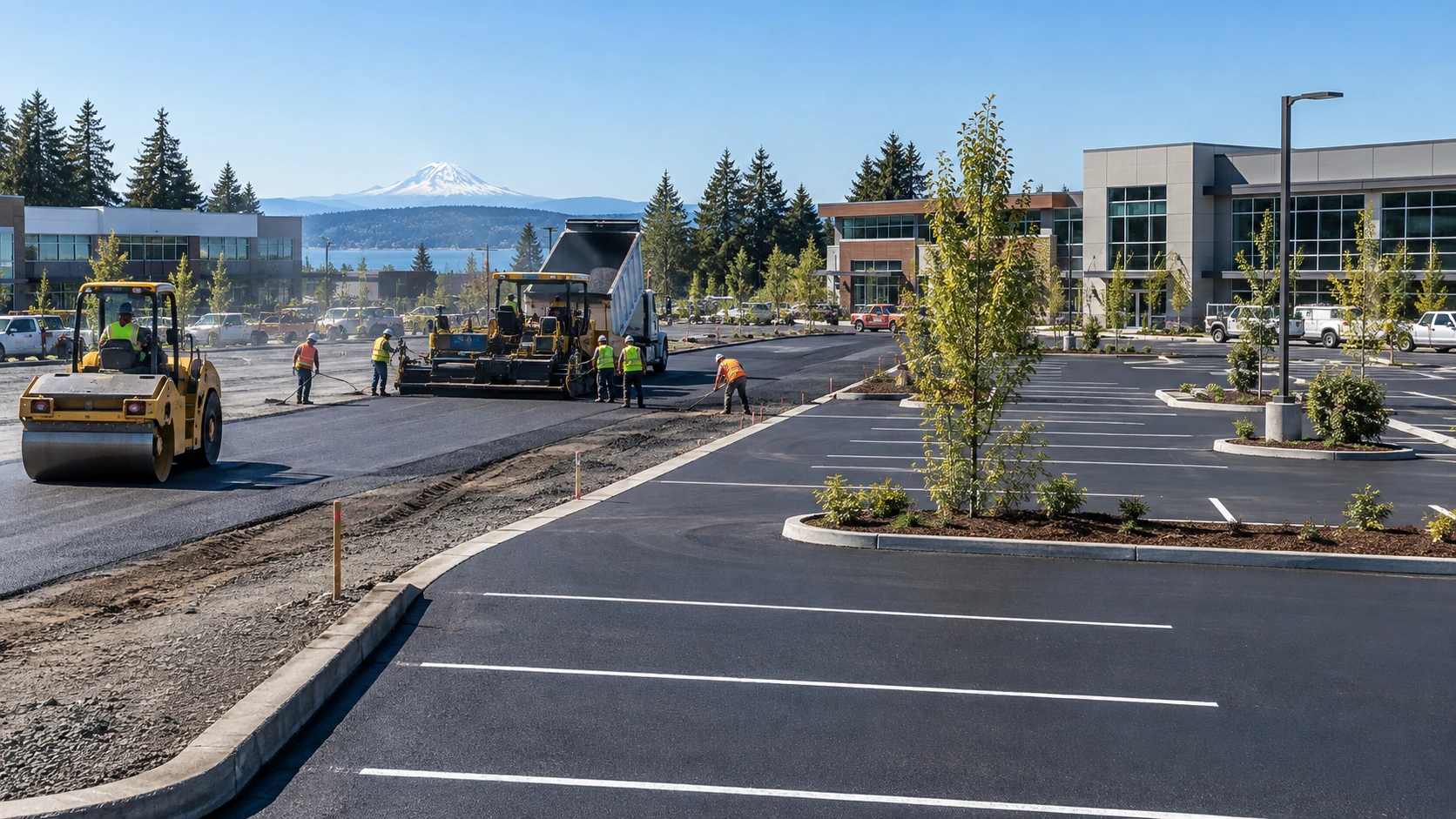
Rather than closing an entire lot at once, most retail paving projects are broken into sections, allowing part of the property to remain open to customers while another section is under construction. This approach extends the overall project timeline slightly but keeps the property functional throughout, which is usually worth the tradeoff for centers that can’t afford a multi-day full closure.
Deciding how to divide the lot usually comes down to which areas see the most customer and delivery traffic. Sections closest to high-volume entrances are often scheduled for the shortest possible closure windows, while lower-traffic areas near the edges of the property can absorb longer work periods with less impact. Perimeter areas, overflow parking sections, and spaces near underused entrances are often good candidates to close first.
Guiding Traffic Through the Work Zones
Clear signage directing customers to open parking areas matters as much as the phasing plan itself. A well-sequenced project can still frustrate customers if there’s no visible guidance about where to park once they arrive and find part of the lot blocked off. Cones and barriers alone tell a customer where they can’t go, but they don’t tell the customer where they should go instead, which is the piece that actually prevents frustration.
Placing directional signage at the property’s entrances, not just at the edge of the work zone itself, gives customers a chance to plan their approach before they’ve already committed to a route through the lot.
Keeping Customers Informed While Work Is Underway
Tenants aren’t the only audience that needs advance notice. Customers who show up expecting normal parking and instead find cones, barriers, or a closed section can have a poor experience even when the closure is temporary and well-managed.
Simple measures make a noticeable difference here: posted notices at entrances in the days leading up to the project, updated signage during the work itself, and, where possible, advance notice through tenants’ own customer communication channels, such as email lists, social media, or in-store signage. None of this is complicated, but it’s frequently skipped when scheduling focuses only on the construction logistics and not on the customer experience.
Some property managers also find it useful to post a general timeline, even an approximate one, rather than leaving customers to wonder how long the disruption will last. A sign that says work is expected to be substantially complete within a certain window sets a reasonable expectation, even if the exact date shifts slightly due to weather or other factors.
Finishing the Job: Striping, ADA Access, and Signage
Once paving work is complete, the lot still needs parking lot striping before it can reopen for normal use, and accessible spaces need to be remarked in compliance with ADA parking lot markings requirements. This restriping period is sometimes overlooked in scheduling discussions, even though the lot generally can’t return to full function until it’s finished.

Maintaining at least some accessible parking throughout the project, even temporarily marked with cones or portable signage, is worth building into the schedule so the property remains compliant while the permanent striping is pending. This matters not only for legal compliance but for the customers who rely on those spaces and shouldn’t have to go without them for the duration of a multi-week project.
Fire lanes and designated delivery zones deserve the same consideration. If a project temporarily relocates a fire lane or delivery zone, that change needs to be clearly marked and communicated to both tenants and emergency services where applicable, rather than left ambiguous during the construction period.
Building Weather and Curing Time Into the Schedule
Asphalt needs specific temperature and moisture conditions to cure properly, and unexpected rain or an early cold snap can push a project’s timeline back. Retail schedules built with zero flexibility tend to fall apart the moment weather doesn’t cooperate, leaving property managers scrambling to explain a delay that tenants weren’t prepared for.
Building a few buffer days into the schedule, rather than promising tenants an exact reopening date with no margin for error, tends to prevent the kind of last-minute scrambling that damages trust with tenants and customers alike. A schedule that communicates a realistic range, rather than a single fixed date, also gives the property room to absorb a short delay without having to issue an apologetic follow-up notice to every tenant.
Mistakes That Commonly Derail Retail Paving Schedules
A few patterns show up repeatedly in retail paving projects that run into trouble:
- Finalizing a schedule before confirming it with tenants, then having to renegotiate dates after the fact
- Overlooking delivery access entirely and only planning around customer parking
- Attempting to close an entire multi-anchor lot in one phase instead of sectioning the work
- Skipping advance customer signage, leaving shoppers to discover the closure on arrival
- Building no weather buffer into the project timeline
- Failing to account for a 24-hour or extended-hours tenant when planning overnight work
- Overlooking lease terms that guarantee a minimum level of parking access
Most of these aren’t paving problems. They’re planning problems that happen well before a crew ever shows up on-site, and they’re the reason scheduling conversations deserve as much attention as the technical scope of the work.
Questions Property Managers Often Ask
How far in advance should tenants be notified?
Several weeks is generally more useful than a few days, especially for tenants who rely on advance marketing or staffing adjustments around slower expected traffic.
Can paving happen in phases to avoid closing the whole lot?
In most cases, yes. Phased work is standard practice for multi-tenant retail properties specifically because it keeps part of the lot functional throughout the project.
Does night paving cost more than daytime work?
It often does, due to lighting and staffing considerations, though the added cost is sometimes worth it for centers with tenants that can’t tolerate daytime disruption.
What if the project runs into bad weather?
A schedule with built-in buffer days can usually absorb a short weather delay without requiring a full renegotiation with tenants.
Should every tenant get the same notice, or does it depend on the business?
It’s worth tailoring notice periods to how sensitive each tenant is to parking disruption. A restaurant with weekend reservations may need more lead time than an office-based service tenant with steady weekday traffic.
Is it possible to keep the lot fully open during the entire project?
Rarely for a full repaving project, but targeted repairs or a well-phased overlay can often keep the majority of spaces available at any given time, even if a small section is closed on a rotating basis.
Planning Your Next Retail Paving Project
A retail parking lot repaving project succeeds or struggles based on decisions made long before the first section of asphalt is removed. Mapping tenant traffic patterns, coordinating delivery access, phasing the work, and communicating clearly with both tenants and customers all matter as much as the quality of the paving itself.
Retail centers considering a parking lot repaving, resurfacing, or repair project benefit from working through this planning process with a contractor who has handled multi-tenant scheduling before. Adams Asphalt & Construction works through each of these scheduling considerations with property managers before a single truck arrives on-site. Teams weighing sealcoating services as a shorter-term maintenance option, or a combined sealcoating and striping approach for a lot that needs both surface protection and refreshed markings, can apply many of the same scheduling principles on a smaller scale. For a closer look at how paving decisions affect long-term costs and maintenance planning, Asphalt Paving: Installation, Cost & Maintenance covers that in more depth, and How Proper Parking Lot Maintenance Protects Your Property offers additional context on why ongoing upkeep reduces the scope of future projects.
Properties ready to start mapping out a retail paving schedule can reach out to Adams Asphalt & Construction to discuss project timing before committing to specific dates.