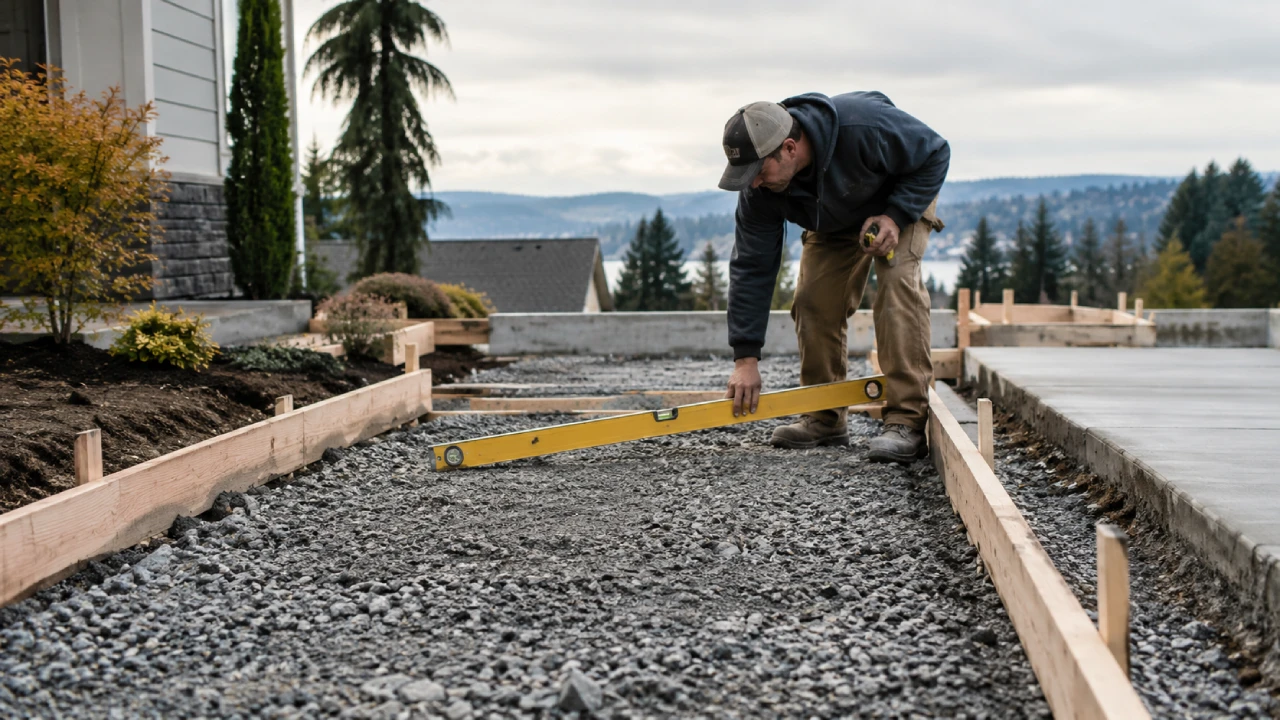
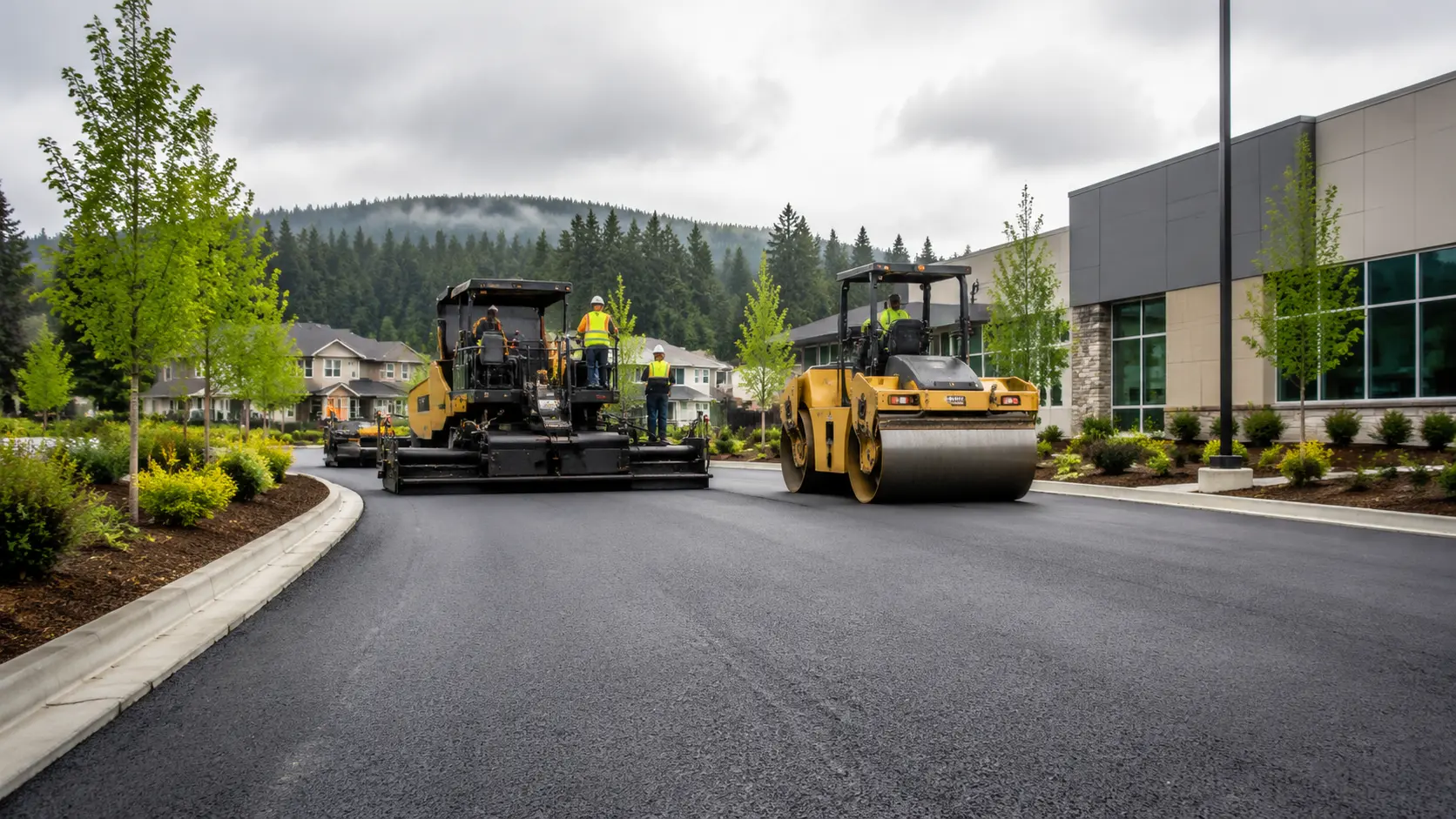
Asphalt paving is a practical choice for driveways, parking lots, private roads, commercial properties, and other high-traffic surfaces. When installed correctly, asphalt provides a smooth, durable surface that can handle regular vehicle traffic while remaining relatively easy to repair and maintain.
However, the quality and longevity of asphalt pavement depend on much more than the asphalt itself. Proper site preparation, grading, drainage, base construction, compaction, pavement thickness, traffic loads, and ongoing maintenance all play an important role.
Whether you are planning a new installation or deciding what to do with an aging paved surface, understanding the process can help you make better long-term decisions.
In this complete guide, Adams Asphalt & Construction explains Asphalt Paving Installation, Asphalt Paving Cost, Asphalt Paving Maintenance, Asphalt Paving Lifespan, repair options, resurfacing, drainage, and what to consider when choosing an asphalt contractor.
If you are planning a paving project, explore our Asphalt Paving Services for residential and commercial properties.
What Is Asphalt Paving?
Asphalt paving is the process of constructing a durable surface using a mixture of aggregates, such as crushed stone, sand, and gravel, combined with asphalt binder.
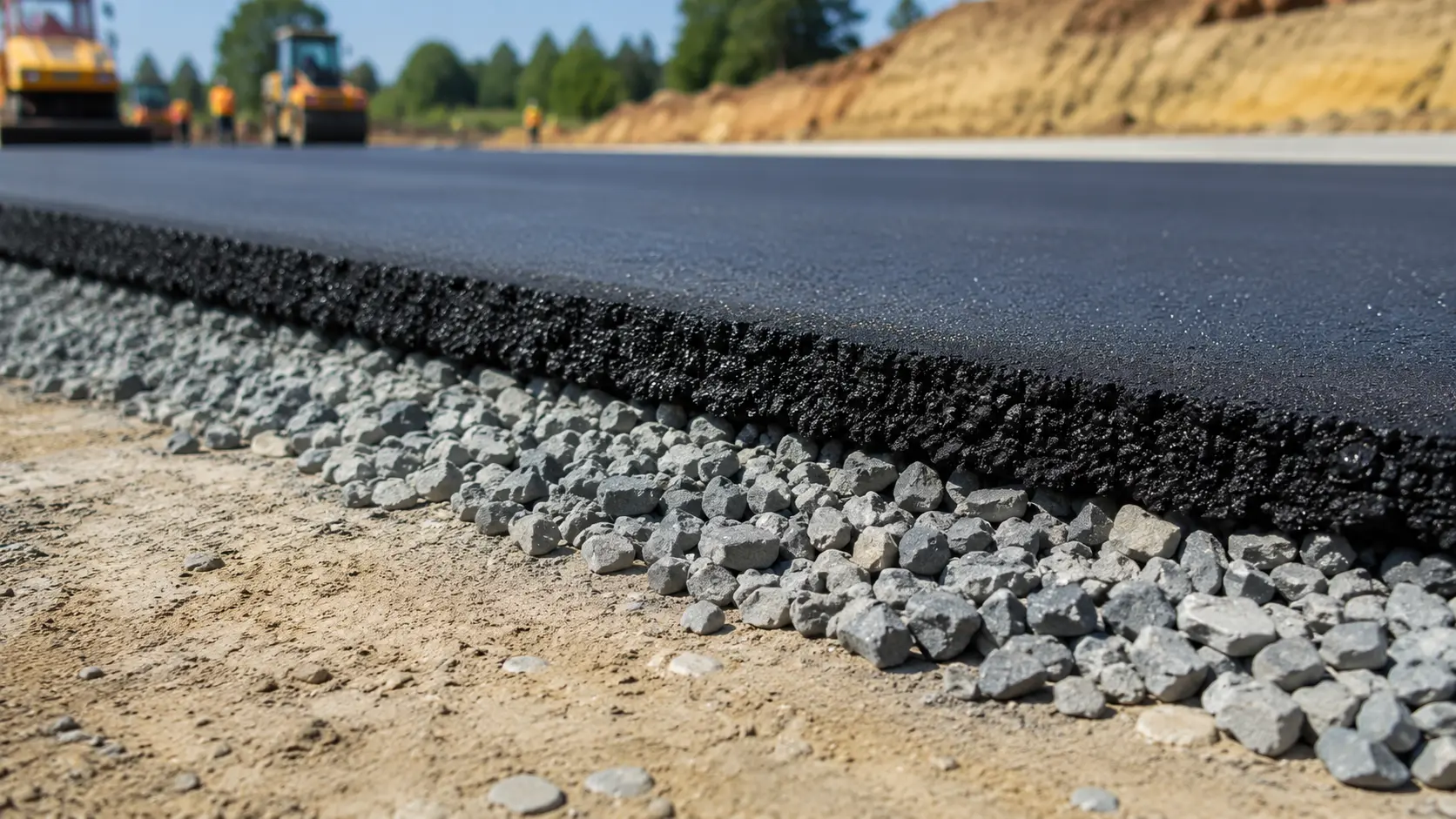
The material is placed over a properly prepared base and compacted to form a smooth, stable pavement surface.
Asphalt is commonly used for:
- Residential driveways
- Commercial parking lots
- Private roadways
- Access roads
- Apartment and HOA communities
- Industrial properties
- Commercial developments
- Municipal surfaces
The pavement you see on the surface is only one part of the overall system. The strength of the base underneath the asphalt is equally important.
How an Asphalt Pavement System Works
A typical asphalt pavement system includes several layers.
The existing soil or subgrade forms the foundation. Above that, a compacted aggregate base may be installed to provide additional support. The asphalt pavement is then placed and compacted over the prepared base.
Each layer helps distribute vehicle loads across the surface.
If the underlying base is unstable, poorly compacted, or exposed to excess moisture, the pavement may eventually develop cracking, settlement, depressions, or potholes.
This is why an experienced asphalt pavement contractor evaluates more than just the visible surface.
Why Asphalt Is a Popular Paving Material
Asphalt is widely used because it provides a combination of durability, flexibility, relatively fast installation, smooth driving conditions, and repairability.
When properly designed and maintained, it can provide dependable performance for many years.
Its ability to be repaired or resurfaced can also make it practical for properties where pavement conditions change over time.
How Does Asphalt Paving Installation Work?
Professional Asphalt Paving Installation involves several important stages.
Skipping or rushing one of these stages can affect drainage, structural stability, pavement appearance, and long-term performance.
Site Evaluation and Planning
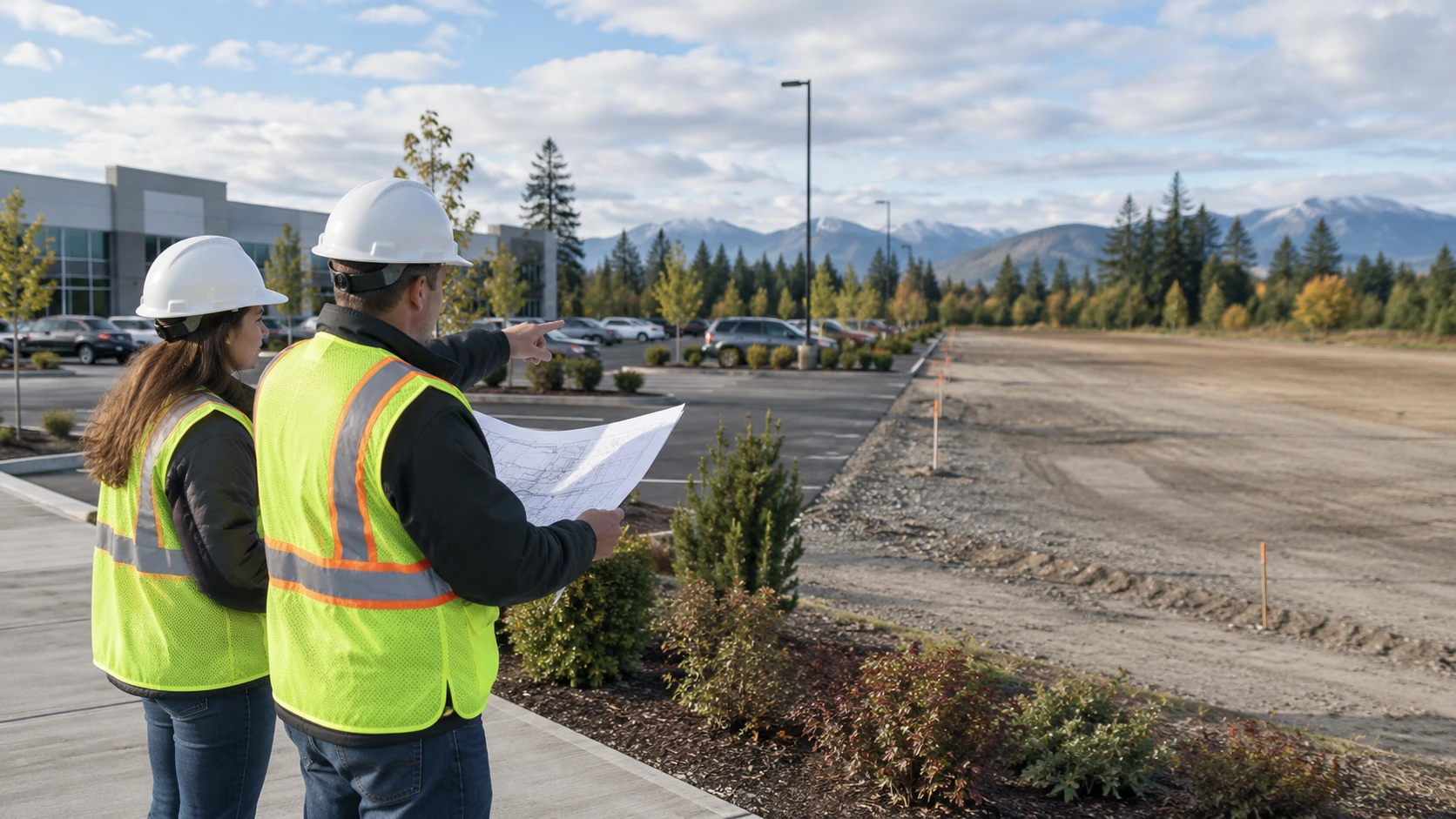
The process starts with an evaluation of the property.
An asphalt contractor may inspect:
- Existing pavement conditions
- Soil and base stability
- Drainage patterns
- Property elevations
- Vehicle traffic
- Expected vehicle weight
- Existing cracking or settlement
- Access for construction equipment
- Connections with sidewalks, roads, or concrete surfaces
This information helps determine the appropriate scope of work.
Some properties may require completely new pavement, while others may be candidates for resurfacing or localized repair.
Excavation and Removal
For new construction or full pavement replacement, unsuitable materials or damaged existing pavement may need to be removed.
Excavation provides access to the underlying base so weak or unstable areas can be corrected before new pavement is installed.
Removing failed pavement without correcting the underlying cause may allow similar problems to return.
Grading the Site
Proper grading helps direct water away from the pavement.
The surface needs enough slope to allow water to move toward appropriate drainage areas instead of collecting in low spots.
Standing water can contribute to pavement deterioration, particularly when moisture enters cracks and reaches the supporting base.
Preparing the Aggregate Base
A properly compacted aggregate base helps create a strong foundation for the new asphalt.
Base thickness and construction requirements depend on the existing soil, expected traffic, site conditions, and type of pavement being installed.
Commercial parking lots and roadways may require a different pavement structure than residential driveways.
Asphalt Placement
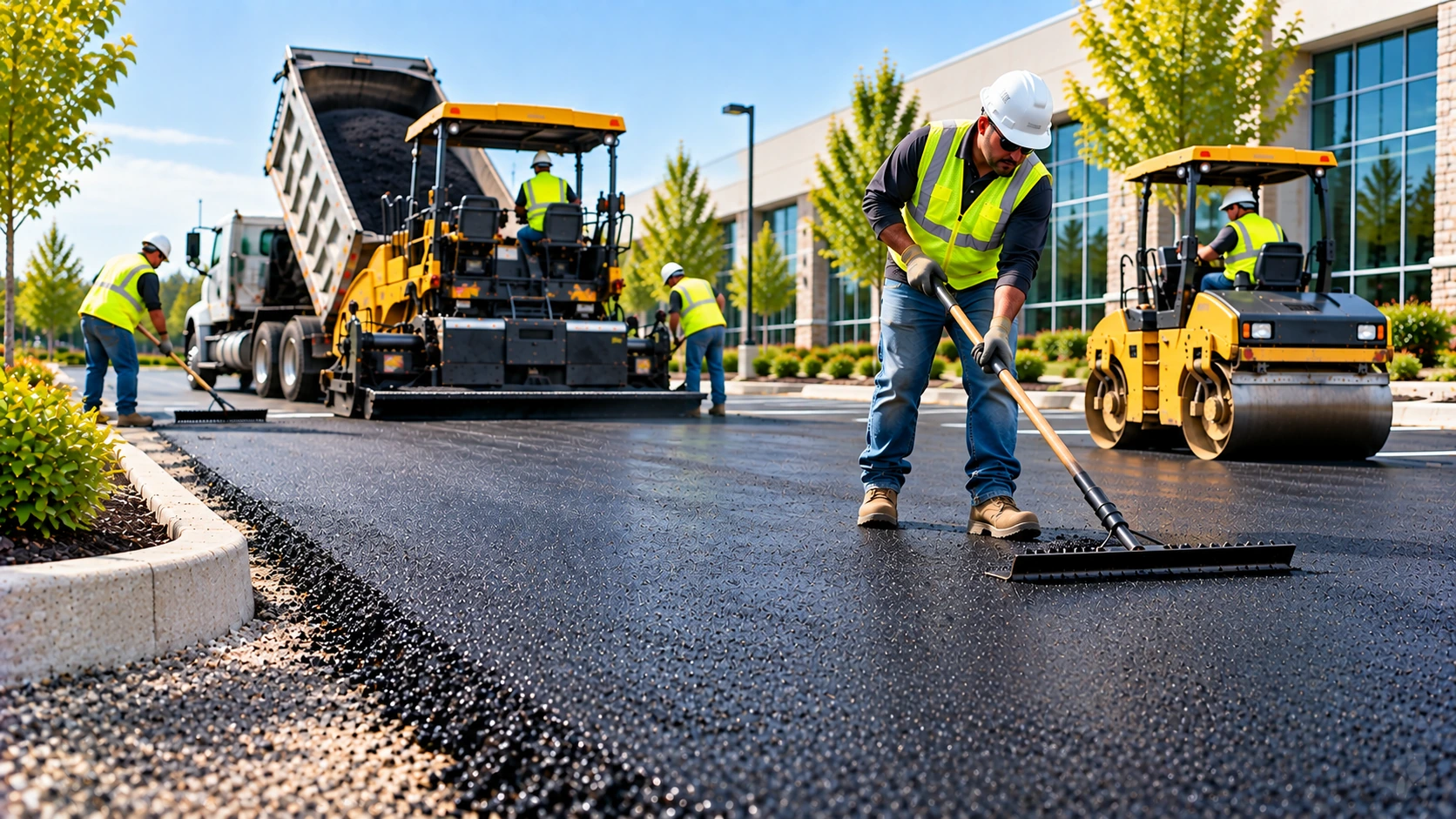
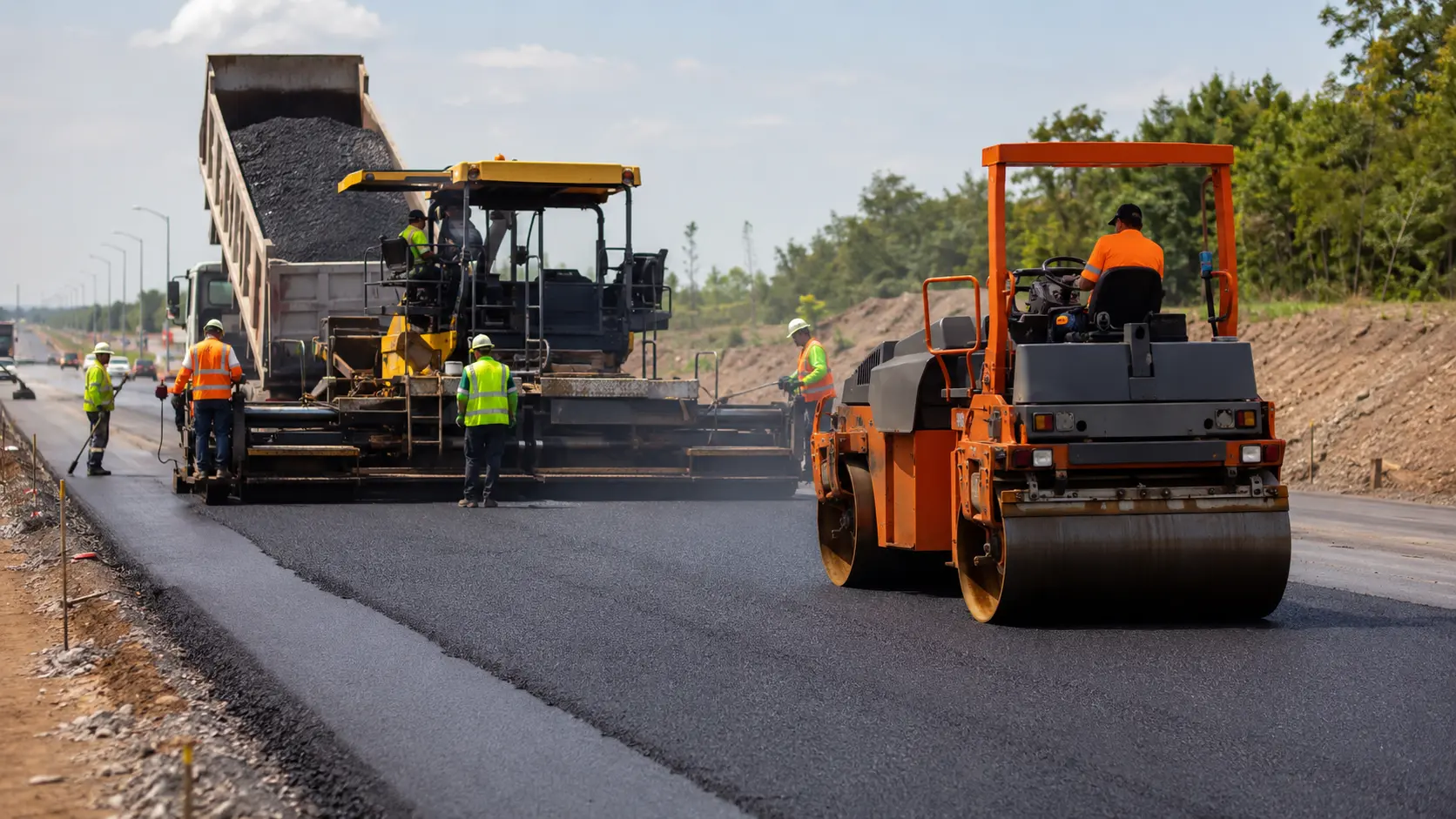
Once the site is prepared, asphalt is delivered and placed over the base.
The appropriate asphalt thickness depends on how the pavement will be used.
Areas carrying heavier commercial vehicles may require additional structural capacity compared with surfaces primarily carrying passenger vehicles.
Asphalt Compaction
Compaction is one of the most important parts of installation.
Specialized rollers compact the asphalt while it is still workable, creating a dense and stable pavement surface.
Proper compaction helps reduce excessive air voids and contributes to better pavement performance.
Final Inspection
After installation, the contractor should inspect the completed pavement.
Drainage, surface consistency, transitions, edges, joints, and other important areas should be reviewed before the project is considered complete.
What Factors Affect Asphalt Paving Cost?
Asphalt Paving Cost can vary significantly from one project to another.
There is no reliable universal price per square foot that applies to every property because the amount of preparation required can be very different.
Several factors influence the final project cost.
Size of the Paved Area
The total square footage of the project affects material quantities, equipment use, labor, and project duration.
Large commercial parking lots naturally require more asphalt than smaller residential driveways.
However, project size alone does not determine the price.
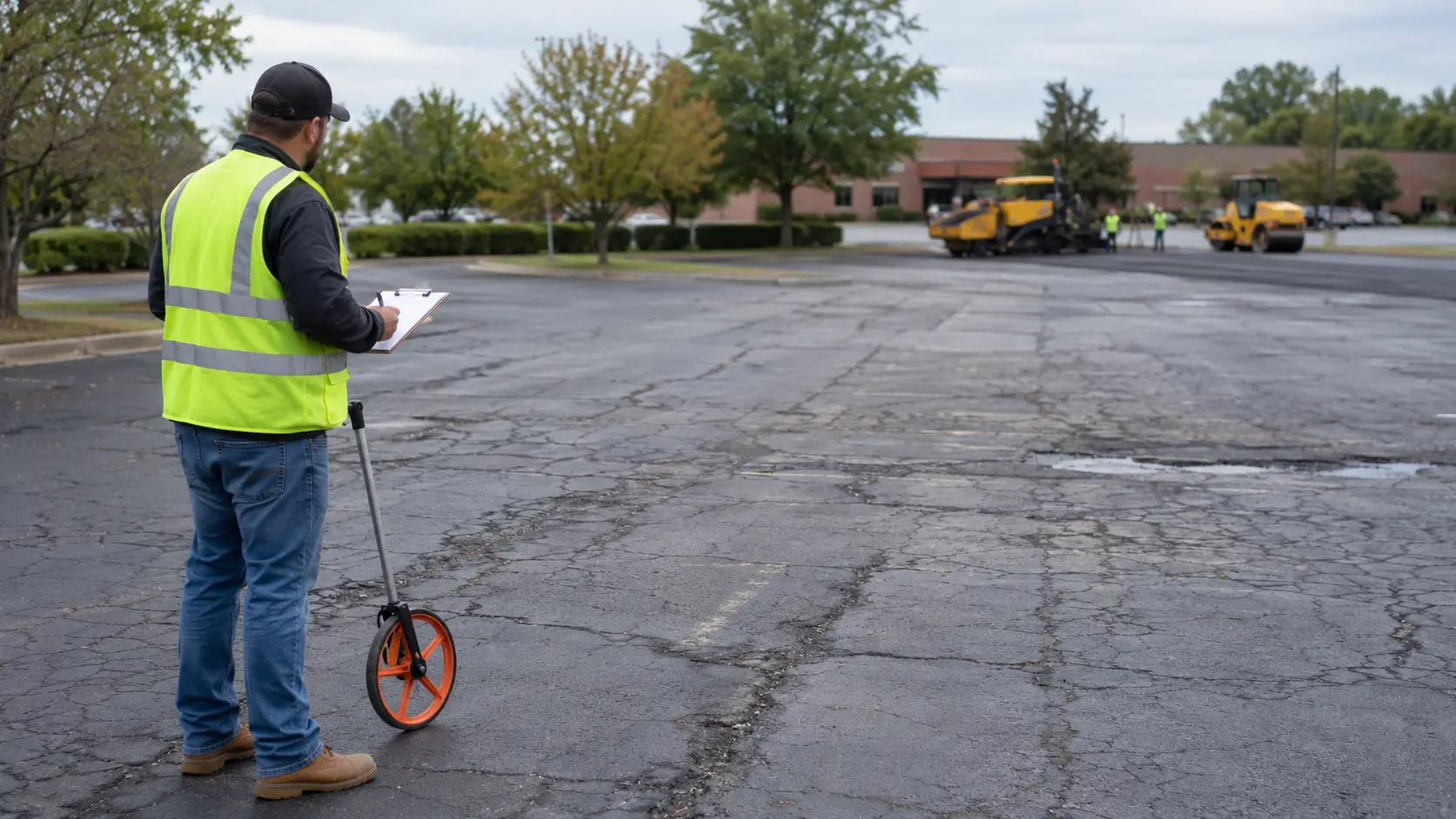
Condition of the Existing Surface
Existing pavement conditions can significantly affect project requirements.
A relatively stable asphalt surface may require less preparation than pavement with widespread structural failure.
Properties with extensive cracking, potholes, settlement, or failed pavement may require removal and additional base work.
Site Preparation Requirements
Excavation, grading, aggregate installation, compaction, removal, and disposal can all affect Asphalt Paving Cost.
A project requiring major site preparation will generally involve more work than paving over a properly prepared surface.
Asphalt Thickness
The amount of asphalt required depends partly on the pavement design.
A surface designed for frequent truck traffic may need a different structure than a residential driveway used primarily by passenger vehicles.
The appropriate thickness should be determined by site conditions and intended use rather than price alone.
Drainage Improvements
Drainage problems may need to be corrected before or during paving.
Depending on the property, this could involve grading adjustments, drainage structures, catch basins, water-management systems, or other site improvements.
Ignoring drainage problems can create more expensive pavement issues later.
Property Accessibility
Limited equipment access, traffic-control requirements, unusual pavement layouts, and tight construction areas can also affect project cost.
An onsite evaluation allows the asphalt pavement company to better understand these conditions before preparing an estimate.
How to Choose the Right Asphalt Contractor
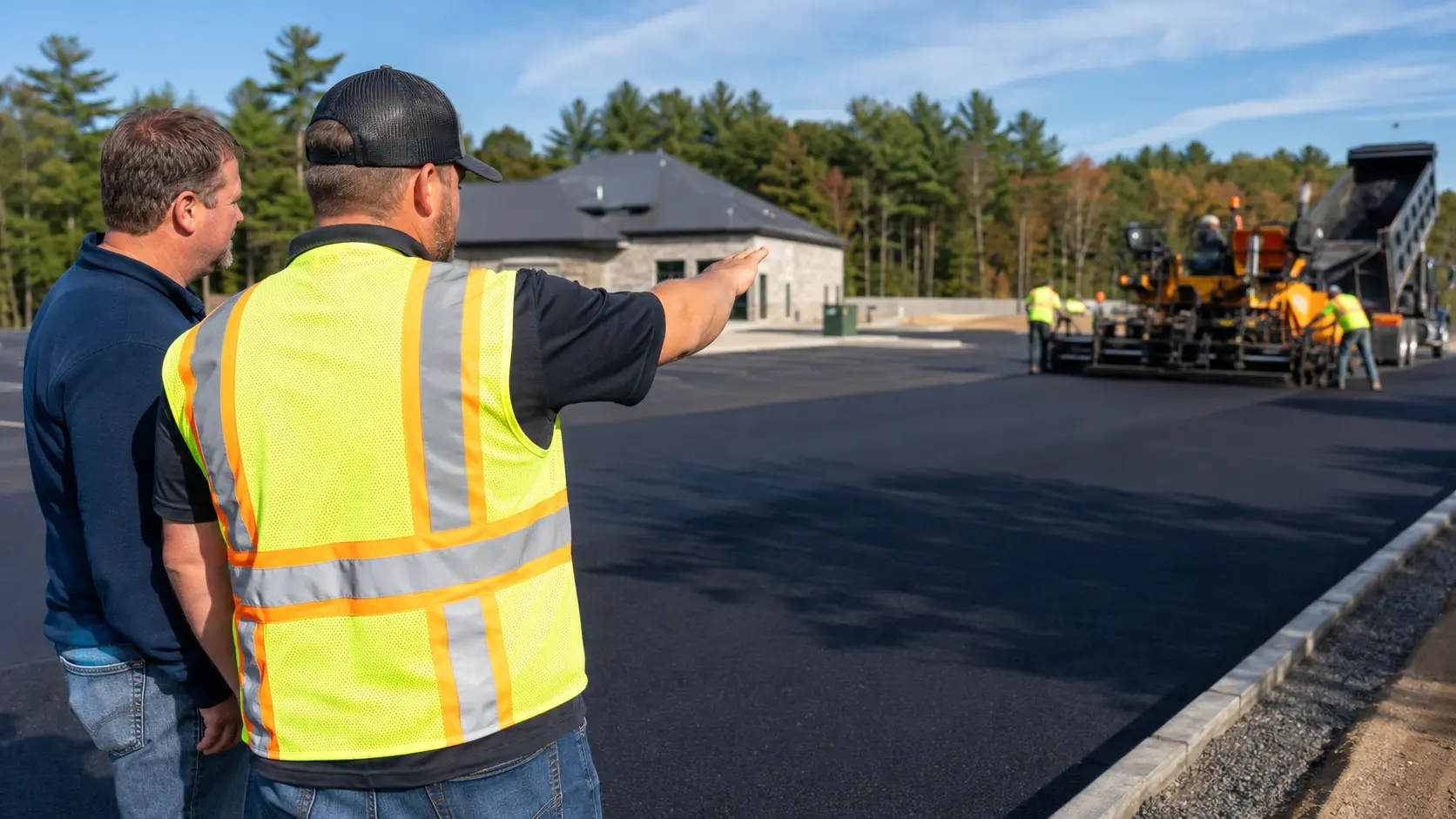
Choosing the right asphalt contractor is an important part of any paving project.
A quality installation requires knowledge of pavement construction, grading, compaction, drainage, equipment operation, and site preparation.
Look at the Entire Scope of Work
Do not evaluate paving proposals based only on the final price.
Compare what each proposal actually includes.
Important details may include:
- Existing pavement removal
- Excavation depth
- Base preparation
- Aggregate installation
- Grading
- Asphalt thickness
- Compaction
- Drainage improvements
- Material disposal
- Edge work
- Transitions
- Project scheduling
Two estimates may appear similar while including very different levels of preparation.
Choose an Experienced Asphalt Pavement Company
An experienced asphalt pavement company should understand both surface conditions and underlying structural problems.
This is particularly important when existing pavement has recurring cracking, potholes, or settlement.
The contractor should be able to explain whether the problem involves the asphalt surface, base, drainage, or a combination of factors.
Ask Why a Specific Solution Is Recommended
A professional asphalt pavement contractor should explain why repair, resurfacing, or replacement is the appropriate option.
For example, putting an asphalt overlay over a severely unstable base may improve appearance temporarily without correcting deeper pavement problems.
Understanding the reason behind the recommended scope can help you make a better investment decision.
Types of Asphalt Paving Services
Different properties require different Asphalt Paving Services.
The appropriate service depends on the pavement’s condition, traffic requirements, property type, and long-term goals.
Parking Lot Paving
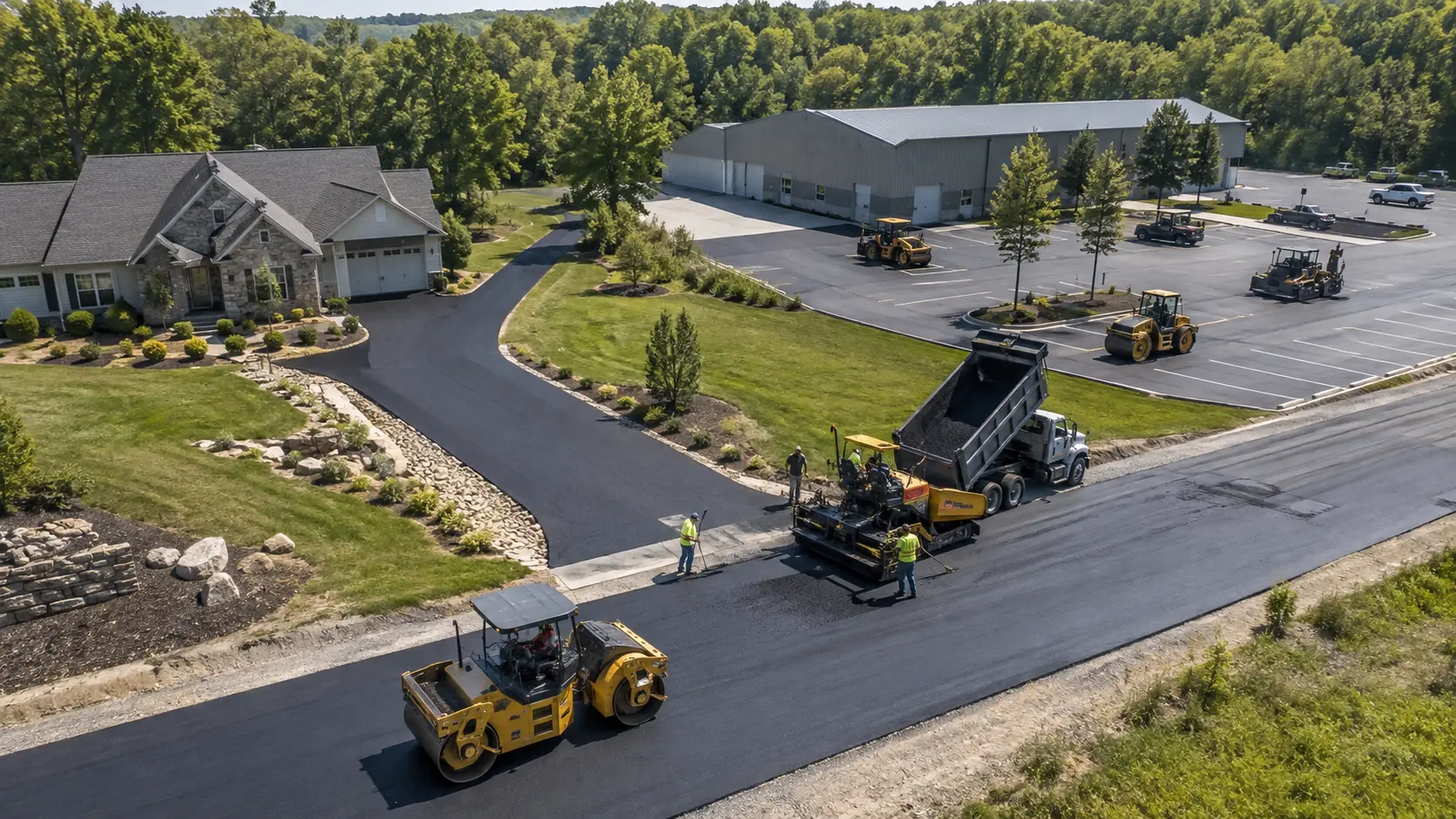
Commercial parking lots paving must handle regular traffic while maintaining safe and functional vehicle movement.
A parking lot paving project may include:
- Existing pavement removal
- Excavation
- Grading
- Base preparation
- Asphalt installation
- Drainage improvements
- Pavement repairs
- Resurfacing
- Striping and markings
Commercial lots should also be designed around expected traffic patterns and vehicle loads.
Asphalt Driveway Paving
Asphalt is commonly used for residential and commercial driveways.
Proper asphalt driveway paving may involve excavation, grading, base preparation, asphalt placement, compaction, edge finishing, and connections with surrounding surfaces.
Drainage should also be considered so rainwater does not continually collect on or underneath the driveway.
Asphalt Roadway Paving
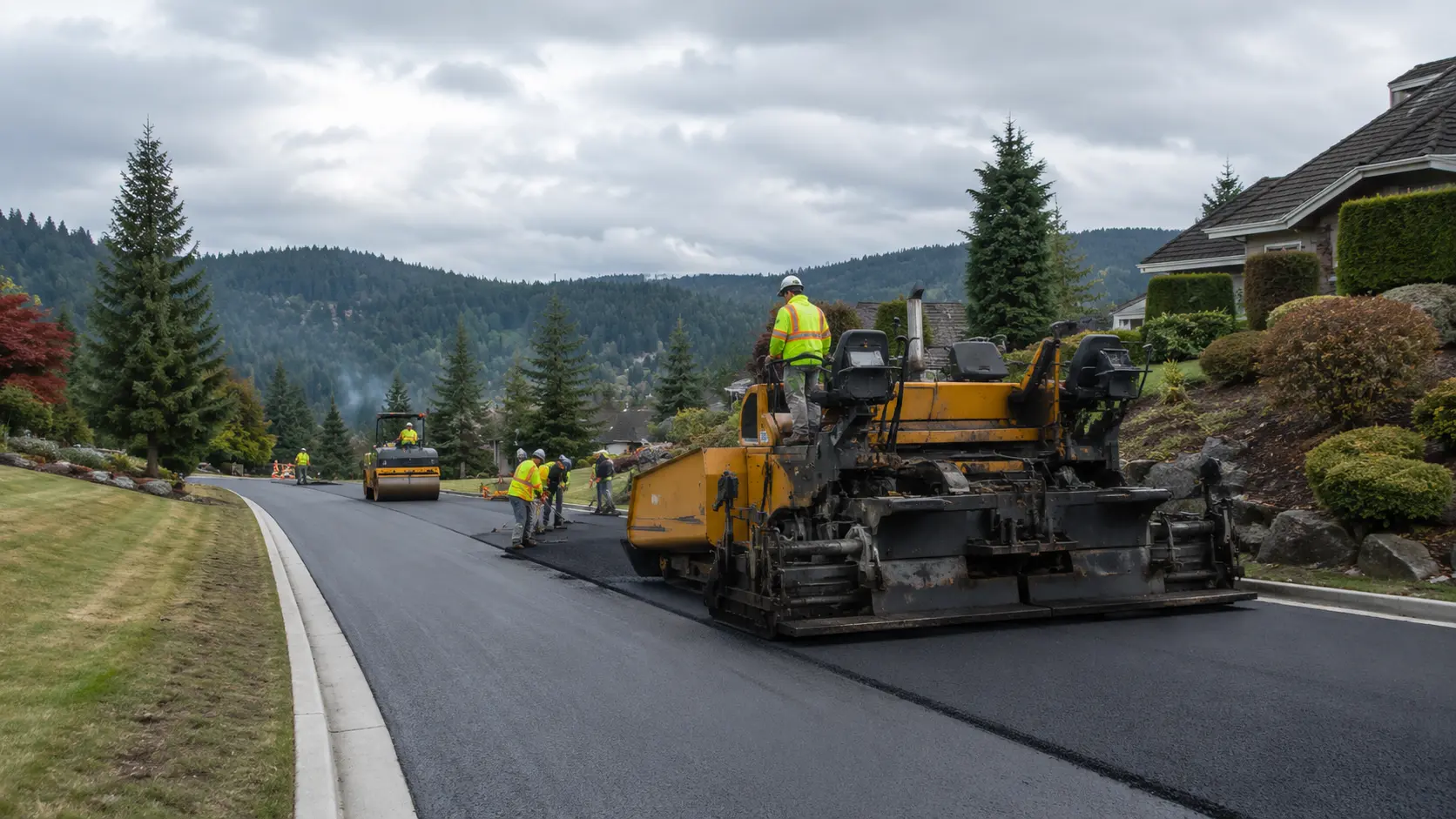
Private roads, access roads, commercial roadways, and community roads require pavement designed to handle repeated traffic.
Roadway paving places particular importance on:
- Base stability
- Asphalt thickness
- Drainage
- Compaction
- Traffic loads
- Transitions
- Long-term durability
Learn more about professional Asphalt Roadway Paving.
Asphalt Repair
Localized pavement damage does not always require complete replacement.
Individual potholes, failed areas, utility cuts, and certain cracks may be repaired when the surrounding pavement remains structurally stable.
Early asphalt repair can help prevent smaller problems from becoming more extensive.
Asphalt Overlays and Resurfacing
Asphalt Overlays Resurfacing involves placing a new layer of asphalt over an existing pavement surface.
It may be an option when the existing pavement is worn but the underlying structure remains reasonably stable.
The pavement should be evaluated before an overlay is installed because structural failures underneath the surface may continue affecting the new layer.
What Is Included in Asphalt Paving Maintenance?
Regular Asphalt Paving Maintenance can help slow deterioration and identify problems before they become more extensive.
The maintenance strategy should be based on pavement condition rather than following the same schedule for every property.
Regular Pavement Inspections
Inspect asphalt surfaces periodically for:
- New cracks
- Widening cracks
- Potholes
- Surface deterioration
- Depressions
- Standing water
- Broken pavement edges
- Drainage issues
- Settlement
- Areas showing repeated damage
Commercial properties with heavier vehicle traffic may require more frequent inspections.
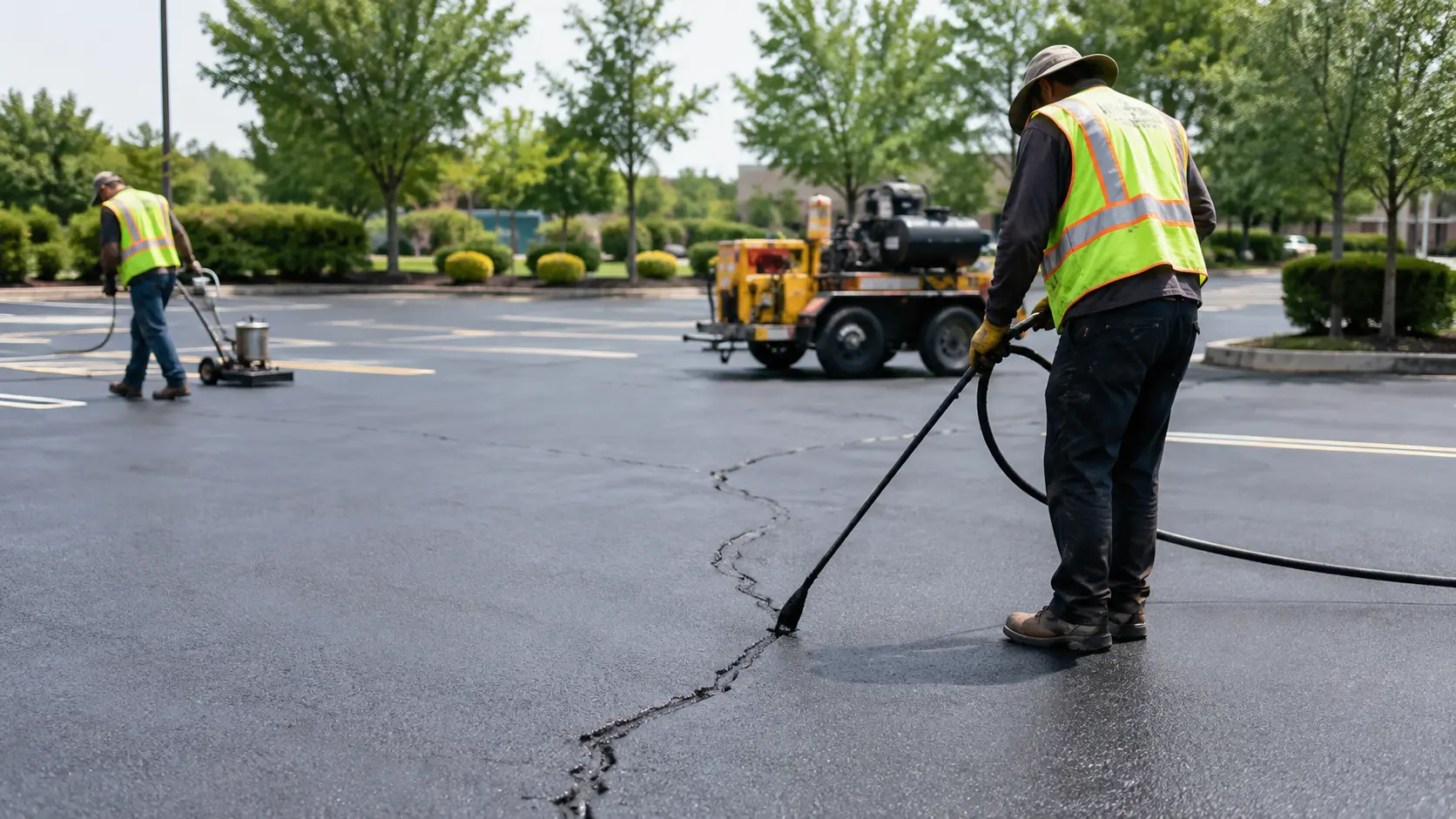
Crack Repair
Cracks can allow water to enter the pavement structure.
When appropriate, addressing cracks early can help reduce water infiltration and slow additional deterioration around the affected area.
Different crack types can indicate different underlying conditions, so widespread cracking should be professionally evaluated.
Pothole Repair
Potholes should not be ignored.
Vehicle traffic and water can cause damaged areas to become larger over time.
Localized pothole repair may be appropriate when the surrounding pavement remains stable.
Recurring potholes in the same area may indicate a deeper base or drainage problem.
Sealcoating
Sealcoating may be used as part of an Asphalt Paving Maintenance program when pavement conditions are appropriate.
It can provide an additional protective surface layer and improve the appearance of existing asphalt.
However, sealcoating is not a structural repair and will not correct significant base failures or severely deteriorated pavement.
Drainage Maintenance
Drainage systems should remain clear and functional.
Debris, leaves, sediment, clogged drainage structures, and damaged water-management systems can contribute to standing water.
Keeping water moving away from pavement helps protect both the surface and supporting base.
How Long Does Asphalt Paving Last?
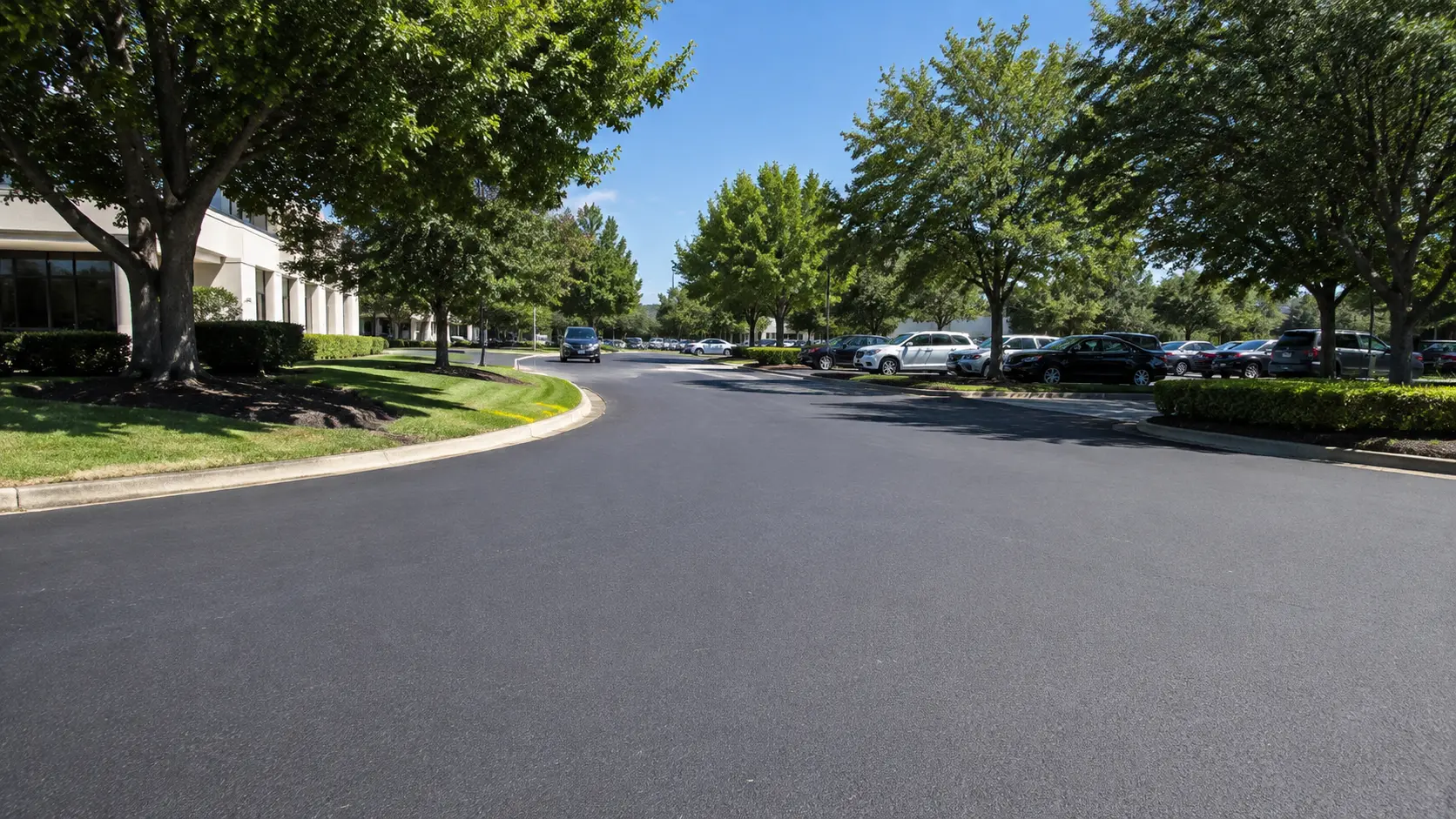
Asphalt Paving Lifespan depends on several factors rather than one fixed number.
A properly installed and maintained asphalt surface can provide many years of service.
The actual lifespan depends heavily on how the pavement was constructed and how it is used.
Installation Quality
Proper preparation is one of the strongest factors affecting pavement longevity.
Good grading, adequate base construction, correct asphalt thickness, and proper compaction create better conditions for long-term performance.
Poor installation can shorten pavement life even when quality asphalt materials are used.
Traffic Volume
Traffic frequency influences how quickly pavement experiences wear.
A lightly used driveway will usually experience different stresses than a busy commercial parking lot.
Vehicle Weight
Heavy trucks place significantly greater loads on pavement than passenger vehicles.
Properties expecting delivery vehicles, construction equipment, commercial trucks, or industrial traffic should have pavement designed for those loads.
Drainage Conditions
Water can weaken pavement support when it reaches the base.
Good grading and drainage help reduce prolonged moisture exposure.
Recurring standing water should be investigated rather than treated as only a surface problem.
Maintenance
Routine inspection and timely repairs can help preserve pavement.
Addressing cracks, potholes, drainage issues, and localized failures before they spread may extend the useful life of the pavement.
Asphalt Repair vs. Resurfacing vs. Replacement
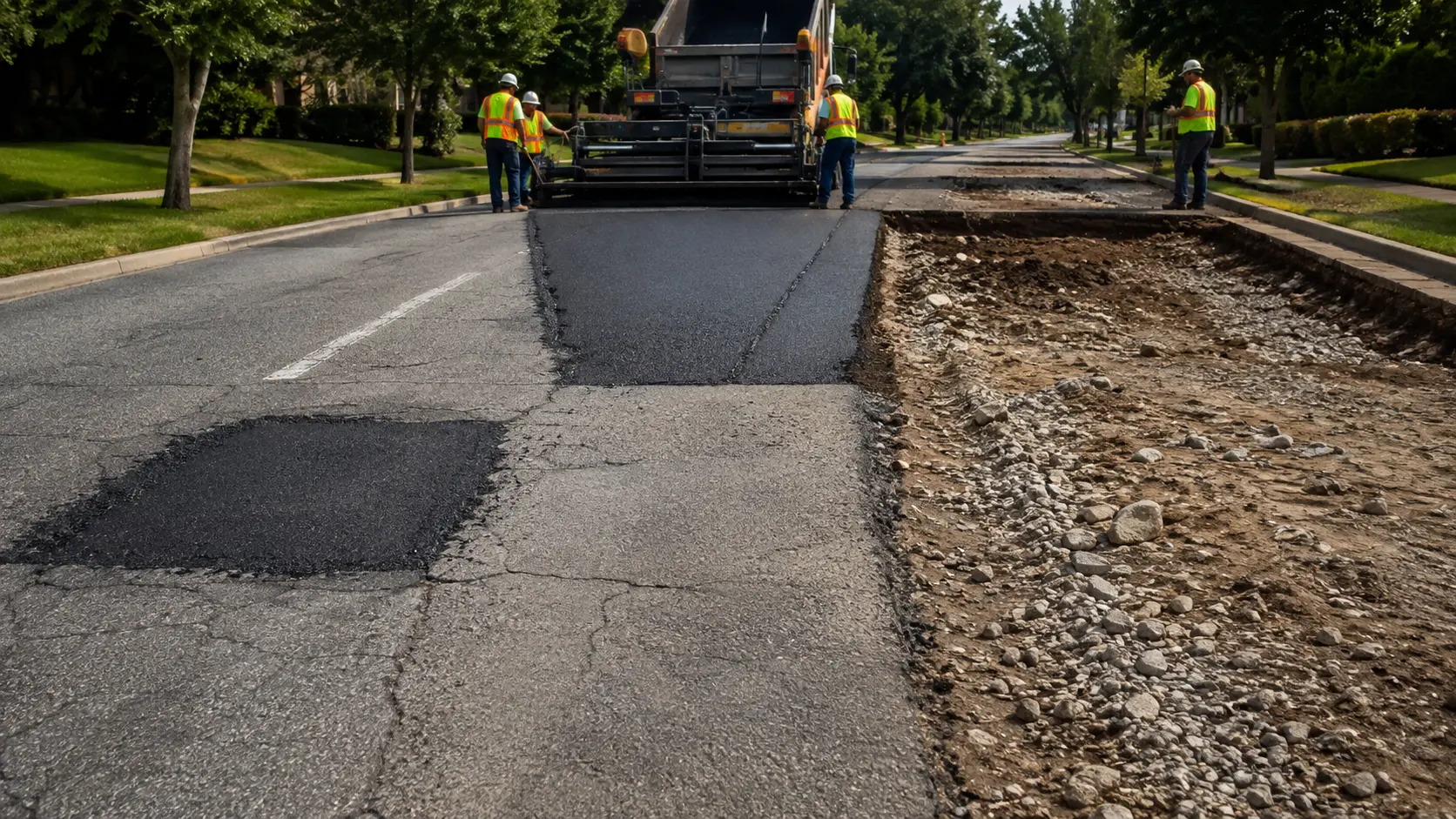
Property owners often need to decide between repairing, resurfacing, or completely replacing asphalt.
The correct option depends on the extent and cause of the damage.
When Asphalt Repair May Be Appropriate
Localized repair may work when damage is limited to smaller areas.
Examples include:
- Individual potholes
- Localized pavement failure
- Small damaged sections
- Utility cuts
- Certain cracks
The surrounding pavement and base should still be in relatively stable condition.
When Asphalt Resurfacing May Be Appropriate
Resurfacing may be considered when the pavement surface has deteriorated but the underlying structure remains stable.
A new asphalt layer can improve surface condition and extend pavement usability.
However, resurfacing should not be used to hide major structural problems.
When Full Asphalt Replacement May Be Needed
Full replacement may be recommended when pavement has:
- Widespread structural cracking
- Extensive settlement
- Major base failure
- Severe deterioration
- Large areas of repeated potholes
- Significant drainage-related damage
- Extensive pavement movement
Replacement allows the asphalt contractor to remove failed pavement and correct underlying conditions before installing new asphalt.
Why Drainage Is Important for Asphalt Pavement
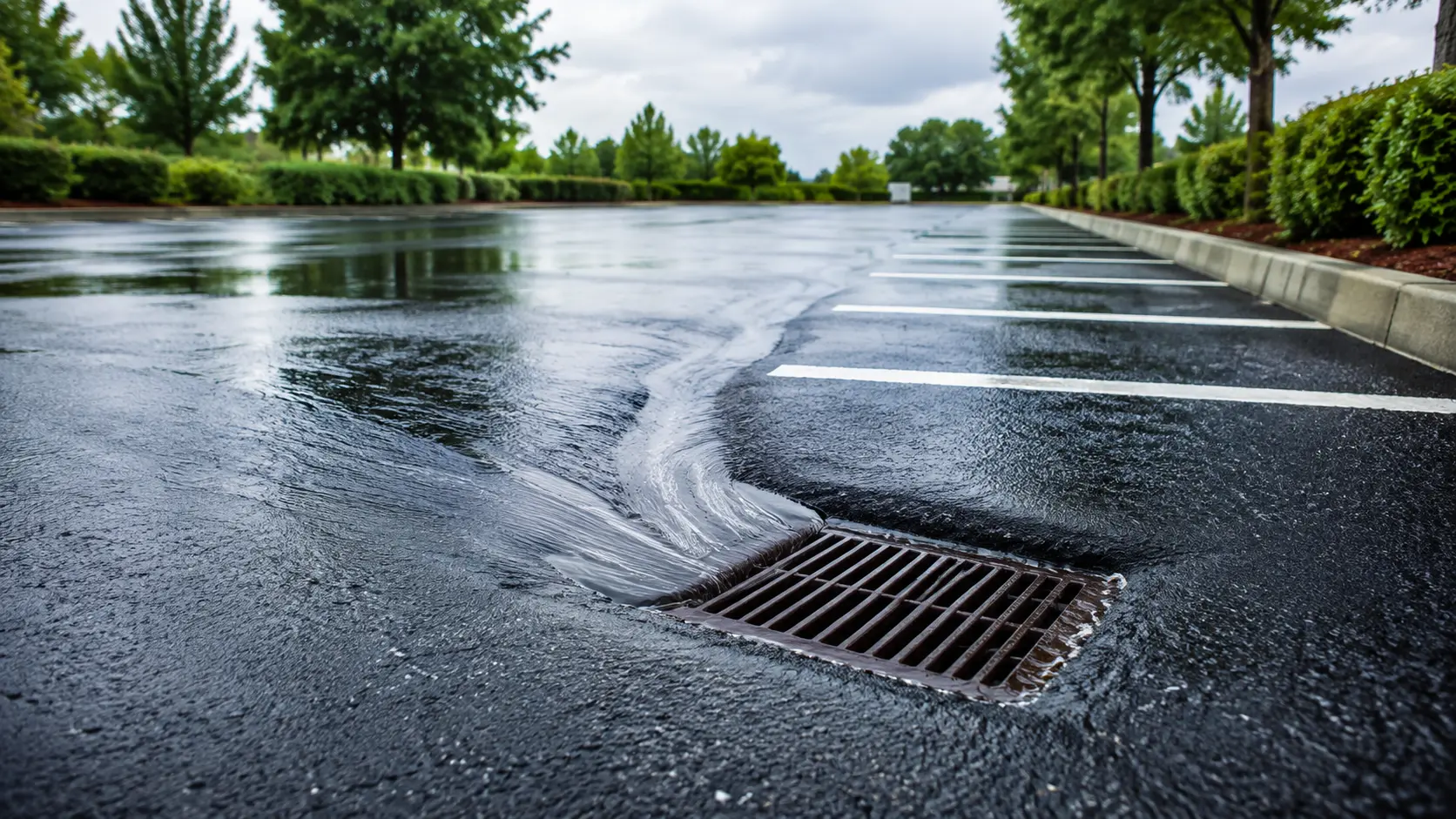
Drainage is one of the most important considerations in both new asphalt construction and existing pavement maintenance.
Water can damage asphalt indirectly by weakening the supporting materials beneath the surface.
How Water Affects Asphalt
Water can enter through cracks, pavement edges, damaged joints, or other openings.
If moisture reaches the base, traffic loads can contribute to movement and loss of support.
Over time, this can contribute to cracking, settlement, depressions, and potholes.
Proper Pavement Grading
Asphalt should be graded so water naturally moves away from the pavement or toward appropriate drainage structures.
Low areas where water continually collects should be evaluated.
Proper grading is easier to address during initial construction than after the pavement has already been installed.
Common Signs of Drainage Problems
Watch for:
- Standing water after rainfall
- Recurring potholes
- Sinking pavement
- Water collecting near pavement edges
- Erosion
- Clogged catch basins
- Repeated cracks in the same areas
If pavement continues failing in the same location, the underlying water-management system may need attention.
Asphalt Paving for Residential Properties
Residential pavement needs vary based on property layout, vehicle use, drainage, and existing site conditions.
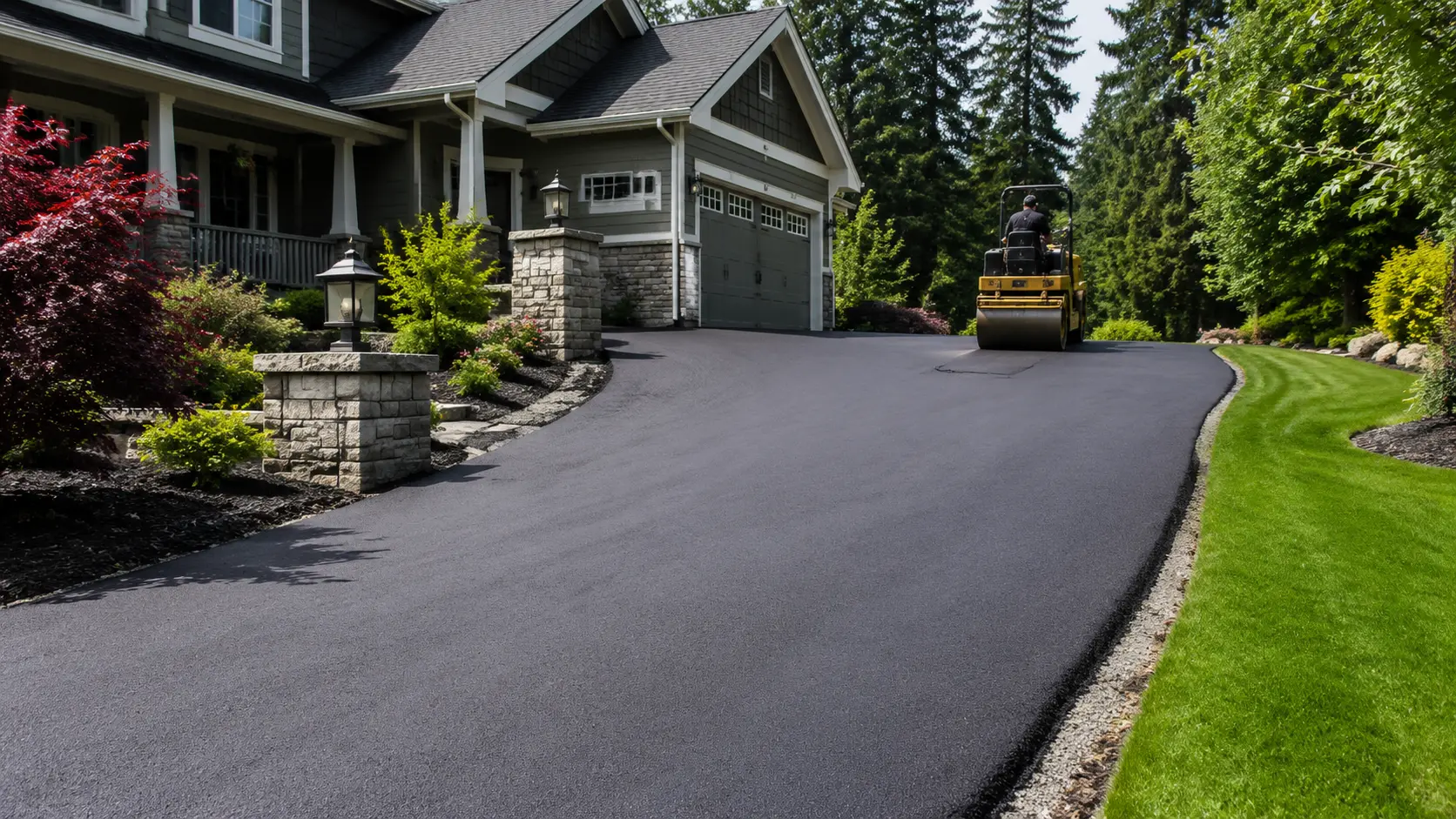
A properly installed asphalt driveway can provide a smooth and practical surface for everyday vehicle traffic.
New Asphalt Driveways
New driveway construction generally requires proper excavation, grading, base preparation, asphalt placement, and compaction.
The project should also account for garage elevations, sidewalks, road connections, and drainage.
Replacing an Existing Driveway
An older driveway may need replacement when deterioration becomes widespread.
Removing the existing pavement allows the contractor to inspect and improve the supporting base before installing new asphalt.
Residential Asphalt Repairs
Smaller pavement problems may sometimes be repaired without replacing the entire driveway.
An onsite evaluation can help determine whether localized repairs or more extensive work makes sense.
Asphalt Paving for Commercial Properties
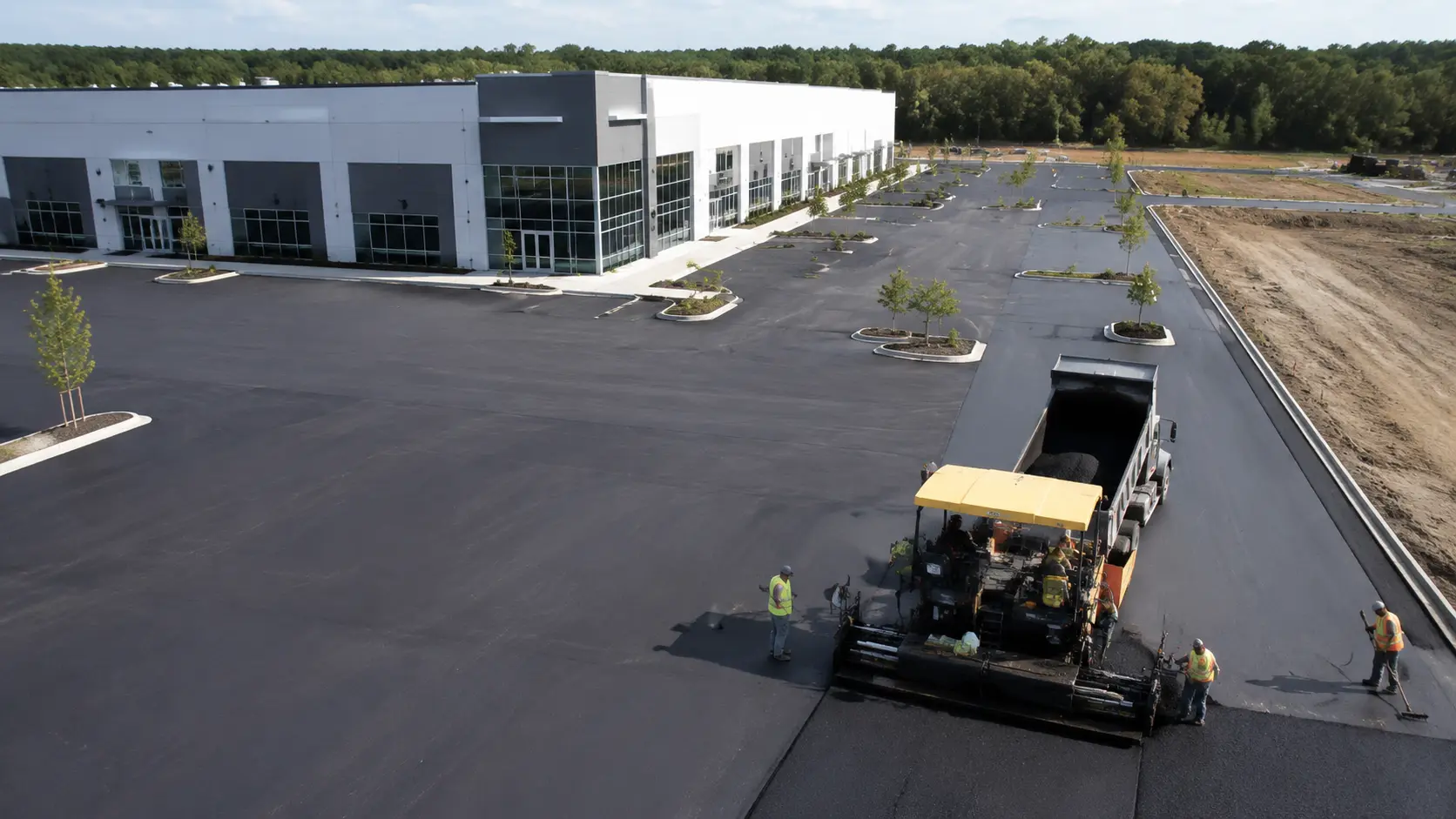
Commercial pavement requires careful planning because it may experience significantly more traffic than a residential property.
Businesses, HOAs, property managers, industrial facilities, and commercial developments should consider both current and future pavement use.
Commercial Parking Lots
Parking lots should provide a stable driving surface while supporting vehicle circulation and parking.
Traffic patterns, drainage, loading areas, accessibility, pavement markings, and pedestrian movement should all be considered.
Commercial Access Roads
Access roads may experience frequent traffic from customers, employees, service vehicles, delivery vehicles, and trucks.
The pavement structure should be designed around expected usage.
Industrial Pavement
Industrial properties may require heavier pavement designs because of trucks, equipment, loading operations, and concentrated vehicle loads.
Base preparation becomes particularly important in these environments.
Asphalt Paving in Kent, WA and the Greater Puget Sound Region
Adams Asphalt & Construction provides professional Asphalt Paving Services throughout Kent and surrounding communities.
Working with a local asphalt pavement contractor can be helpful because pavement design should account for property conditions, traffic requirements, drainage, and regional weather patterns.
Asphalt Paving Service Areas
Adams Asphalt & Construction also serves:
- Kent
- Renton
- Auburn
- Federal Way
- Covington
- Maple Valley
- SeaTac
- Des Moines
- Tukwila
- Burien
- Normandy Park
- Pacific
- Algona
- Milton
- Fife
- Edgewood
- Puyallup
- Sumner
- Newcastle
- Mercer Island
- Bellevue
- Issaquah
These local service areas make it easier for property owners throughout the Greater Puget Sound region to work with an experienced asphalt contractor for paving, resurfacing, repairs, and related site work.
How to Plan an Asphalt Paving Project
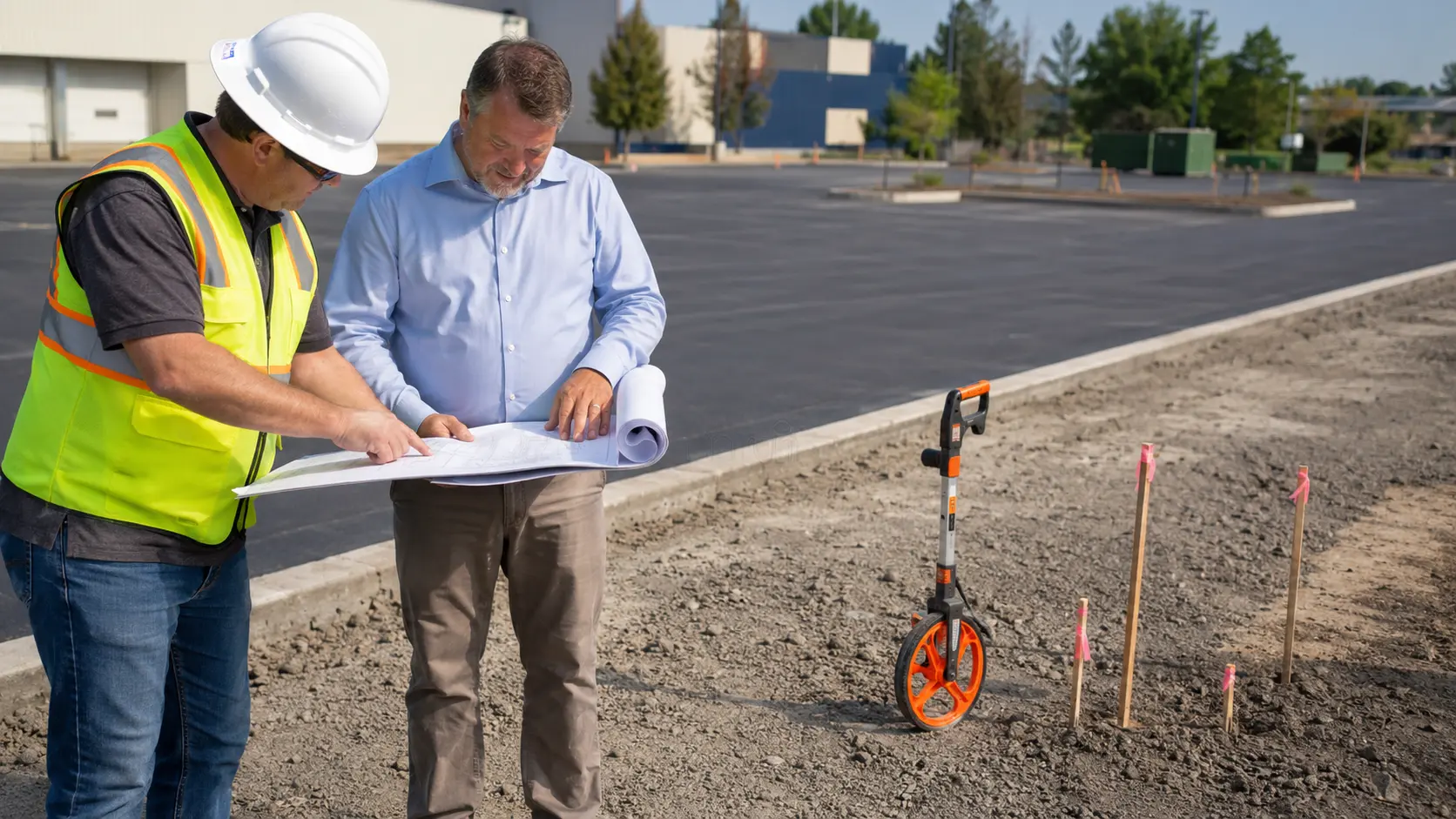
Planning ahead can help create a clearer project scope and reduce unexpected issues during construction.
Before contacting an asphalt pavement company, consider how the paved area will be used and what problems need to be corrected.
Identify the Purpose of the Pavement
Determine whether you need pavement for:
- A driveway
- Parking lot
- Private road
- Commercial access area
- Industrial property
- HOA community
- Other vehicle surface
Expected traffic and vehicle weight should be discussed with the contractor.
Identify Existing Pavement Problems
Document noticeable issues such as:
- Cracking
- Potholes
- Settlement
- Standing water
- Broken edges
- Surface deterioration
- Repeated repair areas
This information can help during the initial evaluation.
Consider Drainage
Look at what happens during and after rainfall.
Areas where water continually collects may require grading or drainage improvements as part of the project.
Request a Detailed Estimate
A professional estimate should clearly explain the proposed scope.
Ask what is included regarding excavation, removal, grading, base construction, asphalt installation, compaction, drainage, disposal, and related work.
Frequently Asked Questions
How Long Does Asphalt Paving Last?
Asphalt Paving Lifespan varies according to installation quality, traffic, vehicle weight, drainage conditions, weather exposure, and maintenance.
Well-constructed pavement that receives appropriate maintenance can provide many years of reliable service.
How Much Does Asphalt Paving Cost?
Asphalt Paving Cost depends on project size, asphalt thickness, existing pavement conditions, excavation, base preparation, grading, drainage, accessibility, and other site-specific requirements.
An onsite estimate is the most reliable way to determine project pricing.
How Long Does Asphalt Paving Installation Take?
Installation time depends on project size and complexity.
Smaller projects may be completed relatively quickly, while large commercial parking lots, roadway projects, drainage improvements, or extensive site preparation can require additional time.
Can New Asphalt Be Installed Over Old Asphalt?
In some situations, an asphalt overlay can be placed over an existing surface.
However, the existing pavement and base should first be evaluated.
Widespread structural failure, major settlement, or drainage problems may need to be corrected before resurfacing.
Can Cracked Asphalt Be Repaired?
Many cracks can be repaired or maintained when addressed appropriately.
However, widespread or recurring cracking can indicate more significant structural problems.
The type and cause of the cracking should be evaluated before choosing a repair method.
What Causes Asphalt Potholes?
Potholes can develop when pavement weakens from traffic, water infiltration, base movement, surface deterioration, or a combination of these factors.
Repairing the damaged area early can help prevent the pothole from becoming larger.
Is Asphalt Good for Commercial Parking Lots?
Yes. Asphalt is commonly used for commercial parking lots because it provides a smooth driving surface and can be repaired or resurfaced as conditions change.
The pavement should be designed according to expected traffic and vehicle loads.
Should I Repair or Replace My Asphalt?
Localized damage may sometimes be repaired, while extensive structural failure may require resurfacing or replacement.
An experienced asphalt pavement contractor can evaluate the pavement and recommend the most appropriate solution.
Get Professional Asphalt Paving Services from Adams Asphalt & Construction
A successful asphalt project begins below the visible surface.
Proper grading, a stable base, appropriate pavement thickness, effective drainage, professional compaction, and ongoing Asphalt Paving Maintenance all contribute to better long-term pavement performance.
Whether you need a new driveway, commercial parking lot, roadway, pavement repair, resurfacing, or complete asphalt replacement, choosing an experienced contractor can help you understand the condition of your property and determine the appropriate scope of work.
Adams Asphalt & Construction provides professional Asphalt Paving Services for residential and commercial properties throughout Kent and the Greater Puget Sound region.