Building a house means hundreds of decisions, dozens of trades, and a long list of inspections. A contractor for home building is the company responsible for turning a design into a finished, livable structure. They also keep everyone else on track while that happens.
At Adams Asphalt & Construction, a Kent construction and site work contractor, we work on residential and commercial properties across the Greater Puget Sound region. We see firsthand how much of a home’s long-term performance depends on work that happens before the walls go up. This guide covers three things: what the contractor actually manages, where that role usually ends, and why site preparation deserves more attention than it gets.
The Short Answer: What the Contractor Is Responsible For
A contractor for home building manages the entire home construction project, from pre-construction planning through final inspections and handoff. That includes:
- hiring and scheduling trades
- controlling the construction budget
- ordering materials
- arranging inspections
- making sure the work matches the approved plans
Most don’t personally perform every task. They act as the project’s central manager, while licensed specialists handle electrical, plumbing, HVAC, and other trades. The contractor is accountable for the whole result, not just individual pieces.
In practice, the role covers five areas: planning and scheduling, site preparation, trade coordination, budget and communication, and finishing and closeout.
Why Construction Planning Starts Before Any Digging
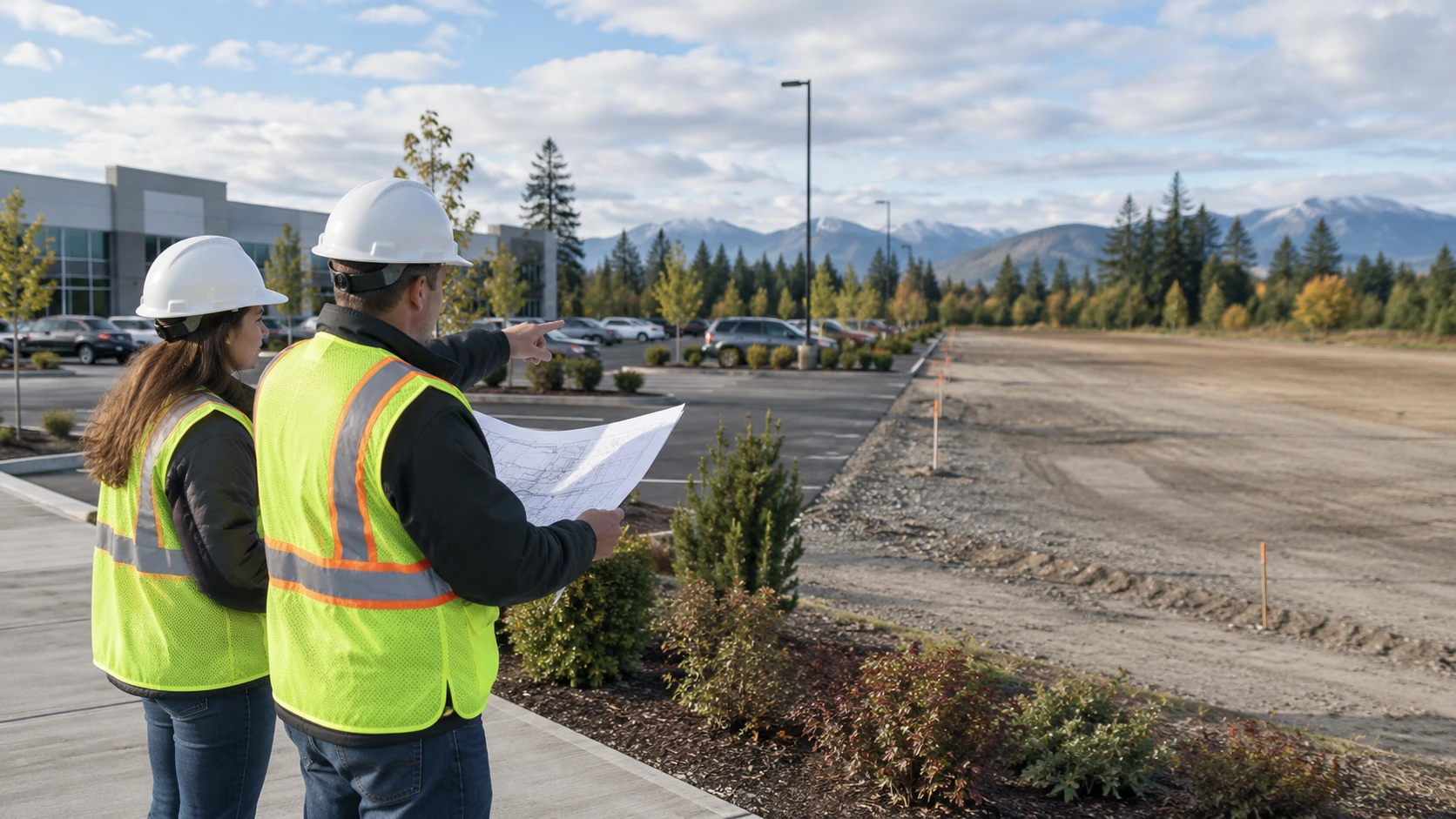
Some of the most valuable work a contractor for home building does happens before equipment arrives. During this phase, the contractor typically:
- Reviews plans, specifications, and site surveys
- Identifies soil, slope, access, and drainage concerns
- Collects bids from trades and suppliers
- Builds a realistic schedule
- Helps with permit applications, depending on how the contract divides that responsibility
Good planning catches site problems while they’re still cheap to solve. A lot that looks flat may slope toward the house. The soil may hold water or need to be removed. The sewer or water connection may sit farther from the building pad than expected. Finding these issues on paper costs far less than fixing them after framing is up.
Site Work: The Part of Home Building Most Owners Overlook
Most people picture framing and finishes when they think about what a contractor for home building oversees. But a house is only as stable as the ground beneath it.
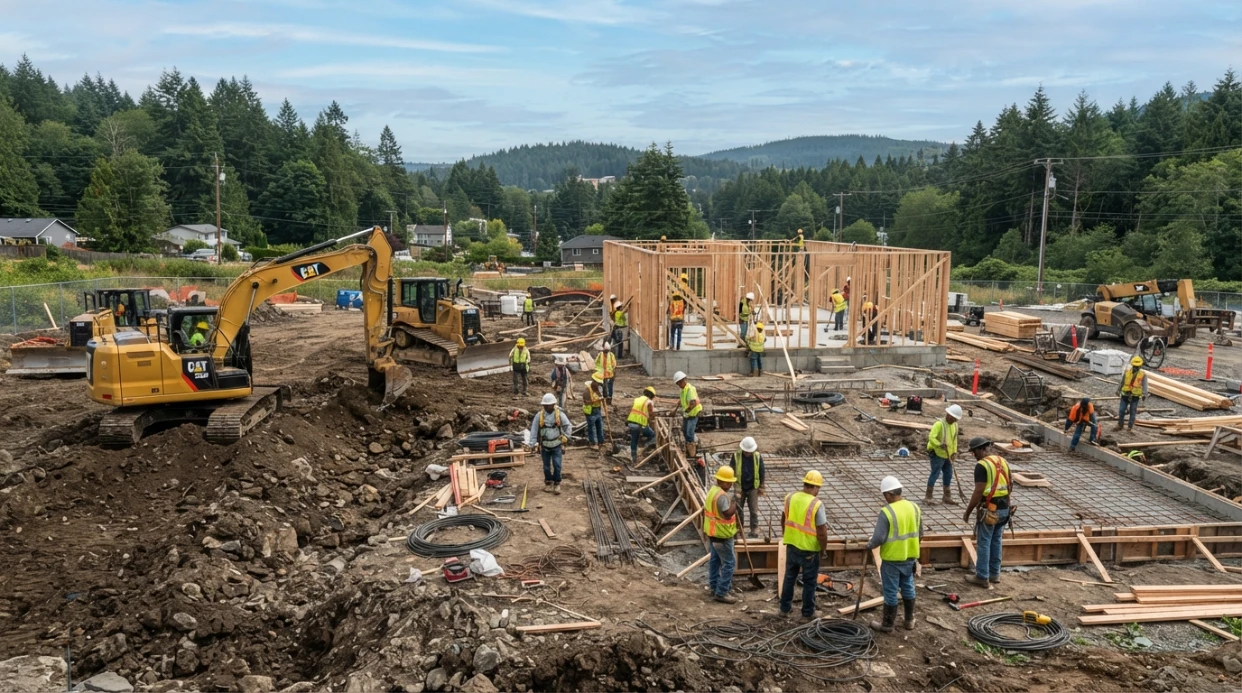
Before a foundation goes in, the lot has to be cleared, excavated, graded, and prepared to shed water. On many projects, the general contractor brings in a site contractor for this phase, often as part of broader building site development.
Excavation and Grading
This phase sets the stage for everything else. Crews dig for footings and foundations, remove unsuitable soil, and shape the lot so finished elevations direct water away from the structure.
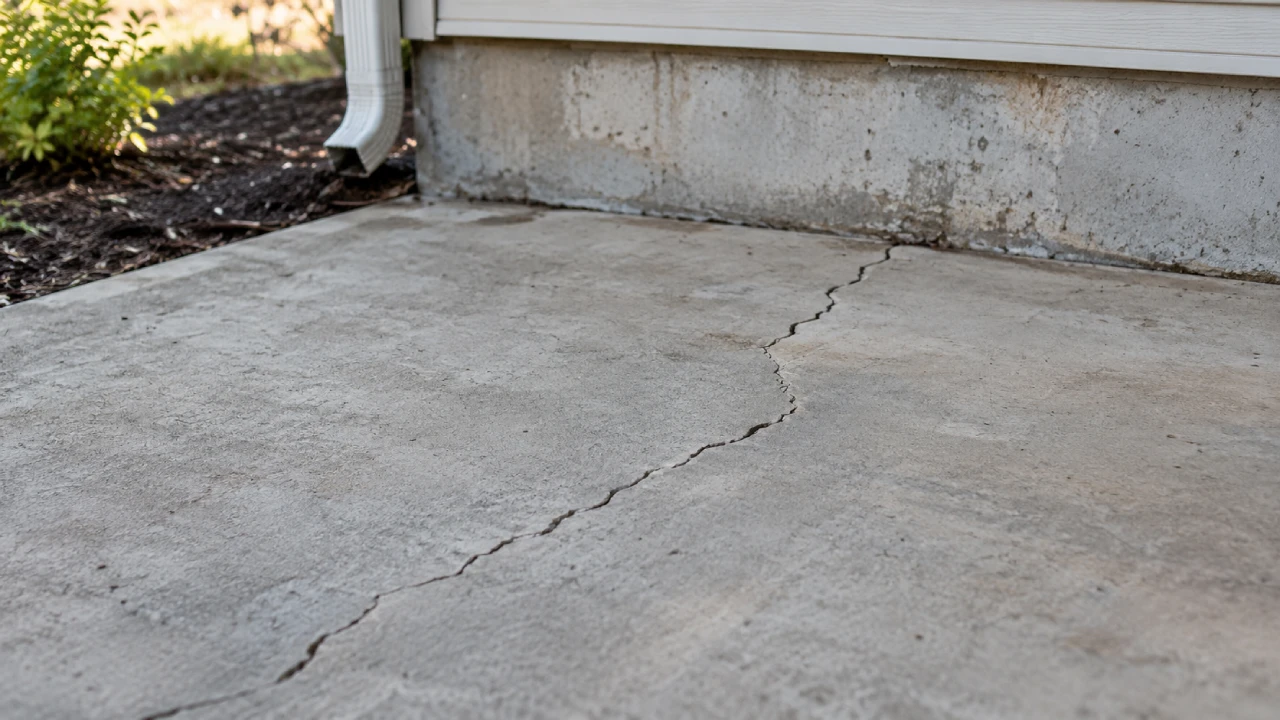
Foundation and site excavation also has to account for compaction. Loose fill under a slab, driveway, or footing can settle over time. That settlement causes cracks that no amount of finish work will hide.
Site Drainage in a Pacific Northwest Climate
In residential construction, Western Washington’s long rainy season makes drainage a bigger issue than it is in drier regions. Water that collects near a foundation can lead to damp crawlspaces, saturated soil, and settlement. Water that runs under a driveway can soften the aggregate base and cause cracking or sinking.
The right solution depends on the lot. Grading, catch basins, and piping all play a role. The final layout should follow the project plans and local stormwater requirements. Property drainage improvements work best when they’re planned together with grading, not added after problems appear.
Coordinating Utilities
Utility coordination means lining up water, sewer or septic, power, gas, and communication connections with the rest of the schedule. Trenches need to be dug, backfilled, and compacted before driveways and walkways go in. Otherwise, crews end up cutting through brand-new surfaces.
Coordinating utility work with providers and trades early keeps connections from becoming the delay that holds up an inspection.
How Contractors Manage Trades and Timing
Subcontractor coordination is where a contractor for home building earns their fee. A typical house may involve framers, roofers, electricians, plumbing contractors, HVAC installers, insulation crews, drywall finishers, painters, and flooring installers.
Construction sequencing matters because each trade depends on others:
- Rough plumbing and wiring must pass inspection before insulation and drywall go in.
- Concrete needs proper curing before it carries heavy loads.
- Driveway paving usually waits until concrete trucks, lumber deliveries, and heavy equipment are finished, because that traffic can damage fresh surfaces.
| Phase | What the Contractor Handles | Specialists Often Involved |
| Pre-construction | Plan review, bids, schedule, permit support | Designers, surveyors |
| Site preparation | Site work scheduling, utility timing, inspections | Excavation, grading, drainage, and utility crews |
| Structure | Material delivery, quality checks, framing oversight | Concrete, framing, and roofing crews |
| Rough-in | Inspection timing, trade order | Plumbing, electrical, HVAC |
| Finishes and exterior | Punch lists, finish quality, final grading | Drywall, flooring, concrete flatwork, paving |
| Closeout | Final inspections, walkthrough, documents | Inspectors, trades making corrections |
Budget, Schedule, and Keeping Owners Informed
A contractor for home building also manages money and expectations. That means tracking costs, handling change orders, managing allowances for fixtures and finishes, and explaining delays when weather or inspections push the schedule.
Clear homeowner communication prevents most disputes. Good contractors share schedules, flag decisions that need owner input, and put scope changes in writing before the work begins.
Costs vary widely. They depend on home size, lot conditions, soil, site access, design complexity, finish selections, and material availability. A sloped or wet lot may need more excavation and drainage work than a flat, dry one. That’s why reliable estimates come from reviewing the actual site and plans, not from a per-square-foot rule of thumb.
Finishes, Exterior Surfaces, and Project Closeout
Near the end, a contractor for home building shifts focus to interior finishing: drywall, trim, cabinets, flooring, paint, and fixtures. Outside, they coordinate final grading, walkways, and the driveway.
Exterior surfaces take real abuse from Puget Sound rain and vehicle traffic. Foundations, curbs, and concrete flatwork and new driveway paving both depend on proper base preparation and drainage underneath.
On rebuilds or additions, an existing driveway may not need full replacement. If the base is sound, resurfacing over existing asphalt or repairing localized pavement damage may be enough. If the base has failed, surface fixes won’t last.
The project closes with a final walkthrough. The owner and contractor review the home together, build a punch list of corrections, and confirm that final inspections are complete before handoff.
General Contractor, Builder, or Specialist: Who Should You Hire?
Not every contractor for home building handles every type of work, so the right hire depends on your scope. For a full new home, you’ll typically hire a home building general contractor or a single-family home contractor who manages every phase. Many owners compare several new construction general contractors based on experience, communication style, and references.
For remodels, additions, or exterior upgrades, a residential contractor or general building contractor may be the better fit. The general contractor residential clients choose for this work often manages a smaller group of trades. Not every company offering building contractor services manages complete homes, so ask about scope early.
For site-specific work such as excavation, drainage corrections, concrete, or paving, you may hire a specialist directly or work through your general contractor. Many building contractors rely on site specialists because this work needs different equipment and experience than framing or finishes.
AAC offers residential and commercial general contracting for interior and exterior projects, along with site preparation, drainage, concrete, and paving. That site work can support a project directly for the owner or alongside home general contractors. If you’re unsure whether your lot needs grading or drainage work before building, AAC can evaluate site conditions and explain your options.
Questions to Ask Before You Hire
Before signing with any of the residential building contractors you’re considering, ask:
- Are you registered, bonded, and insured in Washington? Construction contractors in Washington register with the Department of Labor & Industries, and you can verify their status online.
- Who handles permits and inspections?
- Which trades are in-house, and which are subcontracted?
- Who is responsible for site preparation, drainage, and driveway work?
- How do you handle change orders and schedule changes?
- How often will you update me on progress?
Building on a Solid Start
A good contractor keeps the design, budget, trades, and inspections moving in the same direction. But the finished house still depends on the ground it sits on. Excavation, grading, drainage, and utility work set up every phase that follows.
AAC has been serving Puget Sound property owners since 1971. If you’re planning a new home or improving an existing lot, we’re glad to walk the site, review your plans, and discuss the site work your project may need. You can learn more about our site and paving services around Kent.
Frequently Asked Questions
Does a home building contractor pull the permits?
Often, but not always. Depending on the contract, the general contractor, the owner, or the designer may submit permit applications. Permits are issued by the local jurisdiction, such as the city or county. Confirm in writing who is responsible for applications, inspection scheduling, and corrections, so nothing falls through the gaps.
How long does it take a contractor for home building to finish a house?
There’s no fixed timeline. Schedules depend on home size, design complexity, permit review, material availability, site conditions, and weather. In Western Washington, wet seasons can slow excavation and grading. Ask for a written schedule with milestones, and ask how the contractor handles weather delays.
What’s the difference between a new construction general contractor and a remodeling contractor?
New construction starts from a raw or cleared lot. It includes site preparation, utilities, foundations, and the full structure. Remodeling works within an existing building. It involves demolition, hidden conditions, and often working around people who live there. Both need strong trade management, but they take different planning skills.
Should site work start before I hire a builder?
Early feasibility steps, such as surveys and soil evaluations, can help you budget. Major grading or drainage work, however, should match the final plans. Starting too early can mean redoing work later. In most cases, it’s best to coordinate site work with your builder once the plans are set.
Can I hire my own excavation or paving contractor?
In many cases, yes. Coordinate with your general contractor first, though. Separate contracts can create scheduling conflicts or confusion about who is responsible if problems appear. Agree on who controls sequencing, site access, and inspections before the work starts.
Why does drainage matter so much for new homes in Western Washington?
Frequent rain can saturate soil, weaken driveway bases, and push water toward foundations. Thoughtful residential construction services in this region treat drainage as part of the site plan, not an afterthought. Plan grading, catch basins, and piping together to match lot conditions.