An asphalt driveway can make everyday parking easier, improve access to your property, and give an older entrance a cleaner appearance. But before you schedule the work, you probably want to know what a new driveway will cost—and why one paving estimate might be very different from another.
For homeowners and property owners in Kent and the Greater Puget Sound area, the answer depends on more than the amount of asphalt needed. Driveway dimensions, ground conditions, drainage, removal of existing pavement, and the construction method all affect the price. If you are planning a project, Adams Asphalt & Construction’s asphalt paving services provide a starting point for understanding the work involved and requesting an estimate.
This guide explains typical 2026 asphalt driveway pricing, walks through costs for a 20-by-20-foot driveway, a 1,000-square-foot surface, and a 200-foot-long driveway, and compares asphalt with concrete. The prices are national planning estimates, not guaranteed local bids; an onsite assessment is necessary for an accurate figure.
How Much Does an Asphalt Driveway Cost Per Square Foot?
For a new asphalt driveway, a useful 2026 national planning range is $7 to $13 per square foot installed, according to Angi’s October 2026 driveway cost guide. That estimate includes materials and professional installation for a typical project, but unusual site conditions can push the cost beyond the range.
It is important to compare like with like. Adding asphalt over a sound existing surface is not the same project as excavating an unpaved area and constructing a driveway from the ground up. Angi distinguishes between new construction, full replacement, and overlay work:
| Type of asphalt driveway work | Illustrative 2026 installed cost |
|---|---|
| New driveway installation | $7–$13 per sq. ft. |
| Full driveway replacement | $8–$15 per sq. ft. |
| Asphalt overlay on a suitable existing surface | $3–$7 per sq. ft. |
These figures are averages across markets, not rates advertised by Adams Asphalt & Construction. A contractor may also have a minimum project charge, so a small area will not necessarily be billed at the lowest square-foot rate.
Before calculating your budget, determine whether you need a new driveway, a replacement, or a resurfacing project. That decision affects both the starting price and the amount of preparation required.
How Driveway Size Changes the Total Cost
The most straightforward way to develop a preliminary driveway budget is to calculate the paved area in square feet. For a rectangular driveway, multiply its length by its width:
Length (feet) × width (feet) = total square footage.
Then multiply the result by a reasonable installed cost per square foot. Driveways with curves, widened parking spaces, turnarounds, or irregular edges should be divided into simpler shapes and measured separately. This basic method gives you a useful starting number before a contractor evaluates the property.
How Much Is a 20×20 Asphalt Driveway?
A 20-by-20-foot driveway covers 400 square feet. Using the $7–$13 new-installation range, the estimated cost is $2,800 to $5,200.
That size can work for a compact two-car parking area, although comfortable access depends on the vehicles, garage layout, and space needed to turn or open doors. If the area currently has gravel or grass, the project may involve excavation, grading, and a compacted aggregate base. If it already has cracked pavement, removal and disposal may change the scope to a replacement rather than a new installation.
A 400-square-foot driveway is also a good example of why the square-foot calculation is only the beginning. A simple, accessible site with a stable base may cost less to prepare than a similarly sized area that needs drainage correction or major excavation.
How Much Does 1000 Sq Ft of Asphalt Cost?
For a 1,000-square-foot new asphalt driveway, the same range suggests approximately $7,000 to $13,000 installed. This area could be a long, narrow driveway, a wider parking area, or a combination of driveway and turnaround space. The shape matters because it influences equipment access, edge finishing, material placement, and grading.
For example, a 20-by-50-foot rectangle equals 1,000 square feet. So does a 10-by-100-foot entrance. Both require roughly the same surface coverage, but the longer layout may have different drainage and access challenges. An attached parking pad, slopes, or connections to a roadway can add work that a basic square-foot estimate does not capture.
If an existing driveway is being replaced, applying the separate replacement range of $8–$15 per square foot produces a $8,000 to $15,000 planning estimate. Always confirm which project type a quoted price covers.
How Much Does It Cost to Asphalt a 200 Ft Driveway?
A driveway that is 200 feet long cannot be priced accurately without knowing its width. A 10-foot-wide lane has a very different area from a 16-foot-wide entrance designed to accommodate more vehicle movement.
Using the new-installation range of $7–$13 per square foot, here is how the total changes with width:
| Driveway dimensions | Area | Illustrative installed cost |
|---|---|---|
| 200 × 10 feet | 2,000 sq. ft. | $14,000–$26,000 |
| 200 × 12 feet | 2,400 sq. ft. | $16,800–$31,200 |
| 200 × 14 feet | 2,800 sq. ft. | $19,600–$36,400 |
| 200 × 16 feet | 3,200 sq. ft. | $22,400–$41,600 |
For a common 200-by-12-foot example, the preliminary cost is $16,800 to $31,200. This is not a quotation for a specific property. Long driveways can involve slopes, soft soil, difficult truck access, culverts, or drainage channels that require additional planning.
Before deciding on a width, think about how the driveway will be used. A single-lane private entrance may have different requirements from one that regularly accommodates delivery vehicles or two-way traffic. Adams Asphalt & Construction offers asphalt driveway paving for standard entrances, longer residential drives, and suitable commercial access projects.
What Makes One Asphalt Driveway Quote Higher Than Another?
Size establishes the approximate amount of surface to be paved. The work beneath that surface often explains the difference between a relatively straightforward installation and a more expensive one.
Existing Surface and Ground Preparation
Paving a prepared site is different from removing failed asphalt, concrete, tree roots, or unsuitable soil. Depending on the condition of the property, crews may need to excavate, haul away debris, correct soft areas, and establish the required grade before paving begins.
If the existing driveway is broken but its supporting base remains sound, a contractor may be able to preserve some of that structure. If the base has settled or lost strength, covering it with new asphalt can allow the same problems to reappear. An estimate should make clear what will be removed and what will remain.
Base Thickness and Expected Vehicle Loads
A driveway is a system, not just a black surface. Compacted aggregate and stable underlying soil support the asphalt and help distribute vehicle loads. The appropriate design depends on soil conditions, traffic, and whether the area serves passenger cars, heavier trucks, or other equipment.
More excavation, aggregate, or asphalt generally means additional material and labor costs. Choosing the thinnest available option is not necessarily the least expensive choice over the driveway’s service life if it does not suit the intended use.
Grading and Drainage
Water needs a safe path off the pavement. Low spots that hold rainwater, runoff flowing toward a garage, and saturated soil beneath a driveway can lead to costly performance problems. Correcting drainage may mean adjusting elevations, shaping surrounding ground, or installing additional water-management features.
This is particularly relevant in the Puget Sound region, where sustained wet weather can expose drainage weaknesses. Adams Asphalt & Construction also provides drainage solutions for properties where surface runoff and site conditions need to be addressed alongside paving.
Access, Layout, and Finishing Details
A broad, level work area can be easier to pave than a narrow driveway tucked between buildings or landscaping. Tight turns, steep approaches, utility covers, retaining edges, and connections to sidewalks or public roads all require extra care.
Equipment access and the amount of hand finishing can affect labor time. A detailed proposal should identify any special transitions, edge treatments, or access constraints rather than hiding them inside a single unexplained total.
Is Resurfacing Cheaper Than Replacing an Asphalt Driveway?
Sometimes—but only when the existing driveway is a suitable candidate. An asphalt overlay adds a new layer over a structurally sound surface. It may improve appearance and ride quality while avoiding the cost of complete removal. Using Angi’s 2026 national range, overlay work may cost around $3–$7 per square foot, compared with $8–$15 per square foot for full replacement.
The lower price should not be the deciding factor by itself. A driveway with widespread alligator cracking, repeated potholes, significant settling, or a failed base is unlikely to be fixed simply by covering it. A new surface may crack or move as the problems underneath continue.
Smaller areas of damage may qualify for asphalt paving repairs, while a generally stable but worn surface might be considered for asphalt overlay services. When deterioration affects most of the driveway or the base needs reconstruction, full replacement can be the more sensible long-term investment.
Ask the contractor to explain why a particular approach is recommended. The condition assessment is just as important as the price difference.
Is It Cheaper to Pour Concrete or Asphalt?
Asphalt is often less expensive upfront than concrete, but the ranges overlap, so it is not cheaper in every location or for every project. HomeGuide’s asphalt-versus-concrete comparison puts typical installed asphalt at $5–$12 per square foot and standard concrete at $6–$15 per square foot. Those broad national figures use a different pricing methodology from the new-installation range used in the calculations above.
Both materials can provide dependable access when the site is properly prepared. The better choice depends on your budget, design preferences, maintenance expectations, and how the driveway will be used.
| Factor | Asphalt driveway | Concrete driveway |
|---|---|---|
| Initial cost | Often lower, depending on scope | Often higher, especially with decorative finishes |
| Appearance | Dark, uniform surface | Standard gray or decorative finishes |
| Installation and return to use | Usually faster, subject to contractor instructions | Typically requires longer curing before vehicle traffic |
| Maintenance | Crack repair and periodic sealing may be needed | Joint and crack maintenance may still be needed |
| Service life | Often around 15–30 years | Often around 30–40 years or more |
Concrete may appeal to owners who want a lighter finish or a longer potential service life. Asphalt can be attractive when initial cost, easier localized repairs, and a flexible paved surface matter more. The right comparison is not simply today’s installation bill; it is the expected cost of installation, maintenance, repairs, and eventual replacement.
If your paving project includes sidewalks, curbs, pads, or other concrete site improvements, you can also review the company’s concrete construction services. A contractor can help assess the appropriate material and scope for each surface.
What Happens During a New Asphalt Driveway Installation?
Understanding the installation process makes it easier to evaluate an estimate. On a typical new driveway project, the first step is a site visit to measure the area, identify existing damage or obstacles, discuss vehicle use, and review drainage.
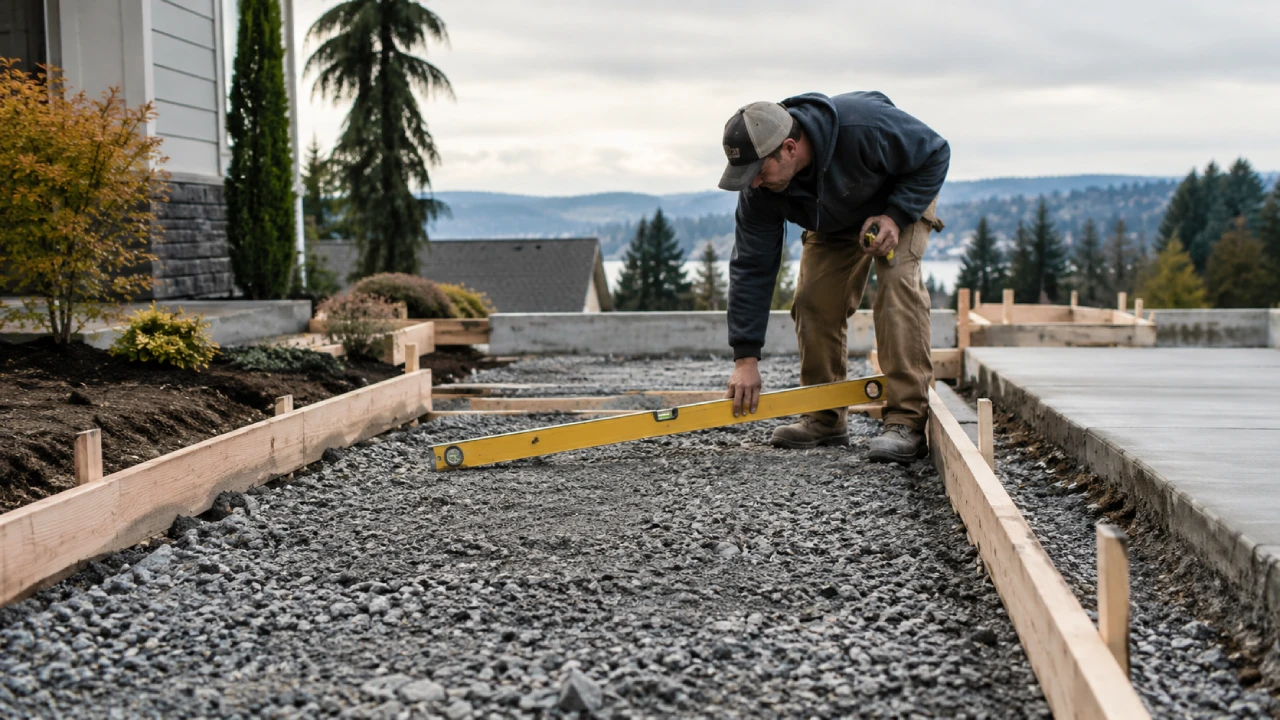
Next comes preparation. Depending on the property, the crew may remove old materials, excavate unsuitable ground, establish grades, and compact the supporting base. This stage can take considerable effort, but it is essential to achieving a surface that performs well over time.
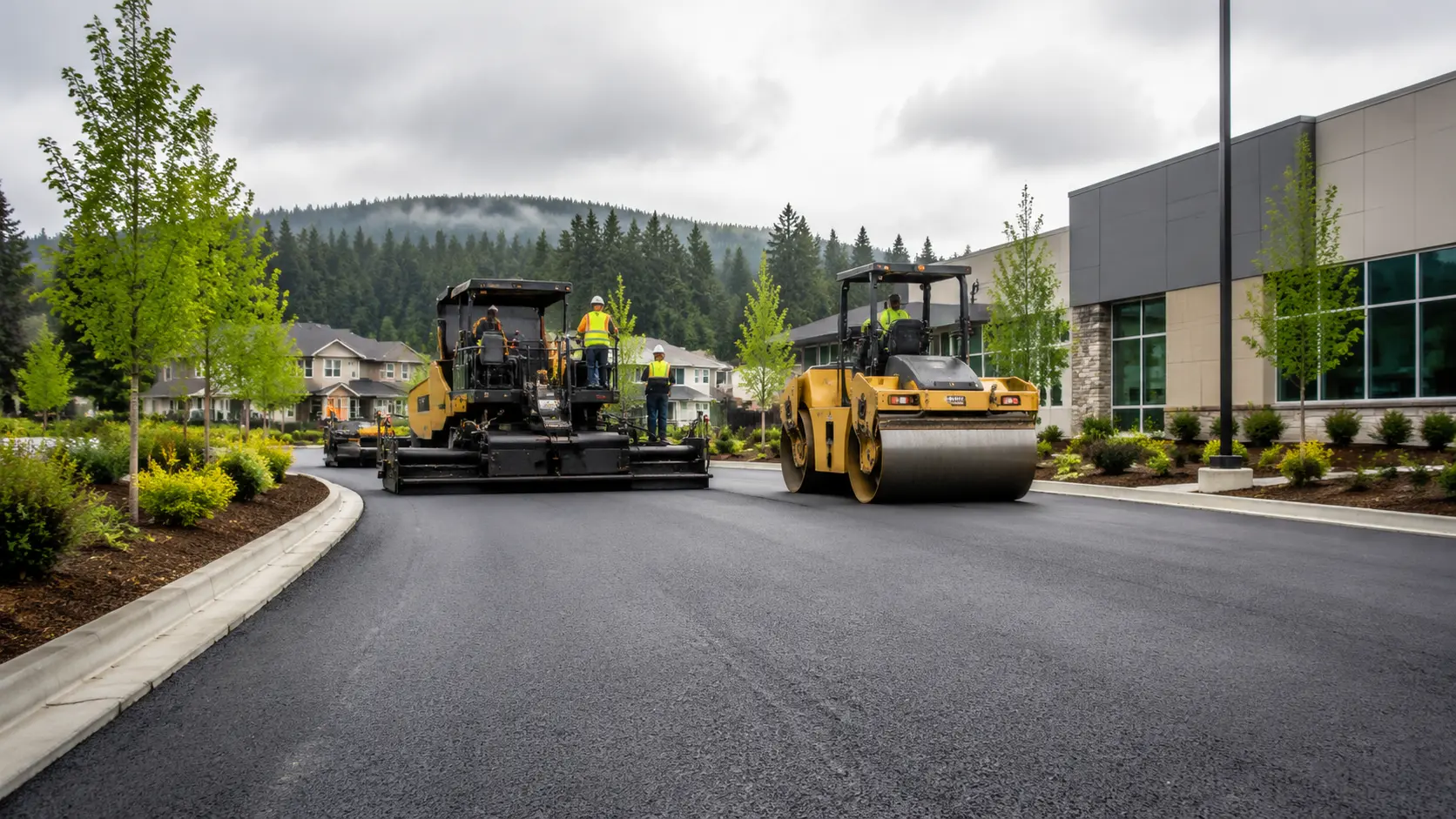
Once the site is ready, hot-mix asphalt is placed at the specified thickness and compacted with appropriate equipment. The edges, transitions, and connections to nearby pavement are finished, and the completed surface is checked for consistent grading and drainage.
Construction duration depends on area, weather, site access, and preparation requirements. A simple residential driveway may be completed relatively quickly, while significant excavation or drainage improvements can extend the schedule.
Do not confuse the end of installation with the time when the surface is ready for regular traffic. Adams Asphalt & Construction’s driveway guidance says homeowners should generally allow 24–72 hours before driving on newly paved asphalt, with the contractor’s site-specific recommendation taking priority. Avoid parking heavy vehicles or making sharp stationary turns until the surface is ready.
How Long Will a New Asphalt Driveway Last?
A well-designed asphalt driveway can commonly provide 15–30 years of service, but no contractor can promise an exact lifespan without knowing the site and how the pavement will be used. The quality of the base, asphalt installation, drainage, vehicle loads, and maintenance all influence durability.
The most useful maintenance approach is preventative. Look for developing cracks, uneven settlement, crumbling edges, water collecting after rain, and potholes that return after repair. Addressing the cause early may be less disruptive than allowing widespread damage to develop.
Sealcoating can be part of a longer-term maintenance plan, but it does not fix a failed base or major structural cracking. New pavement must also be ready for a coating before one is applied; timing depends on the mix, weather, product, and contractor guidance. For existing pavement, the company’s sealcoating and striping services explain the maintenance work available for suitable surfaces.
In the Pacific Northwest, pay special attention to drainage outlets, leaves and debris around paved edges, and areas where rainwater regularly stands. Keeping water moving away from the pavement helps protect the materials supporting it.
How to Get an Accurate Asphalt Driveway Estimate
Online price ranges are useful for setting expectations. A written project estimate is what allows you to compare actual scope and budget. Before requesting one, measure the approximate driveway length and width, note whether the surface is new or existing, and take photos of drainage problems or visible damage.
When reviewing a proposal, make sure it answers the practical questions that affect quality and price:
- What work is included? Confirm removal, excavation, base preparation, asphalt installation, disposal, and cleanup.
- What pavement structure is proposed? Ask about the aggregate base, asphalt thickness, and vehicle loads the driveway is designed to support.
- How will water drain? Clarify grading changes and any additional drainage work.
- Are there access or permitting considerations? Driveway entrances and work affecting public areas may have local requirements.
- What is the schedule? Discuss weather conditions, construction access, and when vehicles can use the completed surface.
- How are unexpected conditions handled? Ask how hidden soft spots or other changes will be priced and approved.
A clear estimate allows you to compare contractors on the work being delivered rather than choosing solely by the lowest total. Property owners in Kent and surrounding Greater Puget Sound communities can contact Adams Asphalt & Construction to discuss a driveway project and request a site-based estimate. Homeowners and businesses planning paving projects in Issaquah can also explore the company’s asphalt paving services in Issaquah for location-specific service information.
Plan Your Driveway Around Long-Term Value, Not Just Square Footage
An asphalt driveway cost estimate begins with measurement, but it should end with an understanding of the entire project. A 20-by-20-foot pad, a 1,000-square-foot parking area, and a 200-foot driveway each raise different questions about access, ground preparation, and drainage.
Use national cost ranges to build a preliminary budget, then ask for a proposal that explains the recommended construction method, materials, and site work. Whether your driveway needs a new installation, a sound overlay, or full replacement, the best choice is the one that addresses the actual condition of the property.
For a project-specific assessment in Kent or the Greater Puget Sound area, request an estimate from Adams Asphalt & Construction.