Common asphalt edge failure causes include weak support beneath or beside the pavement, poor drainage, repeated wheel loads near the perimeter, and construction weaknesses at edges or joints. Along concrete curbs, an opening at the asphalt joint or settlement beside the curb can also contribute. The right repair depends on which conditions are present. 1
When the center of a driveway or parking lot looks serviceable but the outside strip is cracking and crumbling, the location provides a useful clue. That strip may have different support, water exposure, or traffic loading from the rest of the surface. A successful repair starts by investigating those differences.
Recognizing damage that is concentrated at the edge
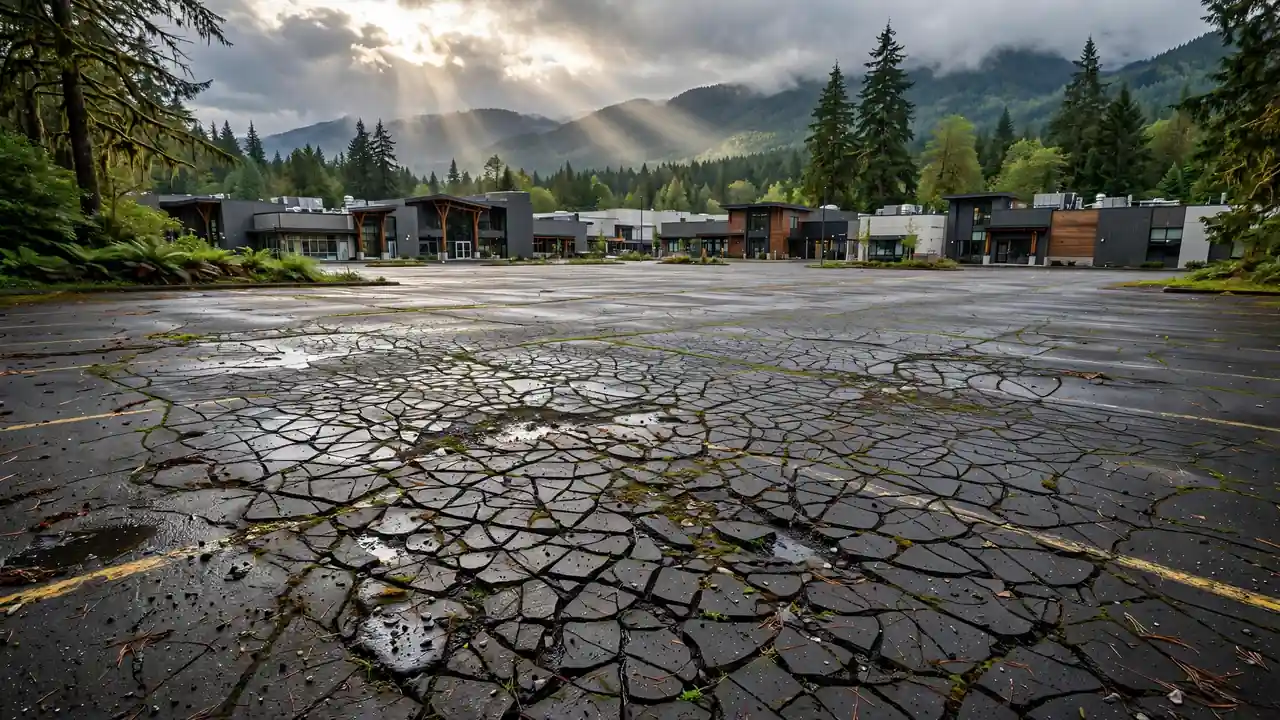
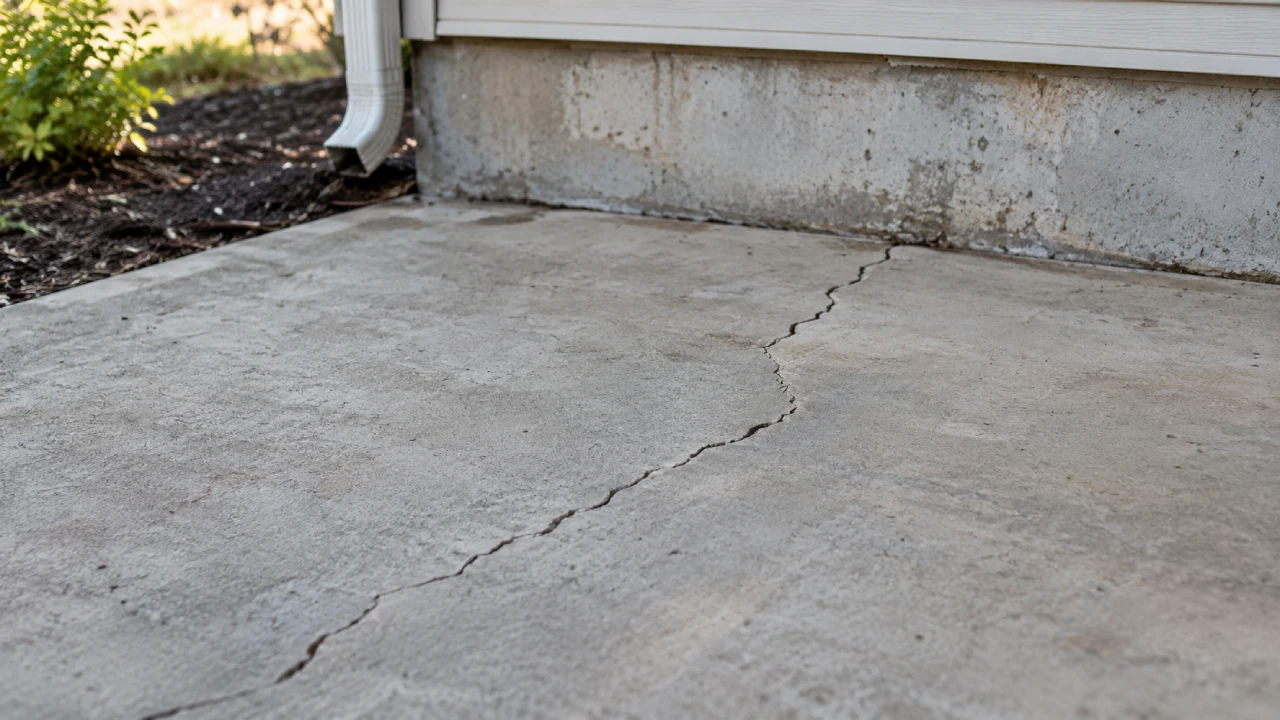
Edge deterioration can appear as a crack running along the outside of the pavement, curved cracks that meet the shoulder, loose fragments, or a strip that has dropped below the surrounding surface. Record whether material is missing and whether the damage extends into vehicle wheel paths.
There is also a terminology distinction. FHWA’s pavement distress manual uses “edge cracking” specifically for pavement next to an unpaved shoulder. Deterioration beside concrete curbing may involve a joint, settlement, or another distress mechanism. Describing the actual condition helps avoid assuming every perimeter crack has the same cause. 2
When evaluating asphalt pavement repair, start with the damaged strip and the ground immediately around it. The condition of the shoulder, curb, or drainage path can explain why that particular area needs attention.
An unsupported shoulder leaves the pavement vulnerable
Asphalt works with the layers below it. The base, commonly made of compacted aggregate, helps distribute vehicle loads. The subgrade is the soil supporting that pavement structure. If either becomes unstable near the edge, the surface can bend or settle under traffic. 3
An exposed or unsupported asphalt edge deserves close attention. Look for a low adjacent shoulder, an eroded strip, or a visible gap beneath the asphalt. These observations help identify where support may have been lost, although they cannot establish the depth of the problem.
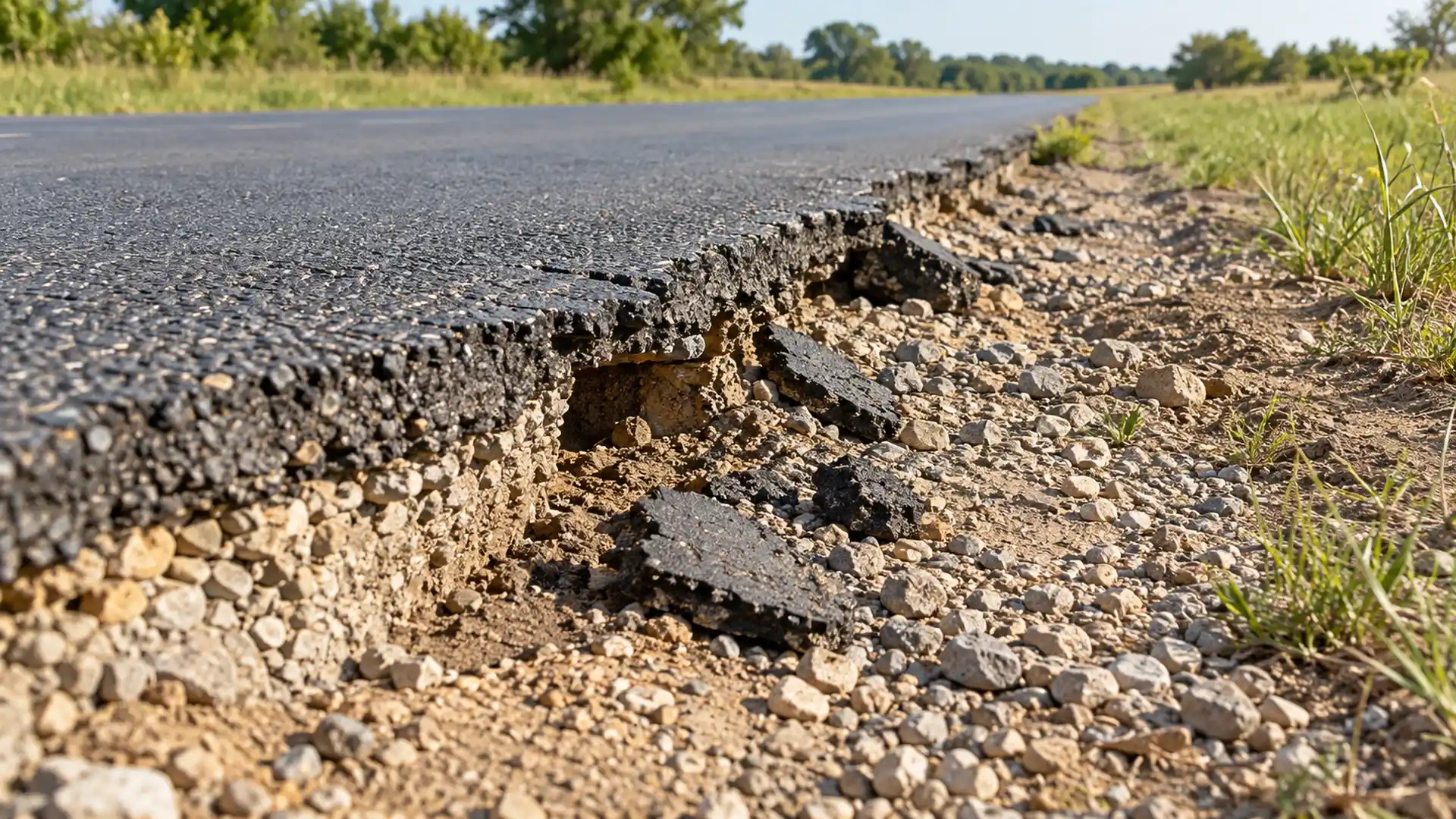
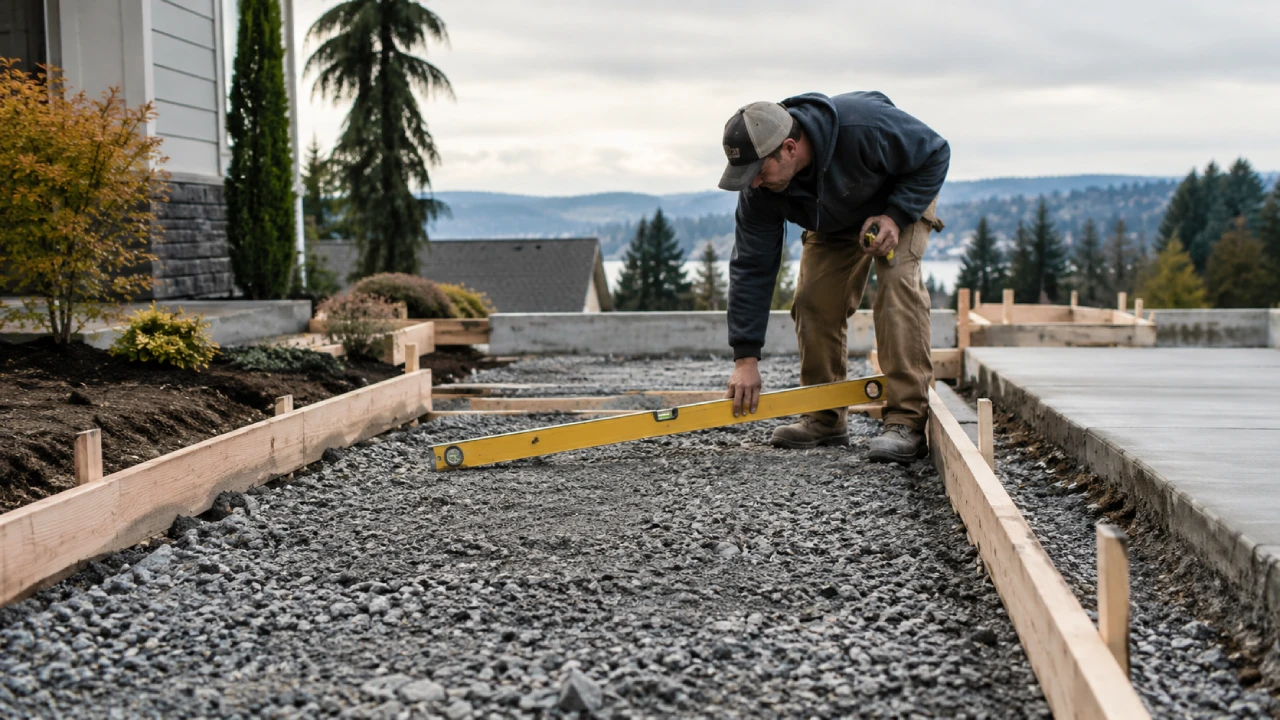
Simply adding loose soil beside the pavement does not establish a suitable foundation for vehicle loads. Shoulder restoration should address material selection, compaction, elevation, and runoff. Where adjacent ground needs reshaping, land grading services may form part of the repair scope.
Water can reach the edge from several directions
Water may enter through an open crack, collect beside a low curb line, or arrive from an adjoining slope. Saturation can reduce the support provided by susceptible soils and unbound pavement layers. Where freezing occurs, frost-related movement can add to the damage. 1 3
Look beyond the puddle itself. Ask where the water comes from, where it should leave, and what prevents that movement. A blocked outlet and an incorrect surface slope require different responses.
For example, imagine a landscaped strip draining toward a parking lot corner. A new asphalt patch may restore the surface level, but the repair plan still needs to explain how runoff will leave that corner. Otherwise, the same exposure remains.
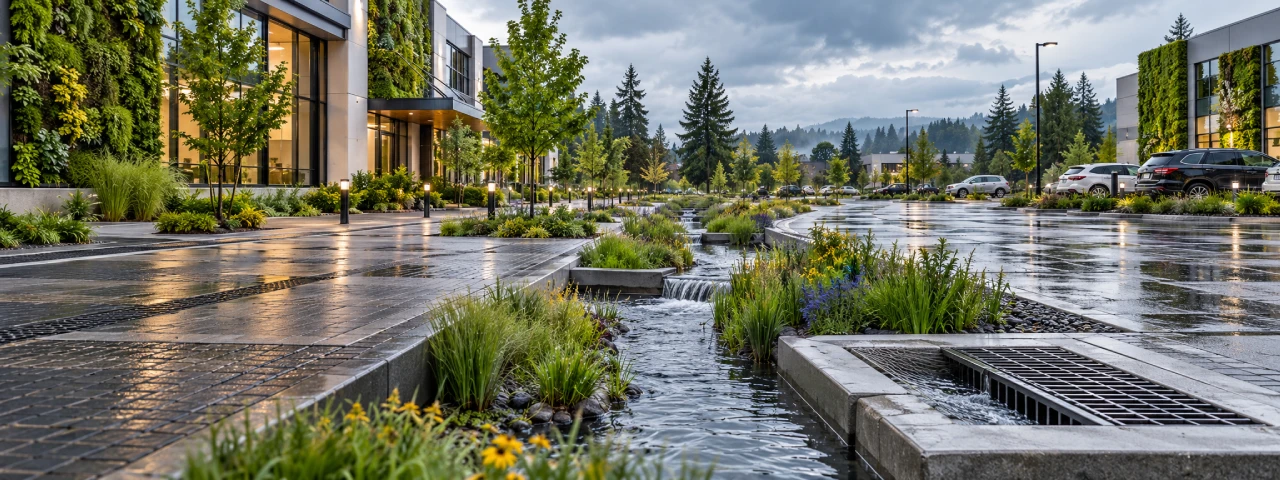
An assessment of pavement drainage solutions can examine grades, collection points, and downstream drainage together. Installing a drain without confirming a suitable outlet leaves an essential part of the problem unresolved.
Repeated wheel loads can turn a weak edge into a failure
Vehicles repeatedly traveling close to the pavement boundary can contribute to edge cracking, particularly where support is poor. Narrow access routes and turning areas deserve attention because the wheel path may follow the same vulnerable strip. 1
During a site review, watch where vehicles actually travel. Delivery trucks may cut across a corner that passenger cars avoid. Drivers may use the outer edge to pass a parked vehicle or swing wide around an obstruction.
Treat these observations as questions for the repair plan. Does the pavement need a stronger or wider section? Can an obstruction be moved? Would a revised circulation layout keep vehicles on an adequately supported surface?
For example, if trucks routinely cross a broken corner, ask the contractor to evaluate that turning path before defining the patch boundary. Replacing only the missing fragments may leave the operating conditions unchanged.
Curb line deterioration needs its own inspection
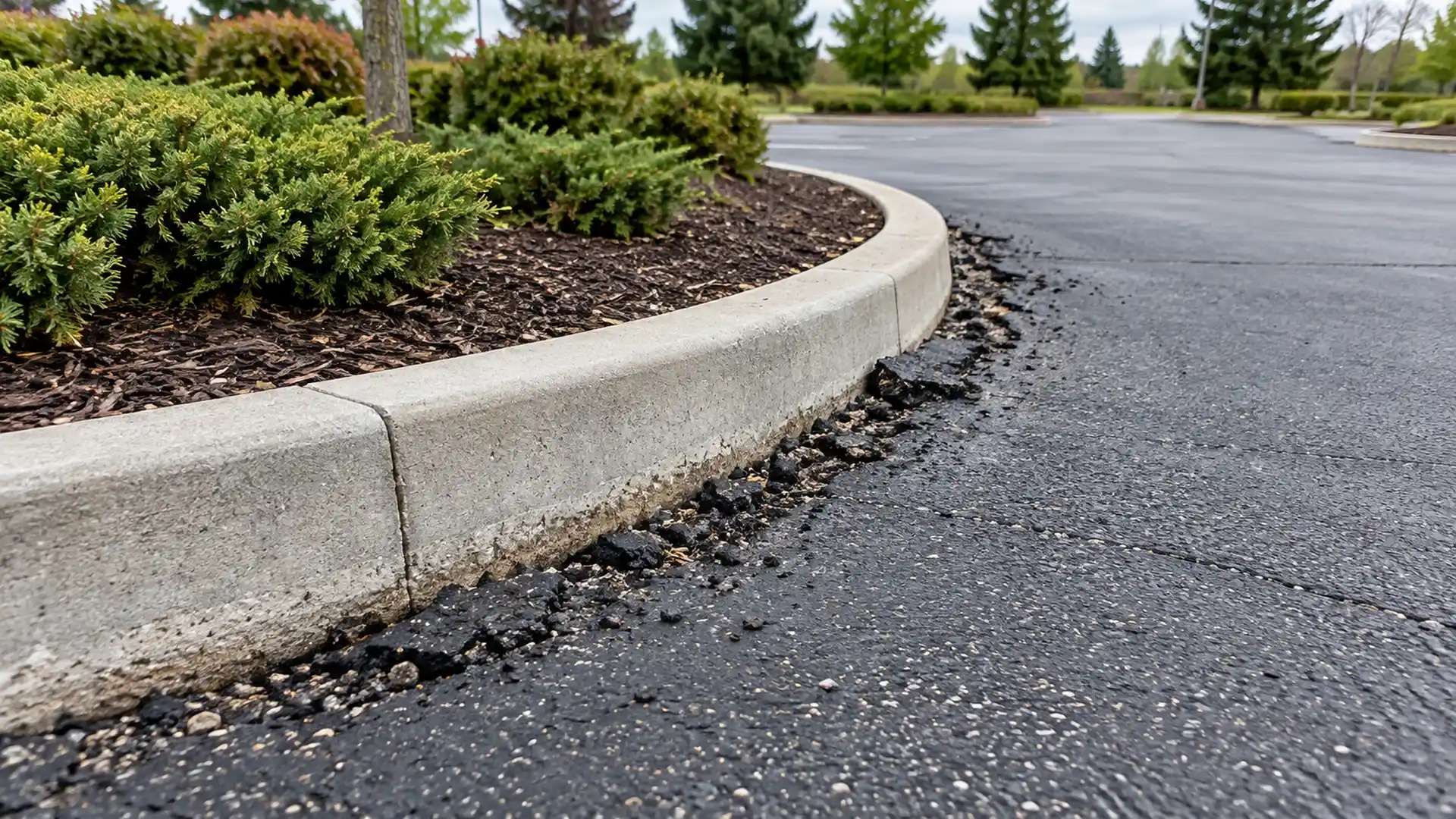
A concrete curb does not reveal the condition of the asphalt or base beside it. Inspect both sides of the transition: the pavement may have settled while the curb stayed in place, the curb may have moved, or the opening may be concentrated at their interface.
An open joint beside a stable curb
The inspection should establish whether the opening is limited to the joint and whether the adjacent asphalt remains sound. Joint construction and compaction influence resistance to water entry, but an opening alone does not prove that poor compaction caused it. Construction history and the surrounding distress pattern matter. 4
A displaced curb or depressed gutter line
If the curb has shifted or water collects beside it, review elevations and foundation conditions before selecting a treatment. Concrete curb installation or replacement may be appropriate when the curb itself needs reconstruction.
Where the work also involves adjoining walkways, ramps, or concrete pads, coordinate the asphalt repair with the relevant structural concrete services. The finished transitions should be planned together so one repaired surface does not create a drainage or access problem beside another.
Construction weaknesses can follow an old edge
A straight crack may trace a previous widening strip, trench, or paving joint. Ask when that area was built and whether the support beneath the added pavement differs from the original section. A visible line can guide the investigation without establishing the cause by itself.
Compaction deserves particular attention at joints. Research on asphalt longitudinal joints identifies density and resistance to water infiltration as important performance factors. A narrow repair needs a placement and compaction method suited to the available working space. 4
Preparation also matters where paving meets vegetation or soil. FHWA guidance cautions against placing asphalt over vegetation because adequate compaction cannot be achieved. Repair boundaries should provide room to prepare a suitable edge and foundation. 5
Read the site before choosing a repair
Useful observations help a contractor investigate the damage more efficiently. Photograph the same area in dry conditions and after rain, when it is safe to do so. Include a wider view showing the curb, shoulder, nearby drain, and vehicle route.
Record the following:
- Where the damage starts and ends, including changes near corners or drains.
- Whether asphalt is cracked, loose, missing, or visibly lower than the adjoining surface.
- Where water enters, collects, and leaves the area.
- Which vehicles use the edge and where they turn.
- Whether previous patches, utility work, or landscaping changes coincide with the damage.
A visual review cannot confirm every buried condition. Depending on the findings, the evaluation may need cores, test openings, or other investigation to establish pavement thickness and the condition of underlying layers. Ask what evidence supports the proposed repair depth. 3
If there is a broken edge or drop-off in an active travel path, arrange temporary access controls while the condition is assessed. Avoid testing a weakened edge by driving over it.
Match the repair to the depth of damage
Repair selection should follow the investigation. The table below is a discussion guide for comparing proposed approaches; several conditions may exist in the same location.
| Observed condition | Approach to discuss | What needs confirmation |
|---|---|---|
| An isolated crack with sound surrounding asphalt | Suitable crack sealing or filling | Whether the crack moves and whether the pavement remains supported |
| A broken or depressed strip extending through the asphalt | Removal and replacement of the affected pavement, with base work where needed | The depth and extent of unsound material |
| Erosion or loss of support beside the edge | Shoulder restoration and drainage correction alongside necessary pavement repair | Suitable material, compaction, and runoff path |
| Damage involving a curb, gutter, or adjoining concrete | Coordinated asphalt and concrete work | Relative elevations, joint condition, and foundation stability |
When crack treatment is appropriate
Crack filling and sealing can help limit water entry through suitable cracks. Treatment selection depends on the crack condition and movement, with preparation and application matched to the chosen material. Loose, extensively broken pavement needs evaluation for repair before a crack treatment is selected. 6
When the damaged strip needs rebuilding
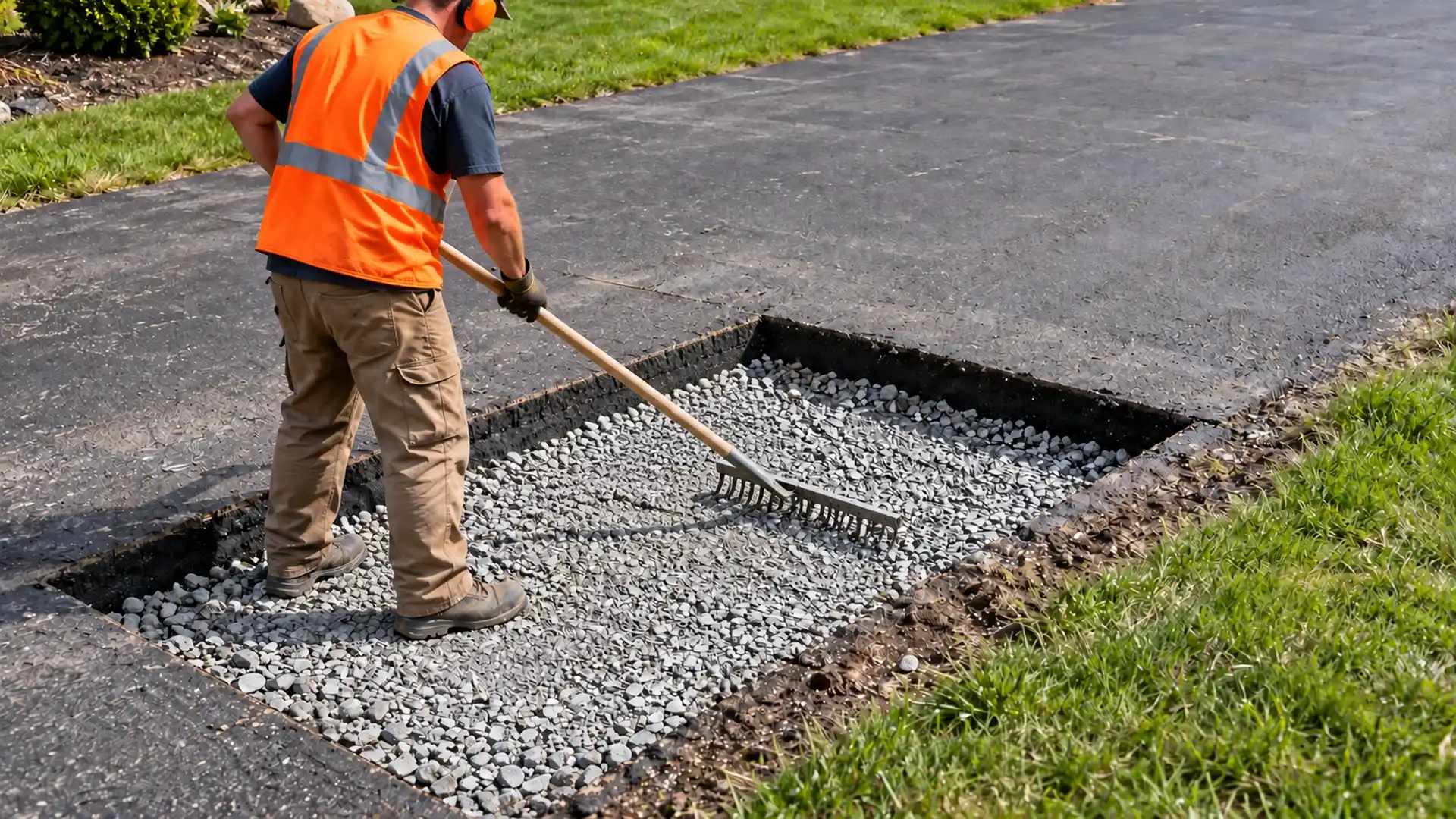
A deeper repair removes unsound pavement and addresses deficient support beneath it. The scope should identify how the contractor will prepare the foundation, bond the repair to existing asphalt where required, place and compact the mix, and finish the joint. FHWA’s asphalt patching checklist addresses these construction controls. 7
“Full-depth asphalt repair” should be clarified in the estimate. Confirm whether it includes only the asphalt layers or also replacement of failed base or subgrade material if found.
Why sealcoating and overlays have limits
Asphalt sealcoating is a surface maintenance treatment. It may be appropriate for suitable weathered surfaces, but it does not replace missing pavement or rebuild a failed foundation. Select it after the structural repair needs have been addressed. 8 9
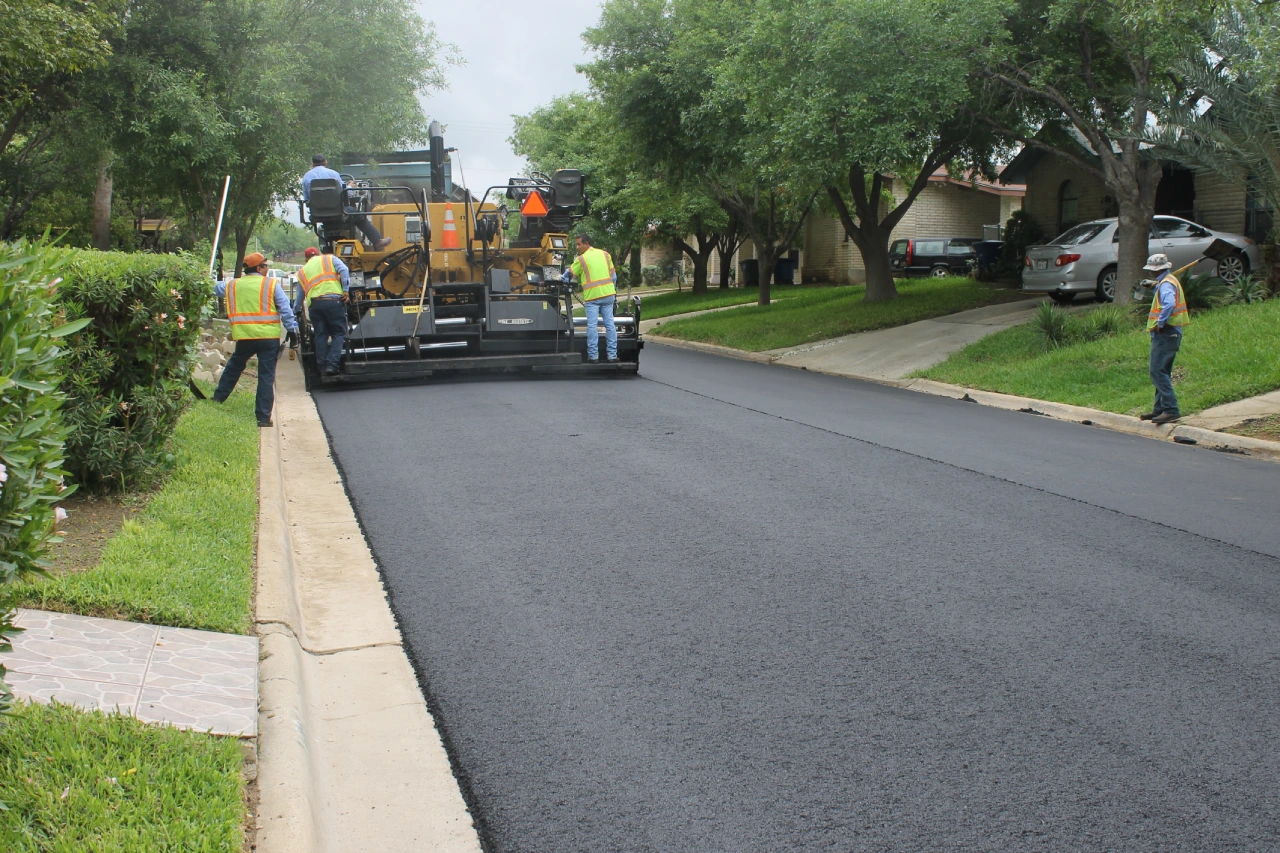
An overlay adds asphalt above the existing surface. Before considering asphalt overlay services, confirm that failed areas will be repaired and that the remaining pavement is a suitable candidate. FHWA’s thin overlay checklist calls for assessing the existing pavement and completing necessary repairs before placement. 10
Along a curb, ask how the proposed surface elevation will relate to the gutter and drainage inlets. Milling or other preparation may be needed to maintain the intended transition. An overlay proposal should explain how it will handle those details. 10
Reduce the conditions that make edge damage return
After the repair, use a simple inspection routine tied to the site’s problem areas. Check previously wet corners after rainfall, observe vehicle movements during deliveries, and photograph any new separation at repaired joints. Comparing the same locations over time makes changes easier to identify.
Keep drainage paths clear of accumulated debris and report recurring ponding. If vehicles continue crossing the boundary, revisit the layout or pavement design with the contractor. Ask before adding soil, edging, or landscaping that could alter the planned runoff route.
Include these perimeter checks in the property’s parking lot maintenance plan. A record of where damage recurs helps distinguish an isolated defect from a condition that still needs correction.
What an edge repair estimate should explain
Price depends on the actual scope, including excavation, material replacement, drainage or concrete work, equipment access, and how traffic must be managed. A photograph alone usually leaves some of those items unresolved.
Before approving the work, ask:
- What evidence supports the proposed cause and repair method?
- Where will the repair end, and how was its depth determined?
- How will unexpected soft or wet material be handled and priced?
- Does the scope include shoulder support, curb work, or drainage correction?
- How will deliveries, parking, and pedestrian access be maintained?
- What conditions must be met before cars and heavier vehicles can return?
Compare proposals against the same physical scope. A surface patch and a repair that includes excavation and foundation replacement represent different amounts of work. Ask the contractor to explain any excluded items and the conditions attached to a warranty.
Request an edge repair evaluation
If pavement is breaking down along a shoulder or curb, document the affected area and ask for an evaluation that considers nearby drainage, support conditions, and vehicle use.
Adams Asphalt & Construction provides asphalt repair, drainage, and concrete services for properties in Kent and the Greater Puget Sound region. Share photos of the damage, notes about standing water, and details of the vehicles using the area to help define the next step.