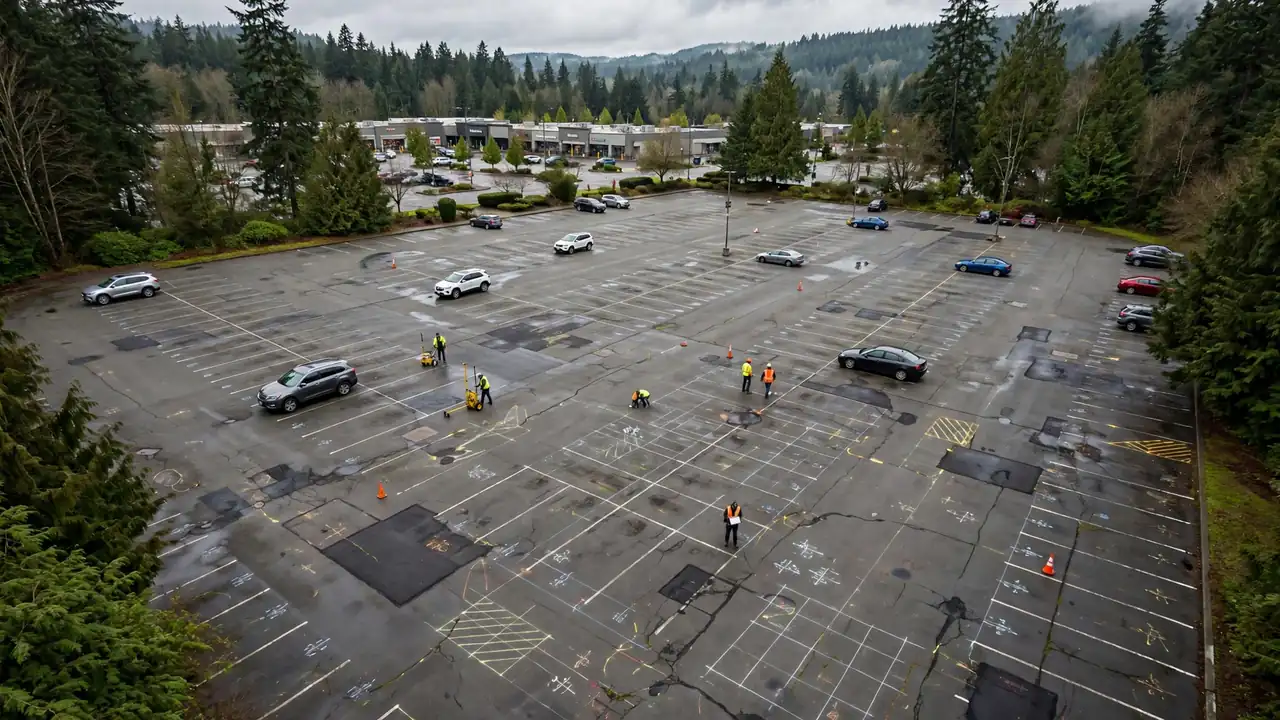
Asphalt pavement failure diagnosis starts with the pattern of damage, its location, and how it changes over time. A cracked loading lane, a crumbling parking space, and a depression beside a drain may need different repairs, even when all three appear to be ordinary pavement wear.
The useful question is what caused the damage and whether that cause is still active. Covering the surface without answering it can leave the same problem waiting beneath the repair.
Visible symptoms provide clues. Confirming the cause may also require maintenance records, drainage checks, measurements, and investigation below the pavement.
What Asphalt Damage Patterns Can Tell You
The shape and distribution of asphalt damage can help distinguish traffic-related stress, material deterioration, movement, and drainage problems. Damage concentrated in wheel paths raises different questions from cracks across lightly used parking spaces. However, no pattern alone confirms which pavement layer has failed or establishes the repair depth.

Start by separating three observations: what the damage looks like, where it appears, and what happens around it. A photograph of a crack is useful. A photograph showing that crack beside a sunken drain, with a record of repeated ponding, gives an assessor more to investigate.
Pavement distress identification names the visible condition. Diagnosis connects that condition to evidence about its cause. Keeping those steps separate helps prevent a repair recommendation from becoming an assumption.
Asphalt Pavement Distress Identification at a Glance
Use this table to organize observations before an inspection. The possible causes are investigation leads, not confirmed findings or automatic treatment recommendations.
| Visible Pattern | What It May Suggest | What Needs Checking |
|---|---|---|
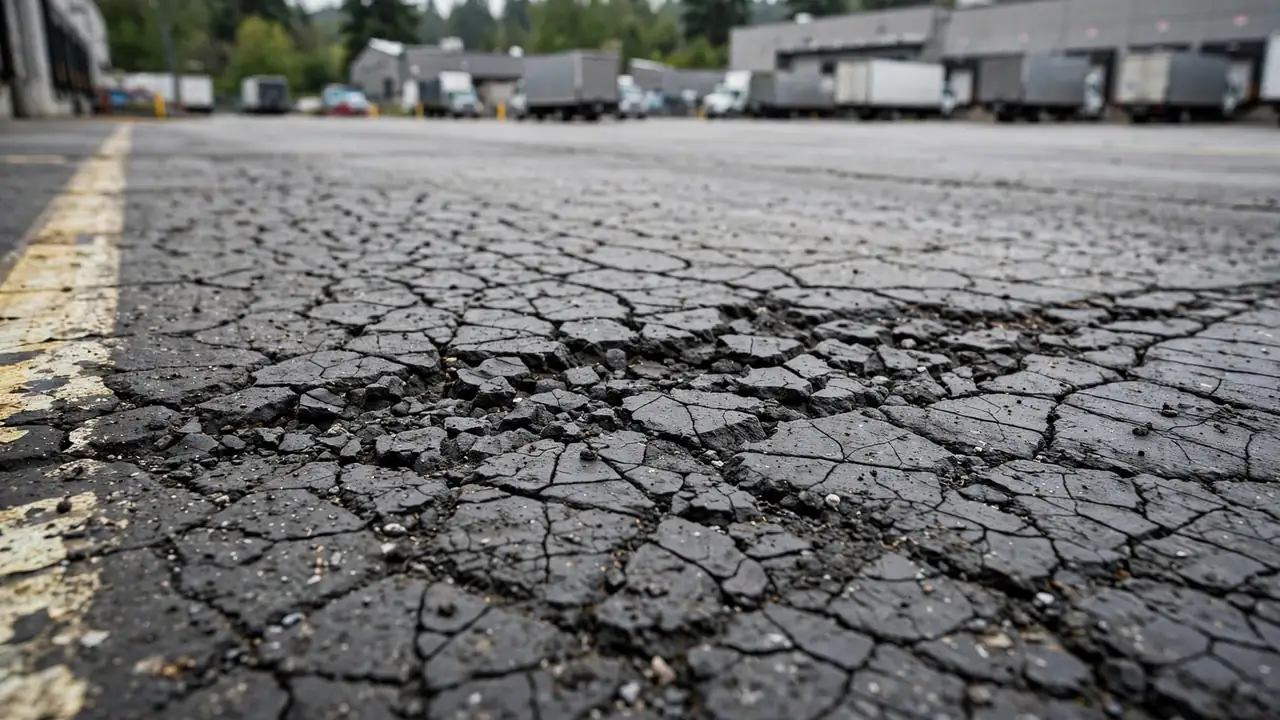
| Small interconnected cracks in wheel paths | Fatigue under repeated loading; inadequate support or pavement capacity may contribute | Loading, layer condition, and support before selecting an asphalt pavement repair |
| Large rectangular blocks across an area | Asphalt shrinkage and temperature cycling, often associated with aging | Distribution outside wheel paths, crack movement, and surrounding condition |
| Long cracks along or across the pavement | Thermal movement, a paving joint, or movement from underlying cracks | Alignment with joints and older repairs; suitability for crack filling |
| Cracks and breakup along an outside edge | Weak edge support, loading near the edge, or drainage problems | Shoulder condition, erosion, and vehicle paths |
| Loose aggregate and a rough, pitted surface | Raveling involving loss of surface material | Depth of material loss, progression, and possible moisture or construction factors |
| Shiny binder or unusually smooth exposed stones | Bleeding or aggregate polishing, which are different surface conditions | Surface texture and whether friction requires further evaluation |
| Channels following wheel paths | Rutting within the asphalt or supporting layers | Rut profile, depth, water retention, and the layer responsible |
| Waves, bulges, or crescent-shaped cracks | Shoving, instability, or slippage between layers | Braking and turning locations, material condition, and layer bonding |
| A localized dip or sunken trench | Settlement or uneven support; drainage may also be affected | Repair history, elevations, and condition below the dip |
| Potholes or repeatedly failing patches | Material breakdown with possible unresolved moisture or support problems | Surrounding damage, repair depth, and the condition beneath the patch |
| Water or fine material emerging through cracks | Water movement beneath the surface and possible loss of supporting material | The moisture source and appropriate pavement drainage solutions |
Several patterns can occur together. Record each one rather than choosing a single label for an entire parking lot or access road.
How Crack Shape and Location Narrow the Cause
Interconnected Cracks in Traffic Paths
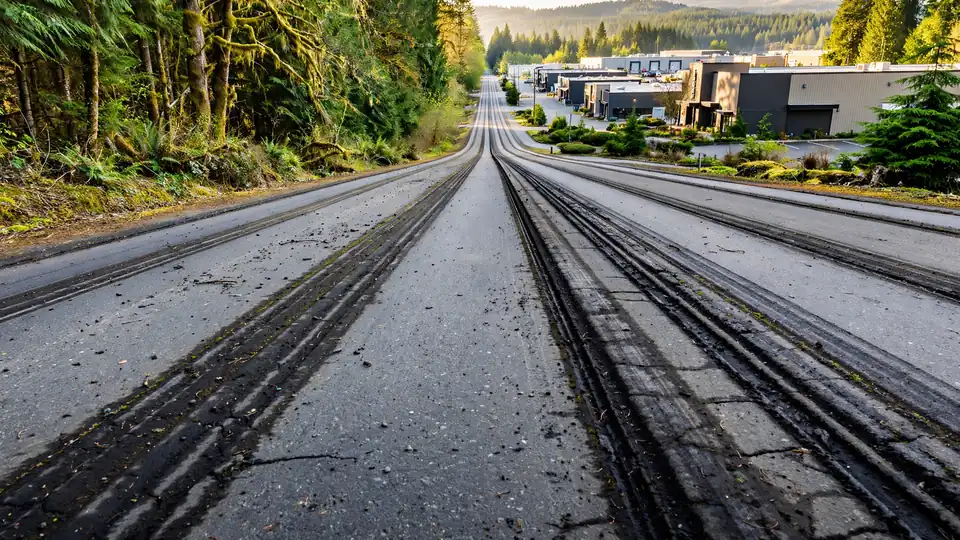
Small connected cracks where vehicles repeatedly travel are consistent with fatigue distress. Repeated loading, pavement thickness, material condition, and support can all affect its development. The pattern alone does not prove that the base has failed.
Document whether the affected area follows delivery routes, turning lanes, or ordinary car traffic. The distinction helps frame the next question: is the existing pavement suitable for the loads it now carries? The guide to industrial roadway paving requirements provides useful context when a property serves heavier vehicles.
Larger Blocks Across Lightly Used Areas
Block cracking creates larger pieces and can appear outside regular wheel paths. Asphalt shrinkage and temperature changes are common considerations. It should not automatically receive the same diagnosis as a tightly interconnected fatigue pattern.
For example, imagine a lightly used row of parking spaces with broad rectangular cracks, while the delivery lane has smaller broken pieces and depressions. Calling both areas “cracked asphalt” leaves out information needed to compare repair options.
Straight Cracks Along Seams or Previous Work
Longitudinal cracks run along the pavement; transverse cracks cross it. Those terms describe orientation, not a confirmed cause. A crack following a paving seam deserves a different investigation from one aligned with an old utility trench.
Reflection cracking occurs when movement at an underlying crack or joint appears through the surface above. Earlier photographs, paving records, and repair boundaries can help identify that relationship. A surface inspection alone may leave it uncertain.
What Loose Stones and Smooth Patches Reveal
Raveling and Loss of Surface Material
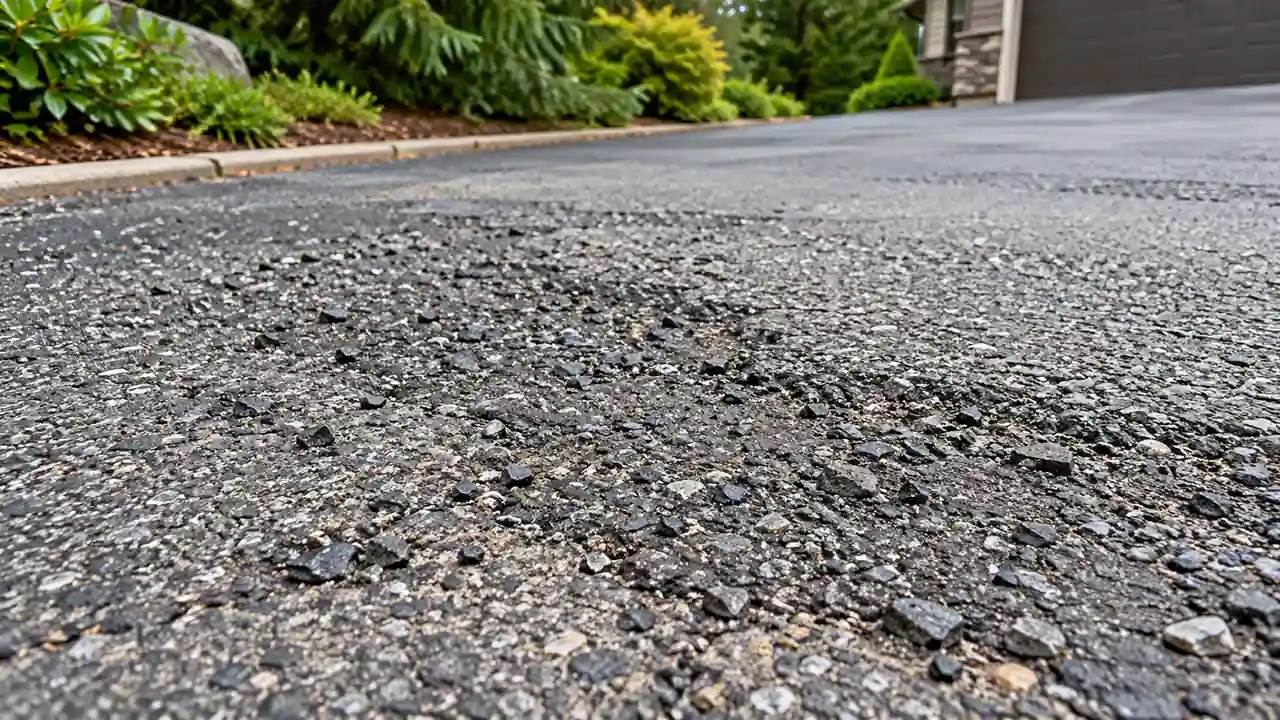
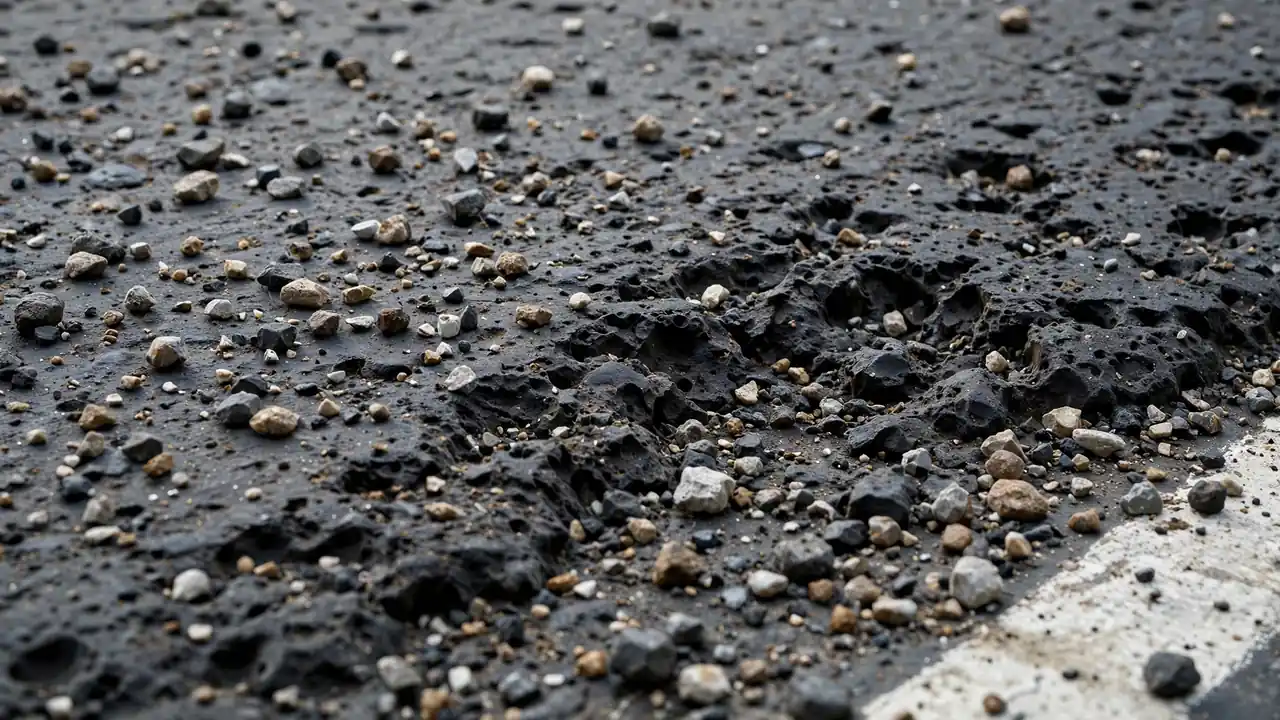
Raveling leaves a rough surface as aggregate particles become detached. Record whether only fine material is disappearing or larger stones are coming loose, and whether the affected area is expanding.
Loose stones should prompt a closer look at the remaining pavement before a coating is specified. Surface appearance does not establish how deeply the deterioration extends.
Moisture-related stripping is a separate concern involving loss of the bond between asphalt binder and aggregate. Raveling and stripping should not be treated as interchangeable labels. Material examination or testing may be needed to establish whether bond loss is involved.
Bleeding and Polished Aggregate
Bleeding brings excess binder to the surface. Polished aggregate involves exposed stone surfaces becoming smooth. Both warrant attention to texture and possible friction concerns, but they describe different conditions.
A dark or shiny patch should therefore be described carefully before someone recommends another surface treatment. Photographs can document appearance; they cannot measure skid resistance.
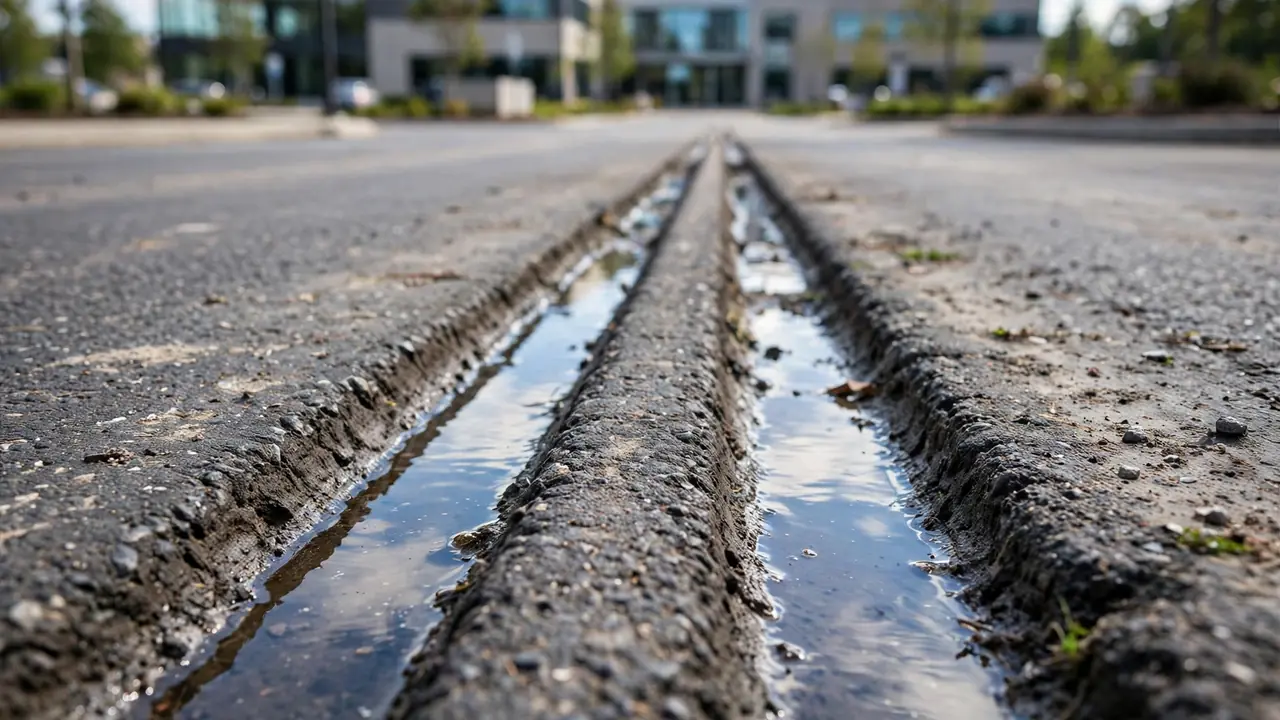
When Ruts, Waves, and Depressions Need Closer Attention
Ruts Following Vehicle Wheels
Rutting creates depressions along wheel paths. Deformation can occur in the asphalt, the supporting layers, or both, so filling the visible channel may leave its cause unresolved.
Measure and map the affected route. Note whether water collects there and whether cracking accompanies the deformation. Those observations help an assessor decide where closer investigation would be useful.
Waves and Crescent-Shaped Cracks
Bulges or waves near stopping and turning areas can be consistent with shoving. Crescent-shaped slippage cracks can suggest movement associated with inadequate bonding or a weak surface layer.
Record the vehicle movements at those locations. Ask whether the proposed investigation will examine the material and layer interface, rather than relying only on the outline of the damaged area.
Localized Dips and Settled Repairs
Depressions need to be considered in relation to surrounding elevations. A dip over a former excavation raises questions about the repaired trench; one beside a drainage structure also raises questions about water collection and support.
Before approving a leveling repair, ask where water will flow afterward and what evidence supports keeping the underlying material in place.
Why Water and Edge Damage Belong in the Same Assessment
A pavement review should trace how water enters, moves across, and leaves the affected area. Ponding can reveal an elevation problem, a blocked inlet, a damaged drainage component, or a combination. The puddle alone does not identify which one applies.
If damage surrounds an inlet, catch basin installation and repair may be relevant after its condition is checked. Where surrounding slopes direct runoff toward the pavement, an assessment of site grading may also be needed.
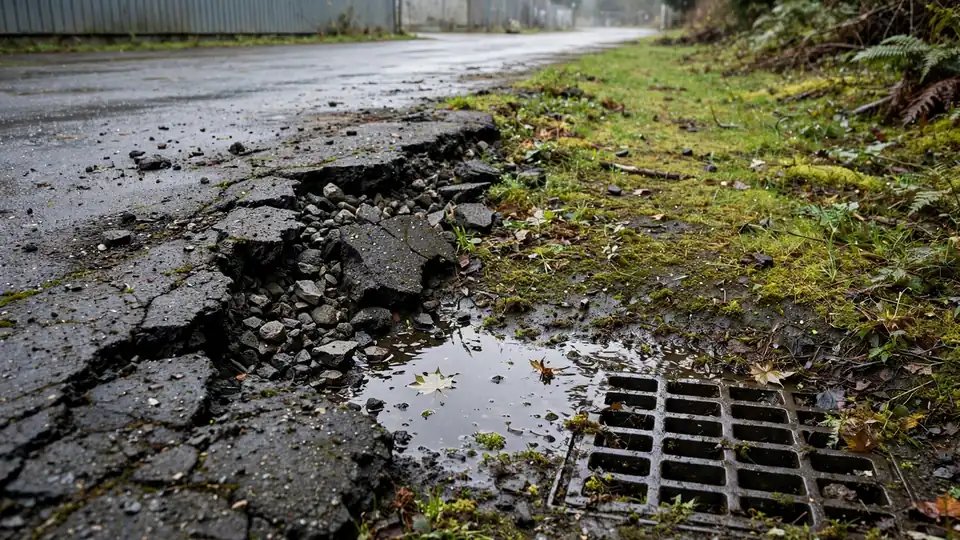
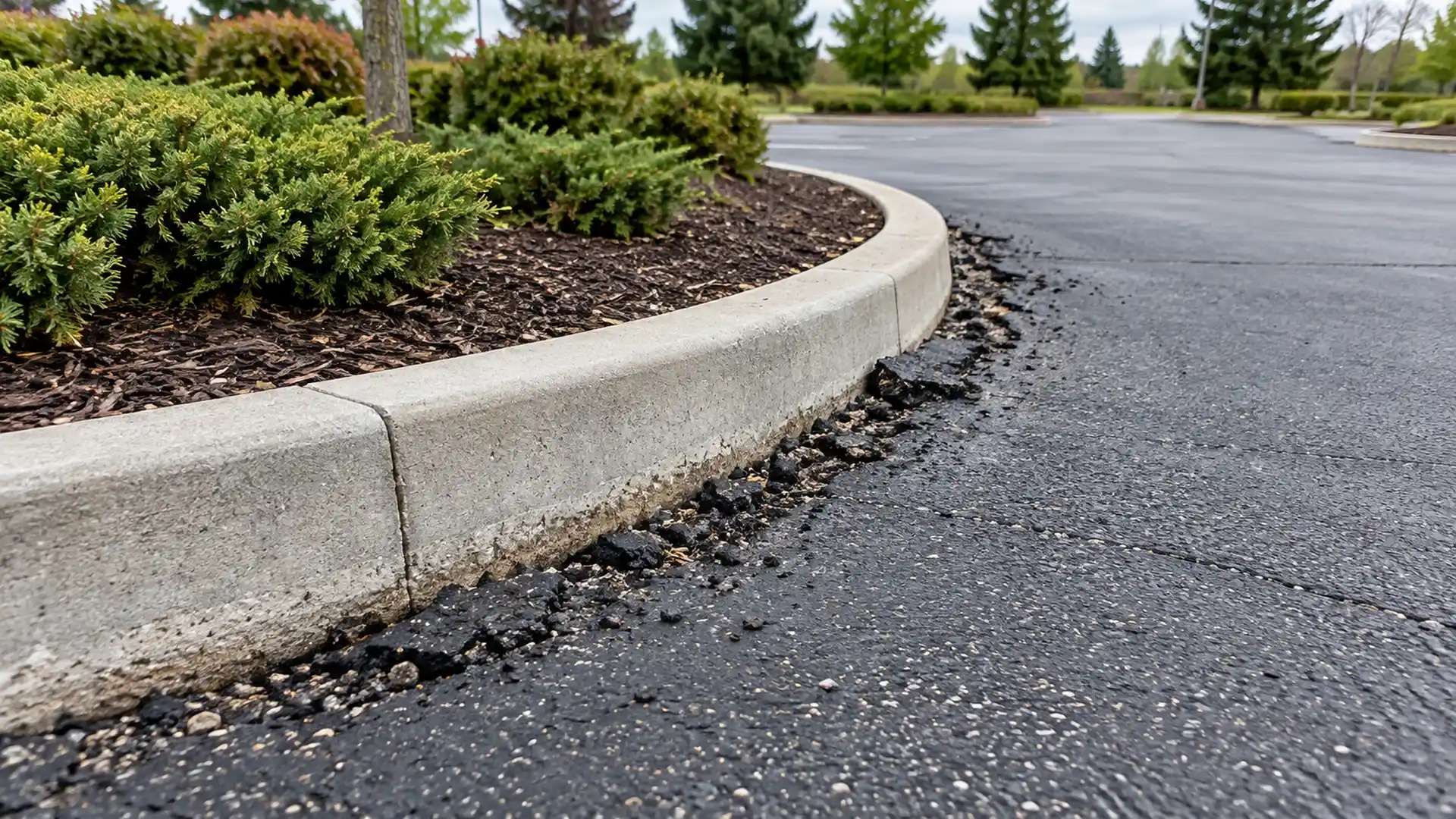
At an outside edge, record missing shoulder material, erosion, nearby standing water, and tire tracks. These observations help connect the damage to the way the site functions.
For example, imagine a delivery route with a crumbling edge beside a low, wet shoulder. A useful inspection would consider both vehicle position and drainage. Specifying only a new strip of asphalt would leave those questions unanswered.
What Recurring Potholes and Failed Patches Tell You
A recurring failure is a reason to review the previous repair, not proof of a particular contractor error. Ask what was removed, what remained underneath, how the area was prepared, and whether drainage was addressed.
Separate a temporary repair intended to keep an area usable from a repair designed to address the underlying problem. That distinction should be recorded in the scope so a short-term measure is not mistaken for permanent rehabilitation.
Compare dated photographs of the same location. Is the patch itself breaking down? Is damage forming around its boundary? Has the entire area settled? These are different observations and should be included in the next inspection request.
How a Professional Asphalt Condition Assessment Works
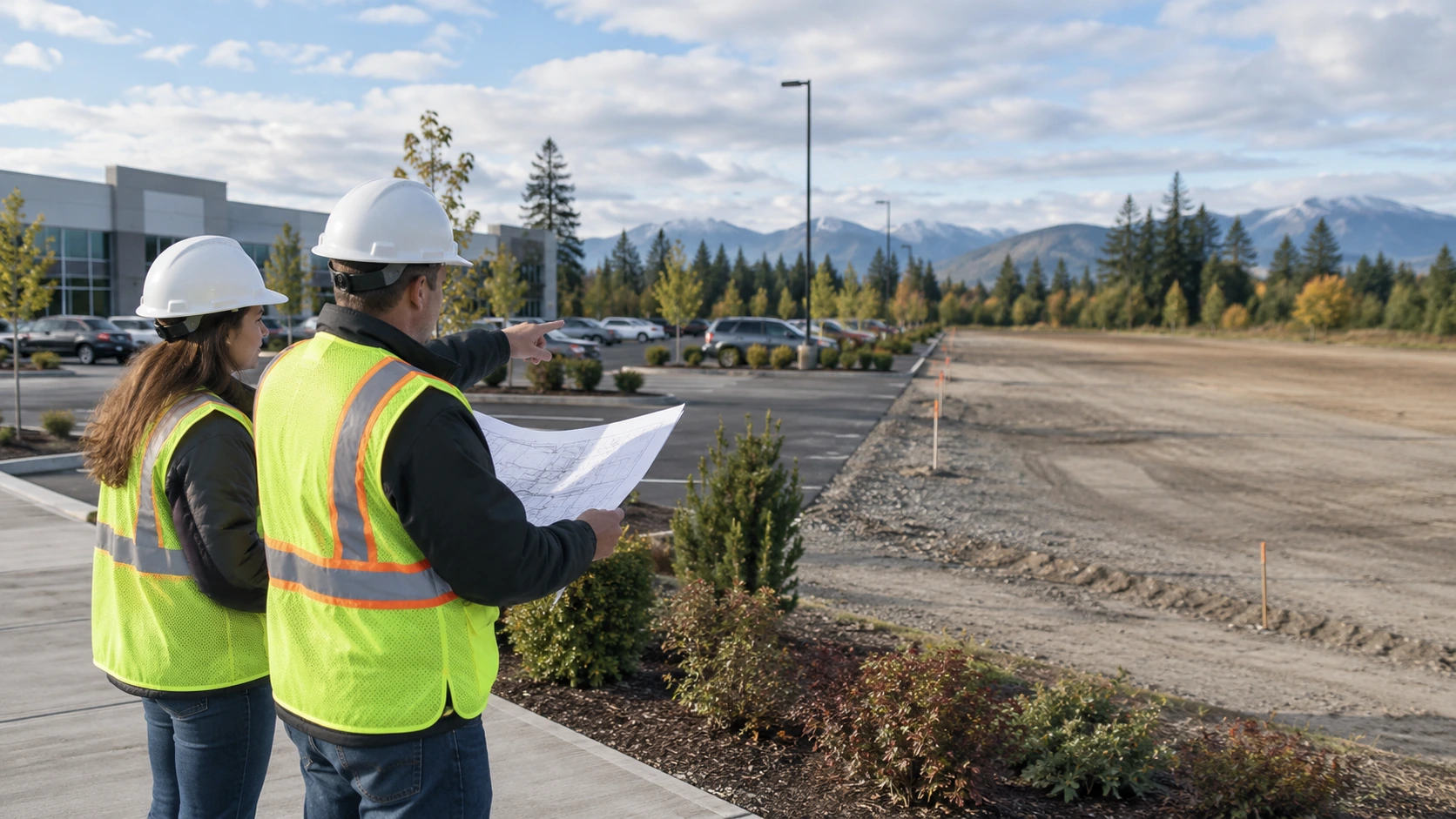
An asphalt condition assessment should produce a documented basis for choosing work. The level of investigation depends on the damage, uncertainty, and consequences of selecting the wrong repair.
- Review the history. Gather paving dates if known, previous scopes, drainage records, utility work, and changes in vehicle use.
- Map the distress. Record each pattern, its extent, and its condition. Keep photographs tied to identifiable locations.
- Check the site context. Compare damage with traffic routes, edges, drains, elevations, and earlier repairs.
- Resolve questions below the surface. Where necessary, a qualified specialist may recommend cores, test pits, material testing, or structural evaluation.
Cores can help establish layer thickness and condition. Deflection testing measures pavement response to loading and can support structural evaluation. These methods answer different questions, and not every property needs every test.
Ask for a findings summary that separates observations, likely causes, unresolved questions, and proposed work. An assessment should also identify when engineering input is needed and whether that work is included in the quoted scope.
Matching Repair Depth to the Confirmed Problem
Maintenance for Suitable Existing Pavement
Crack treatment can reduce water entry through suitable cracks. It does not restore lost structural capacity. Likewise, asphalt sealcoating is a maintenance option for appropriate pavement, not a method for rebuilding a failed supporting layer.
Ask the contractor to explain what the maintenance treatment is expected to accomplish and which damaged areas need separate work.
Localized Removal and Repair
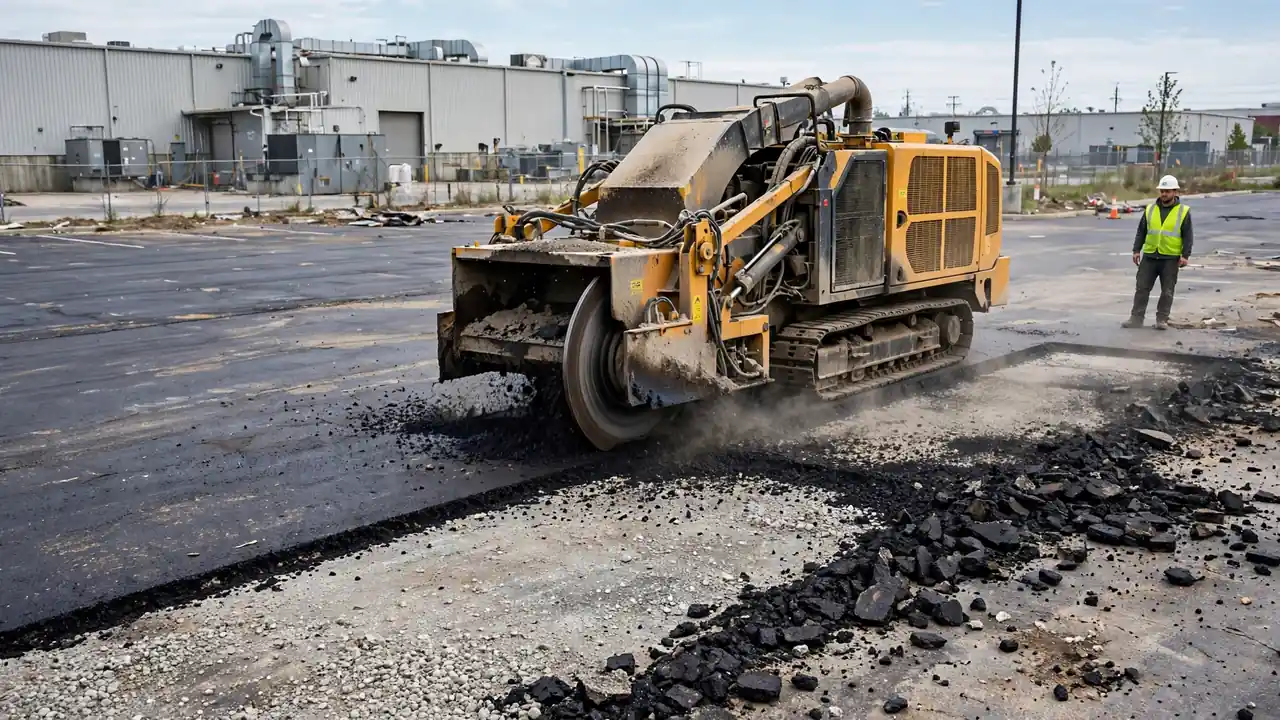
Where investigation identifies a limited failed area, localized removal may be appropriate. The scope should specify the repair boundaries, removal depth, treatment of unsuitable underlying material, and how the new work will connect to sound pavement.
An estimate based only on the visible opening can leave uncertainty about the actual work. Ask how the contractor will handle additional deterioration discovered after removal.
Overlays and Broader Rehabilitation
Asphalt overlay services may be appropriate where the retained pavement and support are suitable for the proposed design. A structural overlay can add capacity, but the design must account for existing conditions, loading, and required repairs.
Widespread deterioration may call for more extensive rehabilitation or reconstruction. Ask what evidence supports retaining each layer and how the proposed work will address unresolved movement or moisture.
The decision should follow the findings. A newer-looking surface is not evidence that a deeper problem has been corrected.
Which Pavement Problems Should Be Addressed First?
Prioritize by the effect on people, access, and continued deterioration, as well as by appearance.
- Arrange prompt review of hazards: loose pavement, abrupt level changes, unstable drain surrounds, or damage affecting pedestrian and vehicle routes. Restrict access where necessary until the condition is assessed.
- Investigate recurring or changing damage: expanding cracks, repeated patch failure, settlement, and water emerging through the pavement deserve a documented next step.
- Plan maintenance for suitable areas: sound sections may need preservation while damaged sections undergo separate repairs.
Ask for a marked plan showing the proposed work in each area. That makes a phased budget easier to understand and avoids treating the entire property as though it has one condition. The guide to parking lot maintenance planning provides broader context for ongoing care.
Questions to Ask Before Approving Pavement Repairs
Can Photographs Confirm the Cause of Asphalt Failure?
Photographs help document the pattern and its surroundings. They cannot confirm the condition of every layer below it. Ask which conclusions can be supported visually and which need measurements, records, or testing.
Does Alligator Cracking Always Mean Full Replacement?
No. The extent of the damage and the condition of the pavement system matter. A localized problem and a widespread failure may justify different scopes. Ask what supports the recommended repair boundaries and depth.
Will an Overlay Prevent Existing Cracks From Returning?
It cannot be promised simply because a new layer is being added. Ask how existing cracks, movement, and failed areas will be treated, and what limitations remain after the proposed work.
What Should a Repair Estimate Explain?
A useful estimate identifies the work area, preparation, removal and replacement scope, drainage work, access arrangements, and exclusions. It should also explain how unexpected conditions will be documented and priced. Compare those details before comparing totals.
Schedule a Pavement Condition Assessment
If cracks are spreading, patches keep failing, or water collects in damaged areas, start by documenting the conditions and discussing the next assessment step.
Adams Asphalt & Construction provides asphalt paving, repair, overlay, and drainage services in Kent and the greater Puget Sound region. Contact the team to discuss your pavement concerns, the available site review, and whether further investigation is needed before a repair scope is prepared.
Bring recent photographs, earlier repair information, and details about the vehicles using the area. These give the discussion a practical starting point.