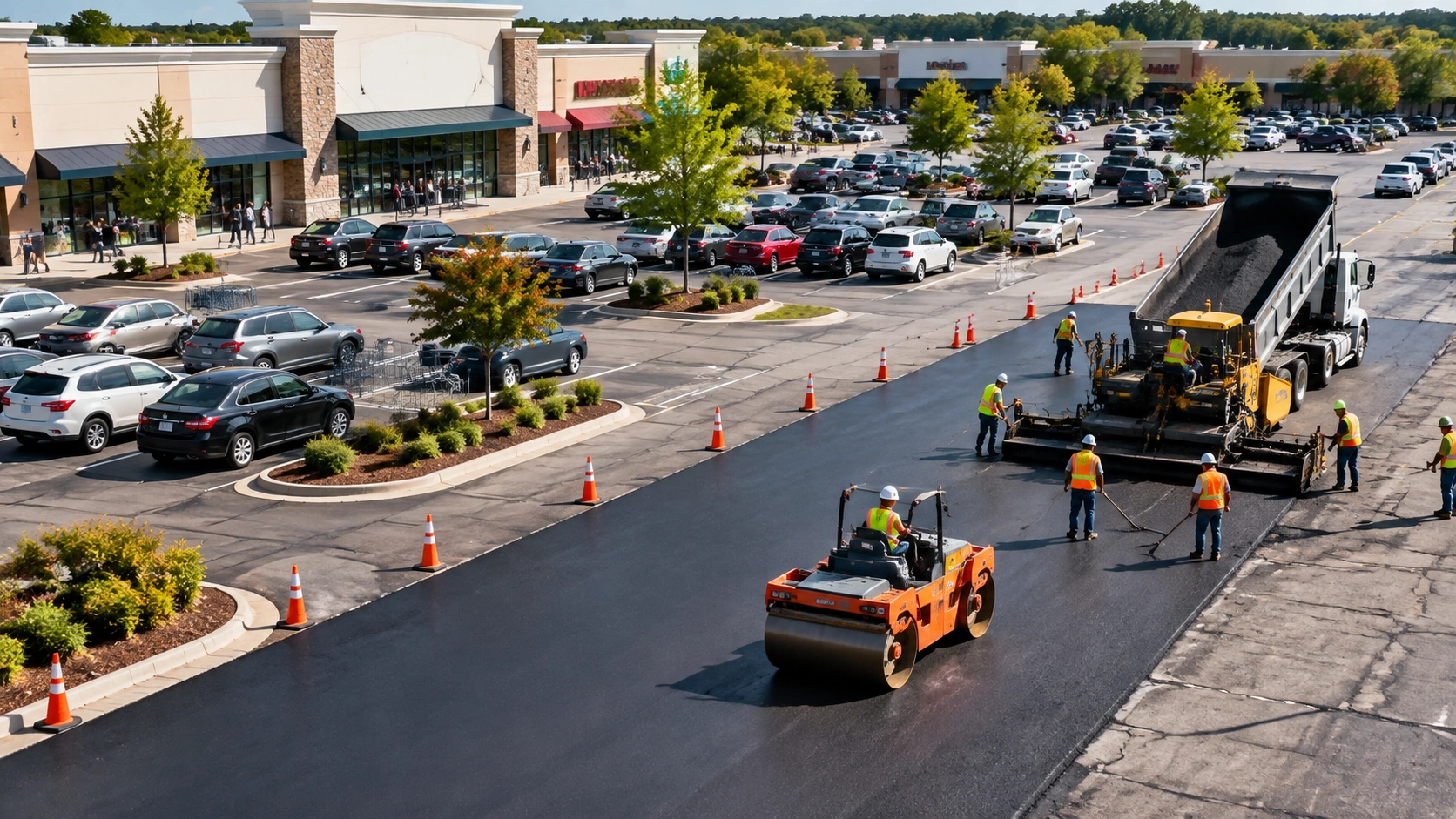
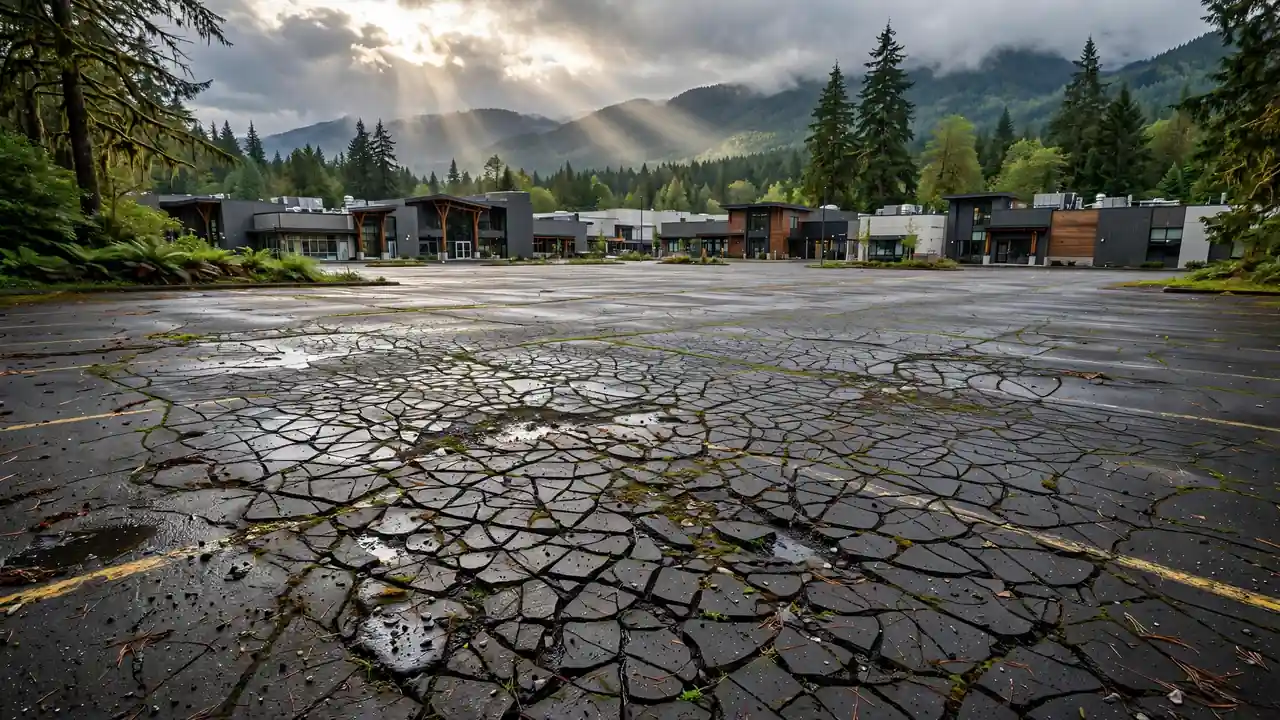
Alligator cracking in asphalt usually signals fatigue or weakness in the pavement system. The connected cracks often develop where vehicles repeatedly load the same area, breaking the surface into small, irregular pieces. Although the pattern warrants investigation, it does not automatically mean the entire driveway, parking lot, or roadway needs replacement.
The useful question is how much of the pavement has deteriorated and why. A small area may need a localized repair, while widespread damage can require broader rehabilitation. Filling the visible cracks may limit water entry, but it cannot restore structural strength that has already been lost.
What Does Alligator Cracking in Asphalt Mean?
Alligator cracking describes a network of interconnected pavement cracks that resembles the scales on an alligator’s back. It is commonly called fatigue cracking because repeated traffic loading is often involved. Early cracks may follow the direction of travel before connecting into a more recognizable pattern.
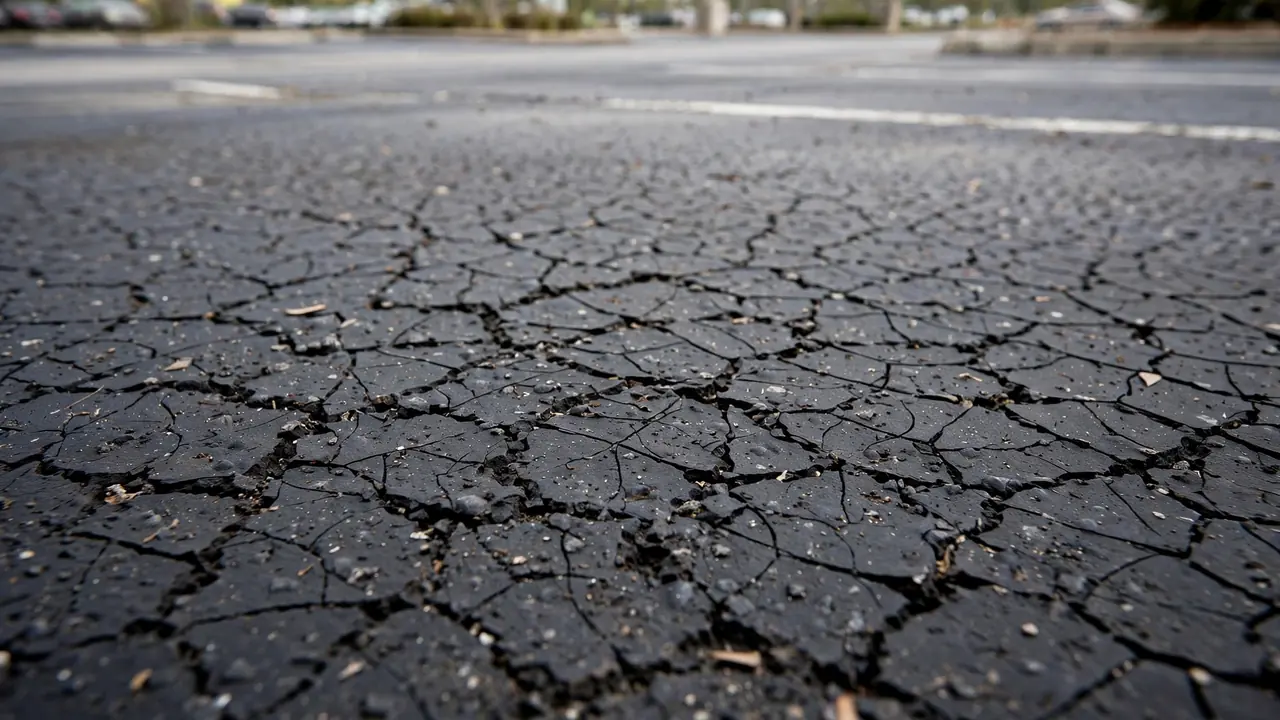
To understand its significance, picture the pavement as a layered system. The asphalt works with the material beneath it to carry vehicle loads. That support commonly includes a compacted aggregate base and the underlying soil, called the subgrade.
Weakness can develop in the asphalt, its supporting layers, or a combination of both. The visible crack network tells you where to investigate. It does not identify every damaged layer or establish the repair depth.
That is why an asphalt pavement repair assessment should consider the surrounding pavement and site conditions as well as the cracks themselves.
Why Fatigue Cracks Develop Under Traffic
Repeated loading, pavement condition, and support beneath the surface work together. A crack pattern alone rarely proves that one factor caused the problem.
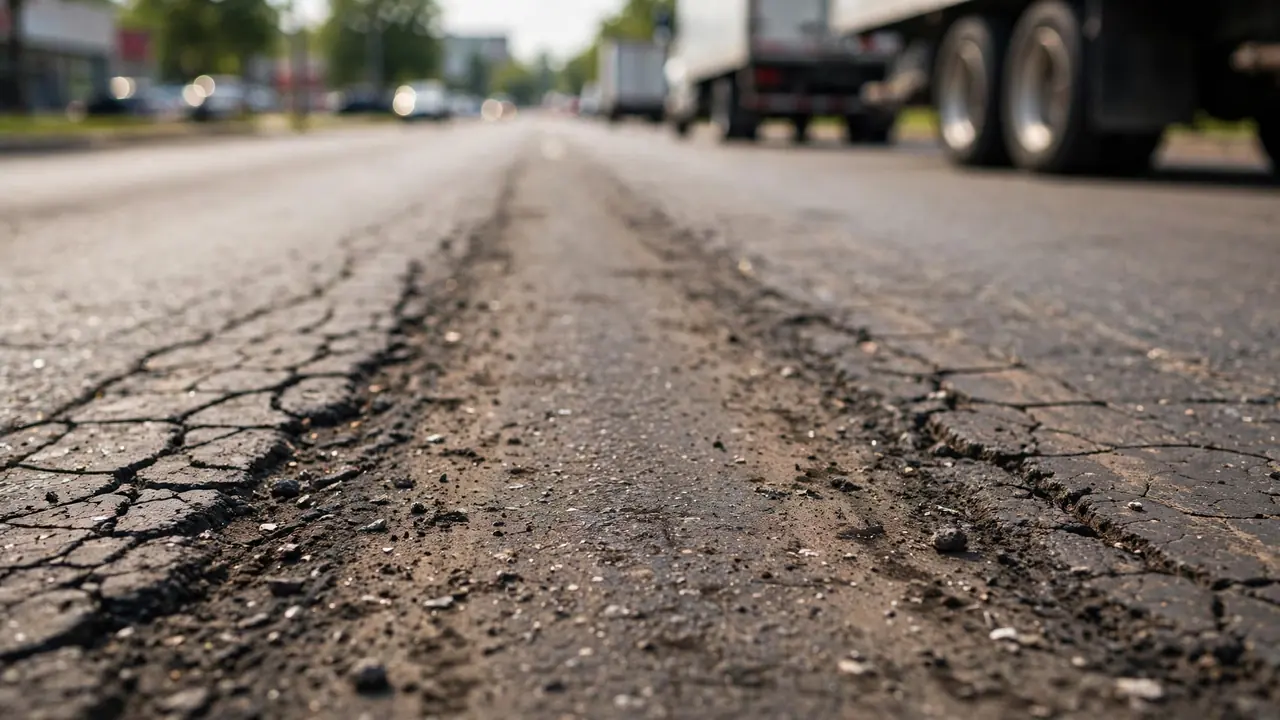
The Pavement Is Carrying Loads It Cannot Sustain
Asphalt pavement flexes under traffic. Repeated bending can gradually produce cracks, especially when the pavement structure is inadequate for the vehicles using it.
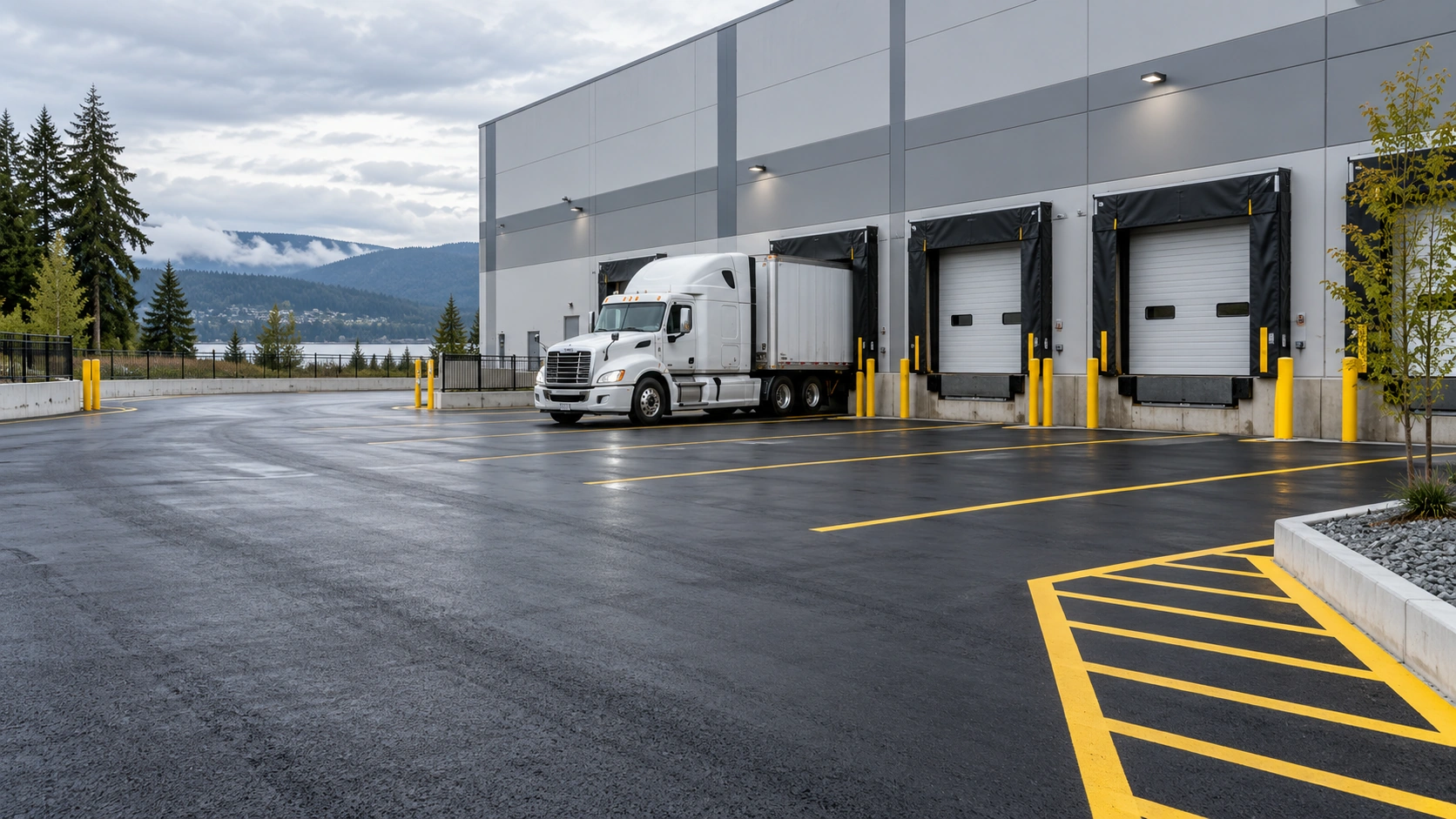
For example, imagine a property where a lane originally used mainly by passenger vehicles becomes a regular delivery route. The pavement has not changed, but the loading demand has. That change belongs in the investigation even if the surface previously appeared sound.
The relationship between vehicle use and pavement design is also discussed in how industrial roadway paving differs.
The Supporting Layers Have Become Weaker
Poorly compacted material, uneven support, or moisture-sensitive soil can allow greater pavement movement under a wheel load. Water can contribute when it enters the pavement structure and weakens susceptible supporting materials.
Standing water is a reason to investigate drainage, although it does not prove that the base has failed. Where water is contributing to deterioration, suitable pavement drainage solutions need to be considered alongside the repair.
The Asphalt Has Lost Resistance to Cracking
The asphalt itself also matters. Aging can make the binder more brittle, while material quality, compaction, and bonding between asphalt layers affect performance.
A pavement may develop fatigue distress through a combination of aging, repeated loading, and reduced support. Describing every alligator crack as a soil failure can therefore lead to an incomplete diagnosis.
How to Tell Alligator Cracking From Other Crack Patterns
Several pavement defects can look like a collection of connected lines. Their shape and location help narrow the possibilities, but similar patterns can have different causes.
| Crack Pattern | What You May Notice | What It Suggests Checking |
|---|---|---|
| Alligator or fatigue cracking | Small, irregular, connected pieces, often concentrated along vehicle paths | Repeated loading, asphalt condition, and support beneath the affected area |
| Block cracking | A network of larger, more rectangular blocks | Asphalt aging and shrinkage, along with any separate load-related damage |
| Transverse cracking | Cracks running across the direction of travel | Temperature-related movement and possible cracks or joints underneath |
| Reflection cracking | Surface cracks that follow cracks or joints in an underlying pavement layer | Previous construction and the condition of the pavement below the surface |
Wheel-path location is a useful clue, not an absolute rule. Fatigue-type crack networks can extend beyond the paths followed by tires. Equally, one straight crack in a wheel path is not enough to diagnose a developed alligator pattern.
Compare the damaged area with nearby pavement that carries less traffic. That comparison can help an evaluator decide where a closer investigation is needed.
What the Pattern Can and Cannot Tell You About Repair Depth
A photograph can show the crack network, its location, and visible breakup. It cannot reliably show how far the cracks extend or whether the material underneath is sound.
This creates two separate decisions: how deep the repair should go and how far it should extend across the property.
A localized area might require removal through the asphalt thickness while the surrounding pavement remains serviceable. A larger area might have deterioration concentrated in upper layers, with suitable support below. Those conditions call for different repair scopes even when both surfaces look heavily cracked.
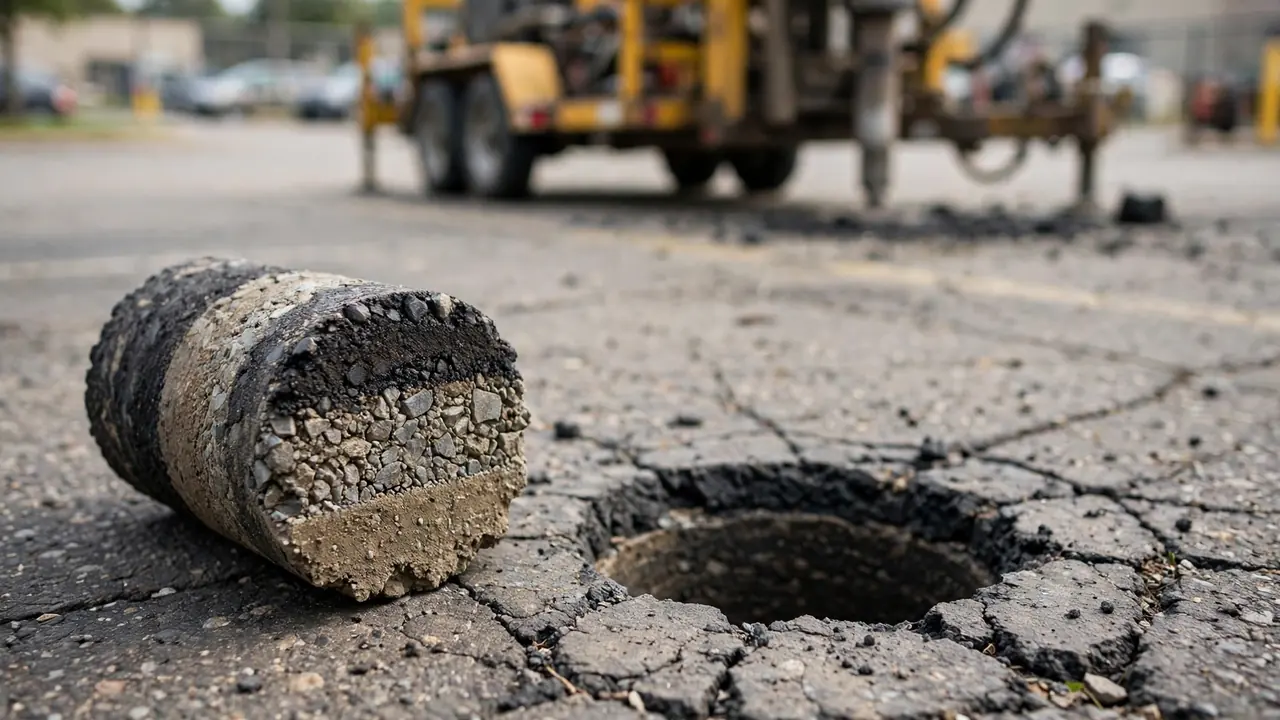
Avoid treating crack width as a direct measurement of depth. Fine cracks can still warrant structural investigation, and wide cracks do not identify which layer failed first.
Ask the evaluator to separate what is visible from what has been confirmed. If the condition of the base remains uncertain until excavation, the proposal should explain how that uncertainty will be handled.
Signs That the Pavement Needs Prompt Attention
A connected crack network becomes more concerning when it is accompanied by movement, material loss, or changes in surface level.
Look for:
- Crumbling crack edges or pieces separating from the surrounding surface.
- Depressions, settlement, or wheel-path ruts within the cracked area.
- Loose pavement fragments or developing potholes.
- Water or fine material appearing through cracks under traffic, known as pumping.
- A damaged area that is expanding or repeatedly breaking through previous patches.
These observations help set inspection priorities. Pumping, for example, can indicate that traffic is moving water and fine material within the pavement system. It deserves more investigation than simply covering the wet spot.
Loose pieces, holes, and uneven surfaces also affect how people use the property. Where an area presents a clear hazard, arrange appropriate access control and assessment. Do not deliberately drive over unstable pavement to test whether it moves.
There is no reliable countdown from the first crack to a pothole. Traffic, weather, drainage, and existing material condition all influence how deterioration progresses.
Why Crack Sealing and Sealcoating Have Limits
Crack sealing and crack filling are intended to address openings in the pavement. Appropriate asphalt crack filling can help reduce water entering suitable cracks, but it does not rebuild a damaged base or replace fractured asphalt.
That distinction matters when many cracks form a fatigue network. Treating every line may leave the pavement’s loading problem unchanged. If the pieces continue to move, the surface can keep deteriorating despite the presence of sealant.
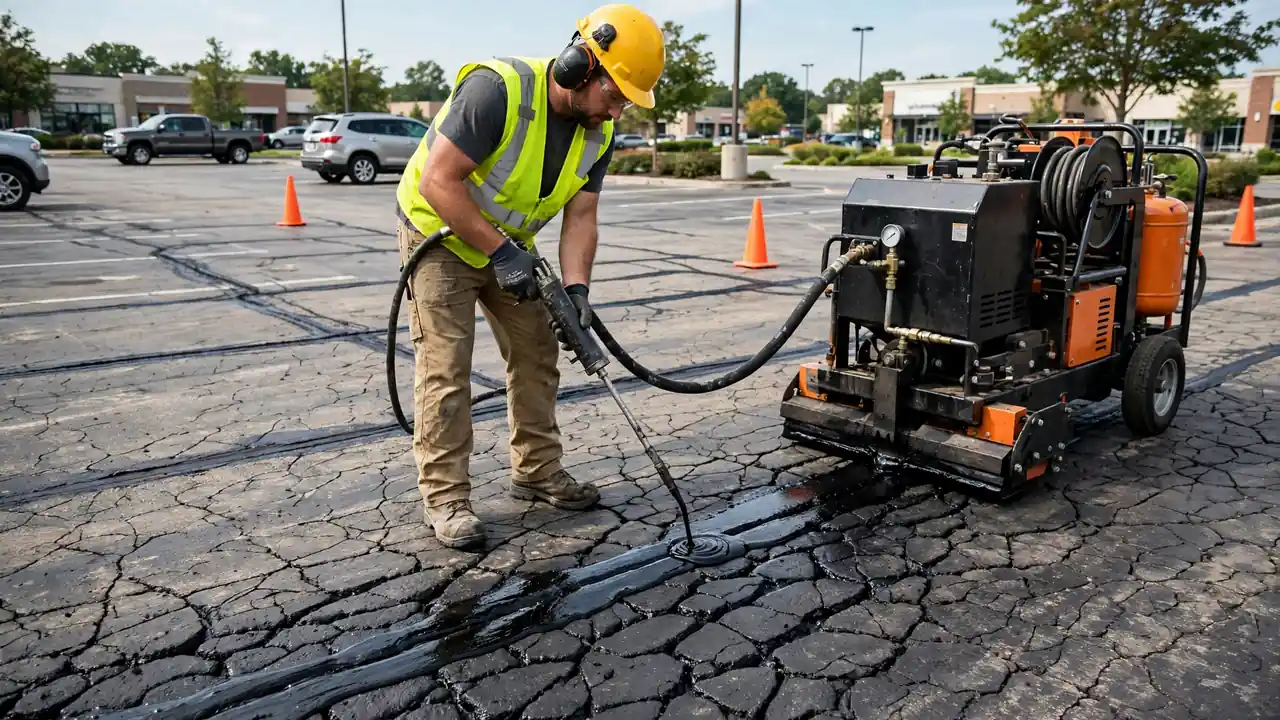
Asphalt sealcoating also serves a surface-maintenance role. It should not be presented as a way to restore the load-carrying capacity of failed pavement.
Surface treatments are not automatically pointless. Depending on the condition and maintenance objective, an evaluator may recommend sealing or another treatment to limit water entry or manage a limited area while further work is planned. Highway maintenance guidance also allows selected surface treatments for some less advanced conditions.
The proposal should state the purpose clearly: is the work intended to slow deterioration, provide temporary service, or correct the underlying failure? Those are different outcomes.
What a Useful Pavement Evaluation Should Check
A useful evaluation connects the visible damage with the way the property is built and used. The amount of investigation should match the extent of the problem and the consequences of choosing the wrong repair.
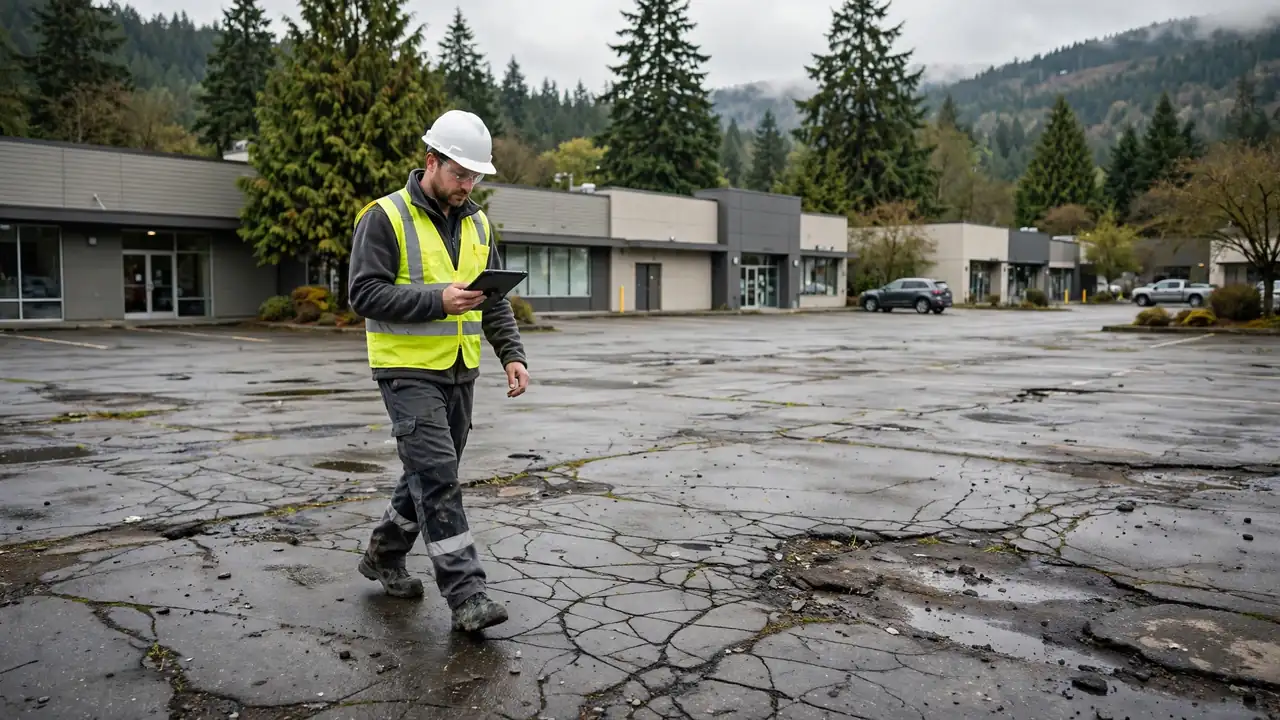
Map the Damage and Review the Site History
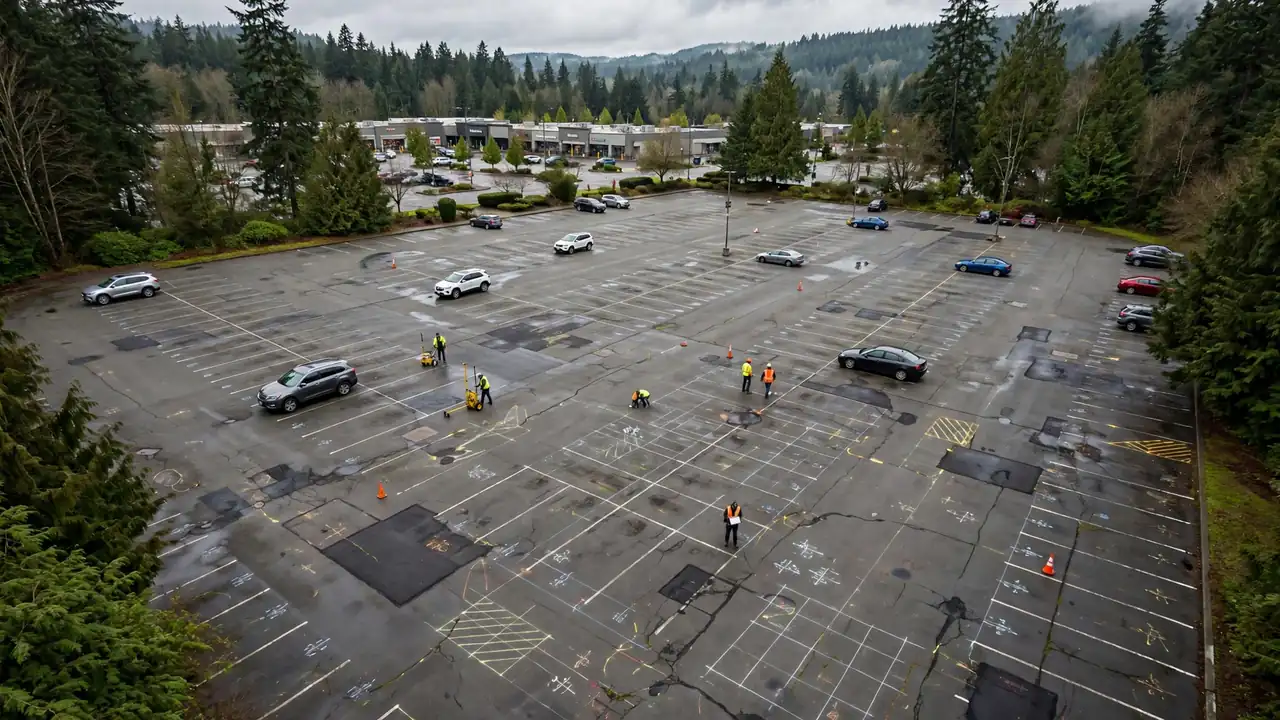
The evaluator should examine the location and extent of cracking, surface deformation, previous patches, and drainage conditions. Traffic patterns also matter, especially repeated truck movements through a confined route.
Property records can answer questions that a site visit cannot. Has vehicle use changed? Does the same area fail repeatedly? Was a utility trench installed nearby? Did water begin collecting after another construction project?
These details are clues rather than proof. Their value is in helping the evaluator decide which explanations need checking.
Investigate Below the Surface When Necessary
Where visual inspection leaves important questions unanswered, cores or test openings can reveal pavement layers and material condition. A core is a cylindrical sample removed from the pavement for examination.
For larger or more complex projects, deflection testing can help assess structural response. A falling weight deflectometer applies a controlled load and measures how the pavement moves. The results require technical interpretation and may be combined with material sampling.
Not every small repair needs every test. The practical question is whether the available evidence is enough to justify the proposed treatment. Testing is useful when it resolves an uncertainty that could materially change the repair.
Does Alligator Cracking Require Full-Depth Repair?
Sometimes, but the pattern alone does not make that decision. Full-depth work is more likely when deterioration extends through the asphalt or when the supporting materials are unstable. Damage confined to suitable upper layers may allow a shallower treatment after the remaining structure has been evaluated.
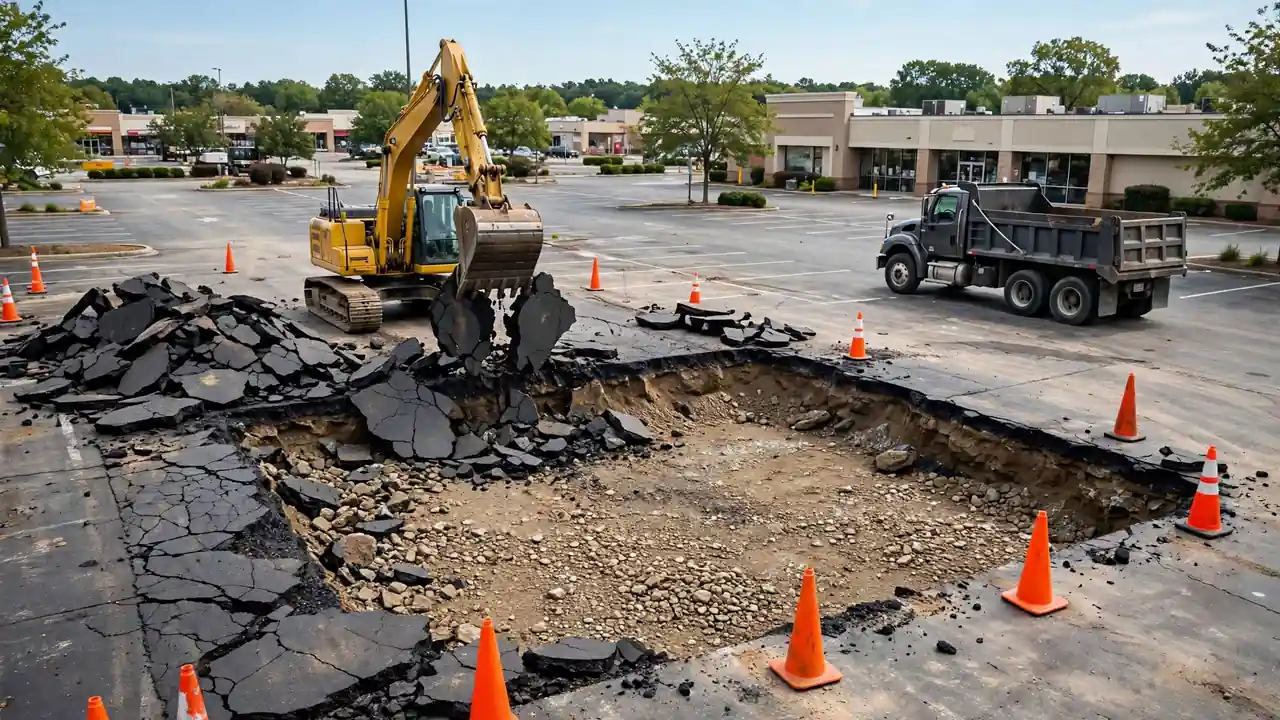
When Partial-Depth Repair May Be Appropriate
A partial-depth repair removes and replaces only part of the existing pavement thickness. It can be considered when the damaged material can be removed while leaving sound pavement underneath.
The depth must follow the actual deterioration. Selecting a shallow repair simply because it is less expensive can leave damaged material in place.
When Full-Depth Repair Is Justified
A full-depth asphalt repair removes the affected asphalt through its thickness. The work must also address unsuitable support where it is found, which may involve removing, replacing, or stabilizing base material and correcting contributing drainage problems.
Ask what “full depth” includes in the specific proposal. Asphalt removal depth, base treatment, and any subgrade work should be described separately. The label alone does not tell you how far excavation will extend.
When Broader Rehabilitation Deserves Comparison
An isolated full-depth patch does not mean the whole parking lot needs replacement. Repair depth and total project area are separate decisions.
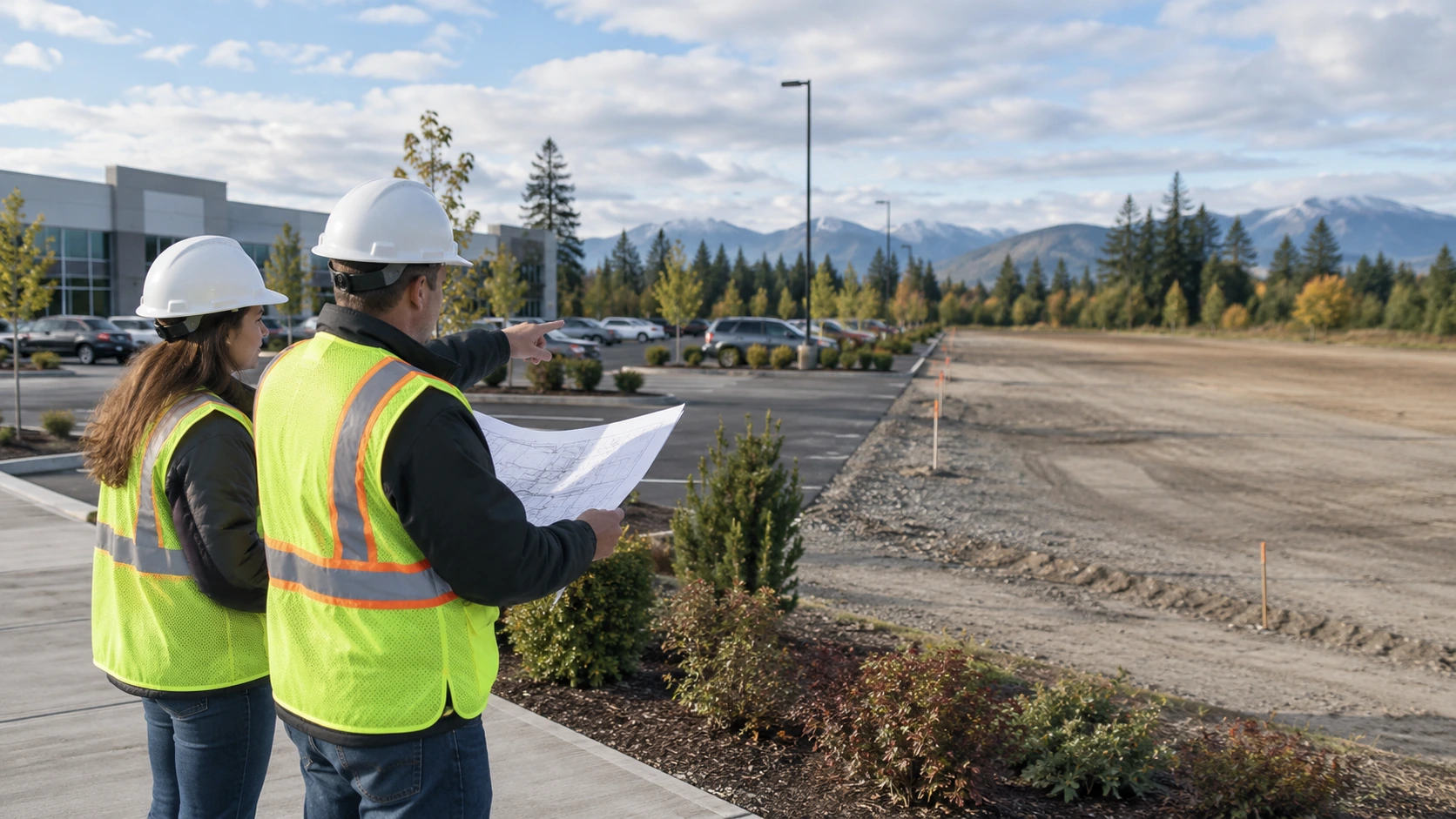
When damage is widespread, compare localized repairs with broader rehabilitation or reconstruction. The comparison should consider the remaining pavement, expected traffic, recurring failures, and disruption to property access. If reconstruction is justified, the new asphalt paving scope should reflect the site’s actual loading and support requirements.
Can You Put an Asphalt Overlay Over Alligator Cracking?
An overlay may be part of a suitable rehabilitation plan after damaged areas and supporting problems have been addressed. Simply covering an untreated fatigue crack network with a thin layer of asphalt can leave the original weakness active beneath the new surface.
Thin preservation overlays primarily improve surface condition. They are generally unsuitable as a stand-alone treatment for existing structural fatigue damage. Movement or cracking underneath can affect the new layer.
A structural overlay is a different design decision. Its purpose may include adding load-carrying capacity, but suitability depends on the remaining pavement, traffic, drainage, and required preparatory repairs. It is not a universal alternative to removing failed material.
Before choosing asphalt overlay services, ask what will happen to the cracked areas before resurfacing. The answer should identify repair locations and depths, explain how the remaining pavement was assessed, and account for drainage and finished elevations.
Where extensive repairs are needed just to make an overlay viable, compare that scope with reconstruction. A fresh surface alone does not establish which option offers the better long-term result.
What Property Owners Can Do Before and After Repair
Before the inspection, collect information that helps the evaluator understand how the problem developed:
- Take a wide photograph showing the crack location and a closer photograph showing the pattern.
- Note where water collects after rain, without entering unsafe traffic areas.
- List the vehicles using the damaged route and any recent changes in use.
- Gather previous paving, patching, drainage, or utility-work records.
When reviewing proposals, ask for defined repair boundaries, removal depths, treatment of unsuitable material, and any drainage corrections. Also ask how additional work will be documented and approved if excavation reveals conditions that could not be confirmed beforehand.
This makes price comparisons more useful. A surface treatment and a repair that includes excavation may address different problems, even if both quotations describe the same visible area.
After repair, keep records of the completed work and watch for recurring drainage issues or new distress. Where practical, review whether heavy vehicles can remain on routes intended for their use. A broader parking lot maintenance plan can help organize ongoing inspection and suitable preventive treatments.
Have Cracked Pavement Evaluated
If your asphalt has developed a connected crack network, start by finding out what is damaged and how far the problem extends. Ask for an explanation that connects the observed conditions with the recommended repair, including the role of drainage, loading, and the remaining pavement.
Adams Asphalt & Construction can discuss the cracked areas and assess the project. Share photographs, the property location, and any history of repeated repairs so the initial conversation focuses on the conditions you are seeing.