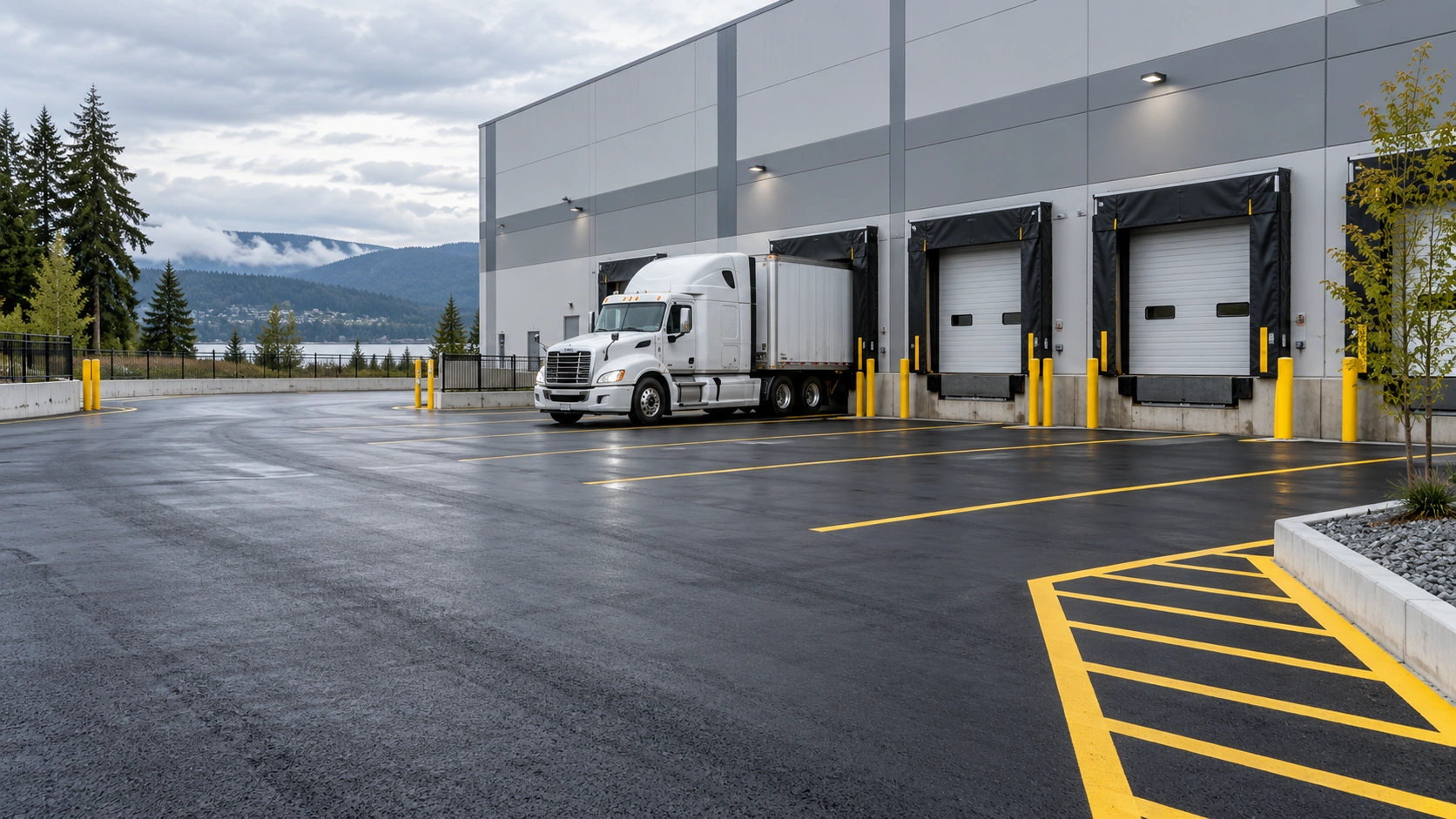
Loading zone asphalt design requires more careful planning than the pavement used for ordinary passenger vehicle parking. Delivery trucks create heavier axle loads, repeated stopping, tight turns, slow-speed maneuvering, and concentrated traffic patterns that can place substantial stress on a relatively small section of pavement.
A loading zone may look like an extension of a commercial parking lot, but it performs a different job. Instead of distributing light vehicle traffic across many parking spaces, it may receive loaded delivery trucks along almost identical wheel paths every day. Trucks may brake at the same point, turn through the same radius, reverse toward the same dock, and accelerate away through the same travel lane.
Those repetitive movements influence how the pavement surface, aggregate base, subgrade, drainage, grading, and surrounding site should be evaluated.
For property owners, facility managers, developers, warehouse operators, and commercial contractors, the goal should not be to choose a universal asphalt thickness from a standard chart. A more reliable approach is to understand how the loading area will actually be used, identify where the heaviest stresses occur, and plan the pavement structure around those real site conditions.
Why Loading Zones Need Different Pavement Planning
The biggest difference between a loading zone and an ordinary parking space is how the pavement is used.
Passenger vehicles generally enter a property, park, and leave without repeatedly placing concentrated heavy loads on exactly the same narrow travel path. Delivery trucks often behave very differently. They may enter from the same driveway, turn at the same point, brake in the same area, line up with the same loading bay, remain stationary while being loaded or unloaded, and then leave along the same route.
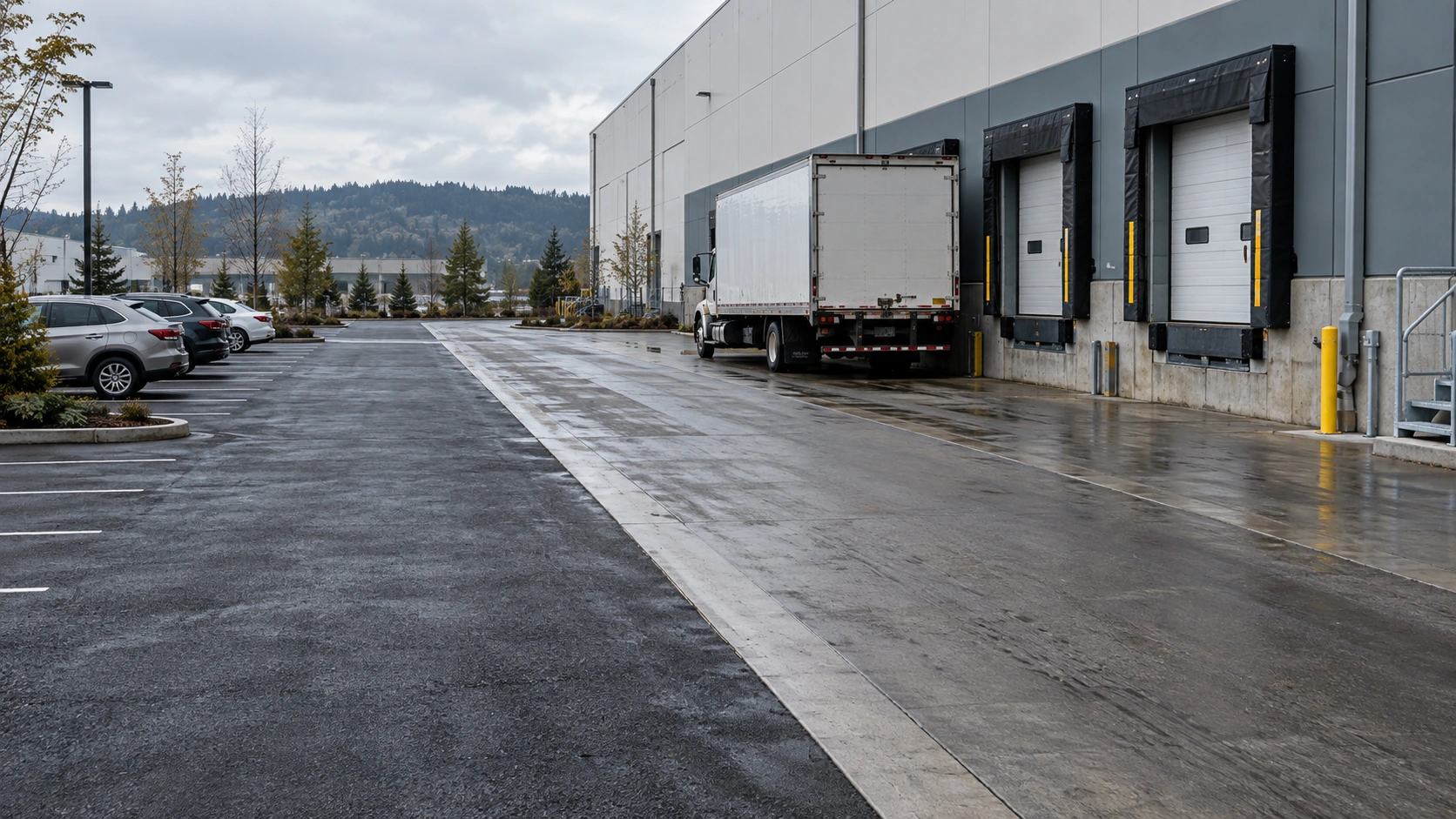
Over time, this creates concentrated pavement demand.
A standard commercial parking lot may include large areas that experience relatively light use. Some spaces may only hold passenger vehicles for several hours at a time. A loading zone, on the other hand, can experience repeated heavy truck movements throughout a working day.
Traffic frequency also matters. A loading area serving a small retail property with occasional deliveries may have much different requirements from a warehouse or distribution facility receiving commercial trucks continuously.
The vehicle type matters as well. Delivery vans, box trucks, refuse vehicles, tractor trailers, service vehicles, and other commercial vehicles can create very different loading conditions.
For properties that also include heavy truck access lanes, industrial drive aisles, or service roads, planning the loading zone alongside commercial roadway paving can help create a more consistent pavement strategy across the property.
Repeated Wheel Loads Concentrate Stress in Small Areas
Truck traffic does not affect every square foot of a loading area equally.
Certain sections normally experience much more use than others. These may include the approach to a dock, the pavement directly in front of loading doors, turning areas near buildings, staging zones, intersections between truck lanes, and places where drivers repeatedly stop before reversing into position.
These repeated wheel paths deserve particular attention.
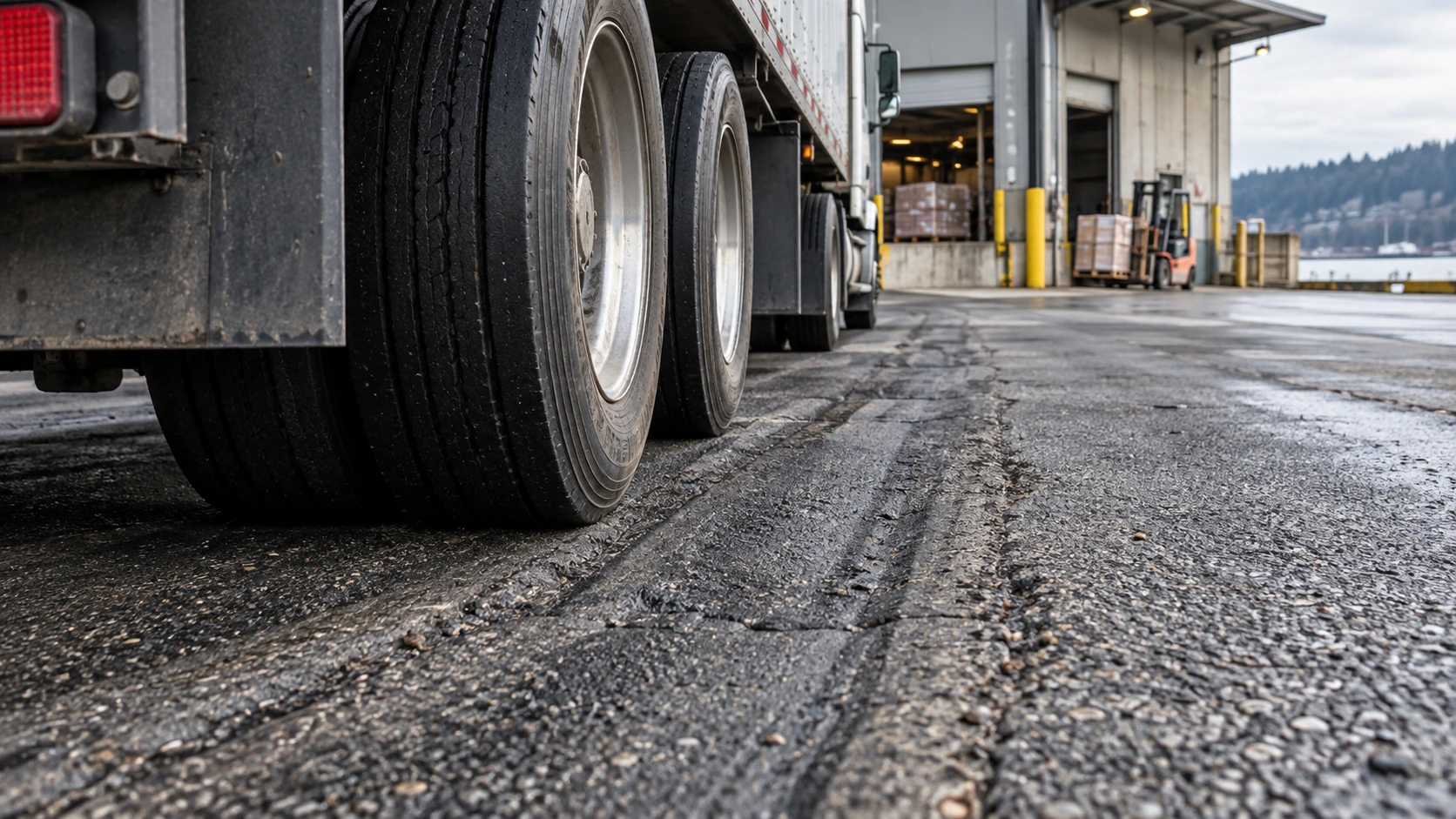
Imagine a loading area measuring several thousand square feet. Most of the pavement may remain lightly traveled, while one narrow path receives practically every delivery truck entering the property. Even though the entire loading area was paved at the same time, that one section may experience significantly more stress.
The same principle applies near dock doors.
A truck may stop in approximately the same position during every delivery. The rear axle, front axle, and trailer wheels can repeatedly load similar pavement areas. If underlying support is weak or moisture is affecting the pavement structure, those repeated loads can accelerate visible distress.
When new asphalt construction is being considered, broader asphalt paving services should therefore be evaluated together with the expected loading pattern rather than treating every paved portion of the property as having identical requirements.
Braking, Acceleration, and Turning Change How Trucks Interact With the Surface
Truck weight is only part of the loading-zone challenge.
Delivery areas are usually low-speed environments where vehicles frequently brake, accelerate, reverse, turn sharply, and maneuver into confined spaces. These movements affect the pavement differently from a vehicle traveling steadily in a straight line.
A truck entering a loading zone may first travel along a relatively straight access lane. As it approaches a building, the driver may brake, make a tight turn, move forward again, stop, reverse, reposition, and then back toward the loading dock.
All of those movements occur within a fairly limited area.
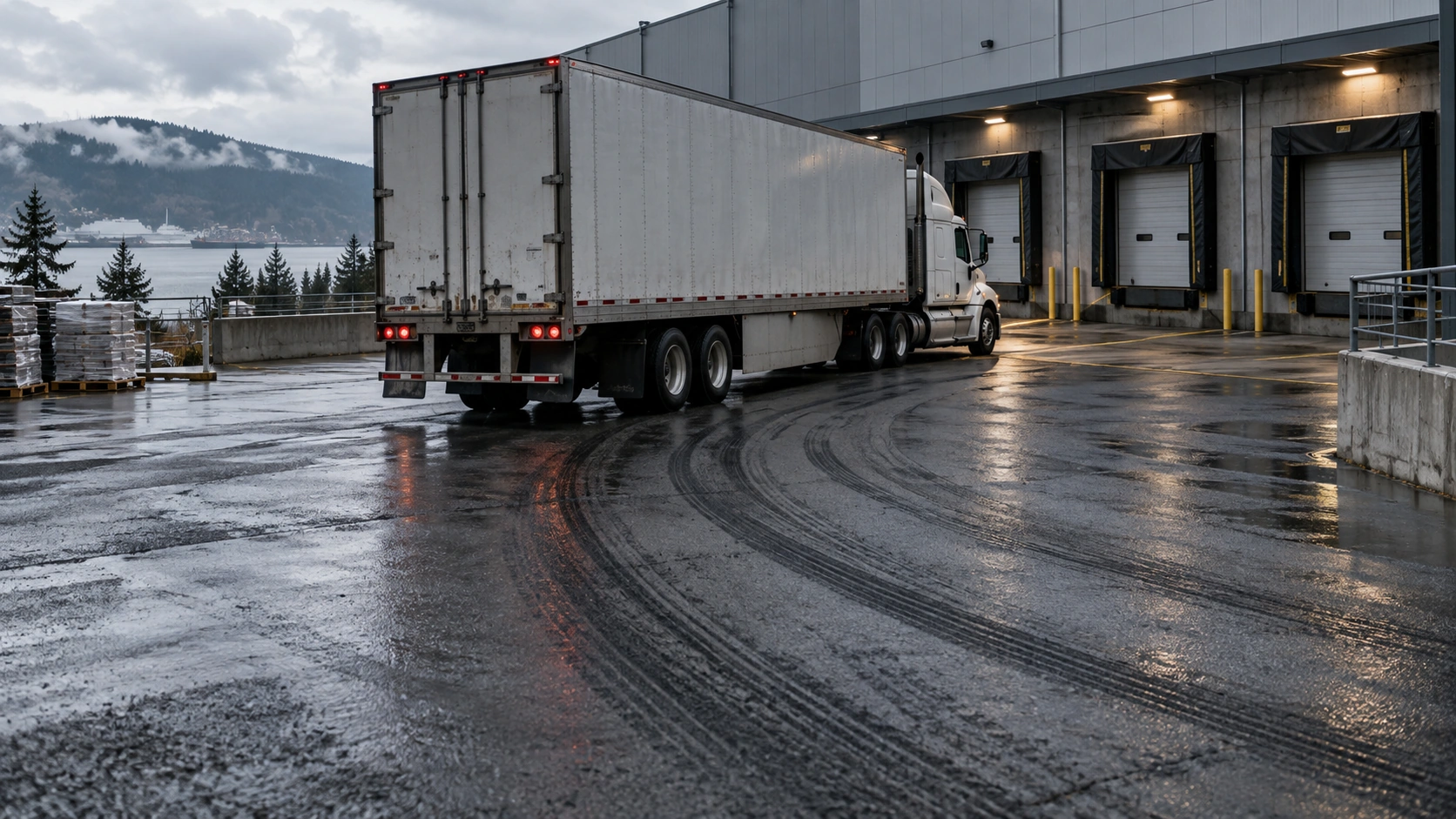
Turning areas deserve specific attention
Larger commercial vehicles require greater maneuvering space than passenger vehicles. Their front and rear wheels also follow different paths through a turn.
As a result, pavement near turning points may experience concentrated wheel loading, especially when truck movements repeatedly follow the same path.
The physical layout of the loading zone should therefore be evaluated together with the pavement plan.
Curbs, islands, buildings, fences, parked cars, drainage structures, landscaping, and other site features can influence the path trucks are forced to take.
If the geometry creates an unnecessarily tight turn, trucks may repeatedly place stress on the same pavement edge or turning area.
Stopping points can become recurring stress locations
Stopping locations also deserve attention.
If drivers typically brake at the same point before reversing into a dock, that location can receive repeated forces from heavy vehicles. The same may happen where trucks pause at gates, security checkpoints, intersections, or loading-area entrances.
Studying the real vehicle movement pattern often reveals these concentrated-use areas more clearly than simply reviewing the total pavement square footage.
Acceleration areas may behave differently
Vehicles leaving a loading dock can also place stress on the pavement as they accelerate.
A truck pulling away from a stationary position transfers forces through the tires into the pavement. When the same movement occurs repeatedly in one location, that area deserves consideration during pavement planning.
This is one reason loading-zone design should focus on how trucks actually operate rather than assuming that traffic is evenly distributed.
The Base Beneath the Asphalt Matters as Much as the Surface
A loading zone cannot be evaluated by looking only at the visible asphalt.
The pavement structure depends heavily on what supports it.
Subgrade conditions, aggregate base, compaction, soil stability, drainage, and site preparation all influence how effectively traffic loads are distributed.
A strong-looking asphalt surface installed over inadequate support can still develop problems.
For example, if the underlying material is weak, inconsistent, saturated, poorly compacted, or unable to support the expected loading, the pavement above it may begin to move under repeated truck traffic.
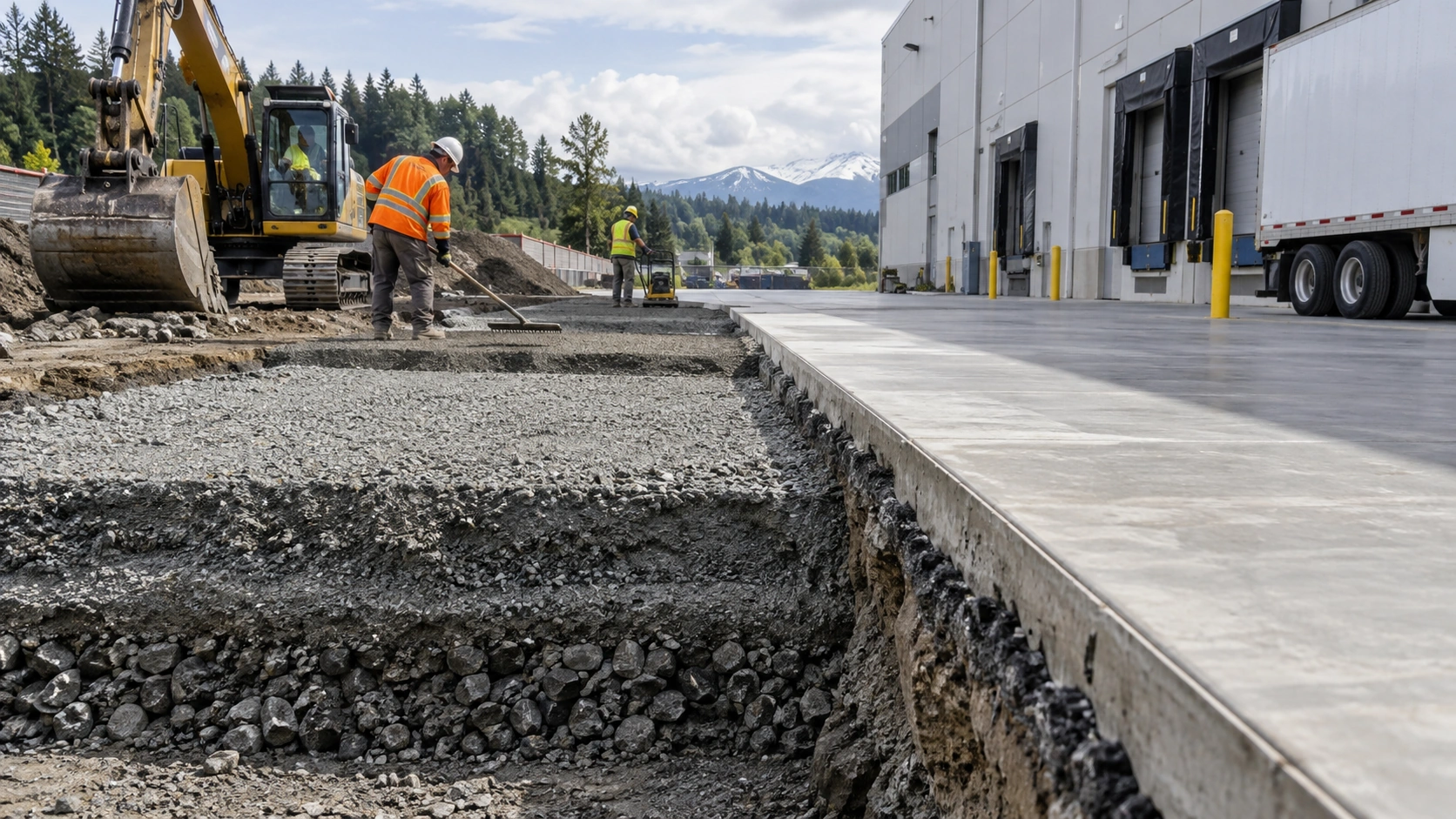
Visible symptoms may eventually include depressions, uneven areas, cracking, rutting, settlement, or localized pavement failures.
Installing another surface layer without identifying the underlying issue may not solve the actual problem.
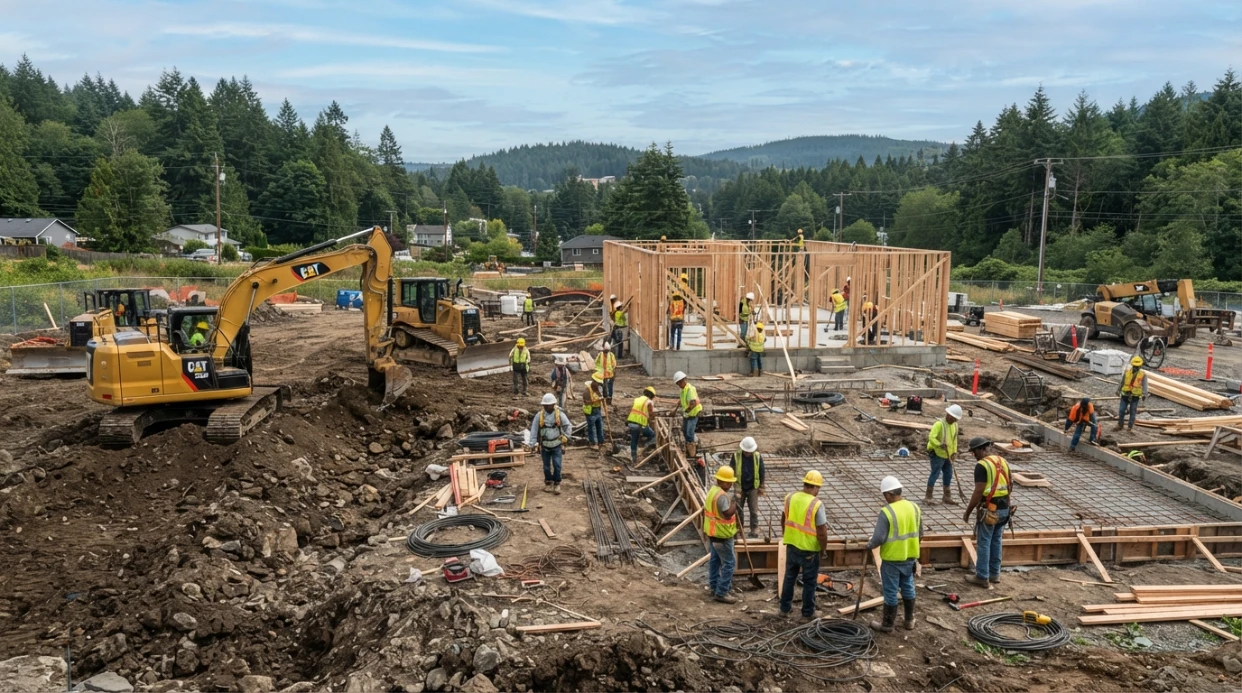
Projects involving undeveloped commercial property or substantial reconstruction may therefore require civil site work before paving begins.
Where existing materials need to be removed or the site elevation needs significant adjustment, excavation services may also become part of the project.
The loading zone should be treated as a complete pavement system rather than simply a layer of asphalt placed on the ground.
Site Preparation Helps Determine How the Pavement Performs
Before paving begins, the condition of the work area deserves careful evaluation.
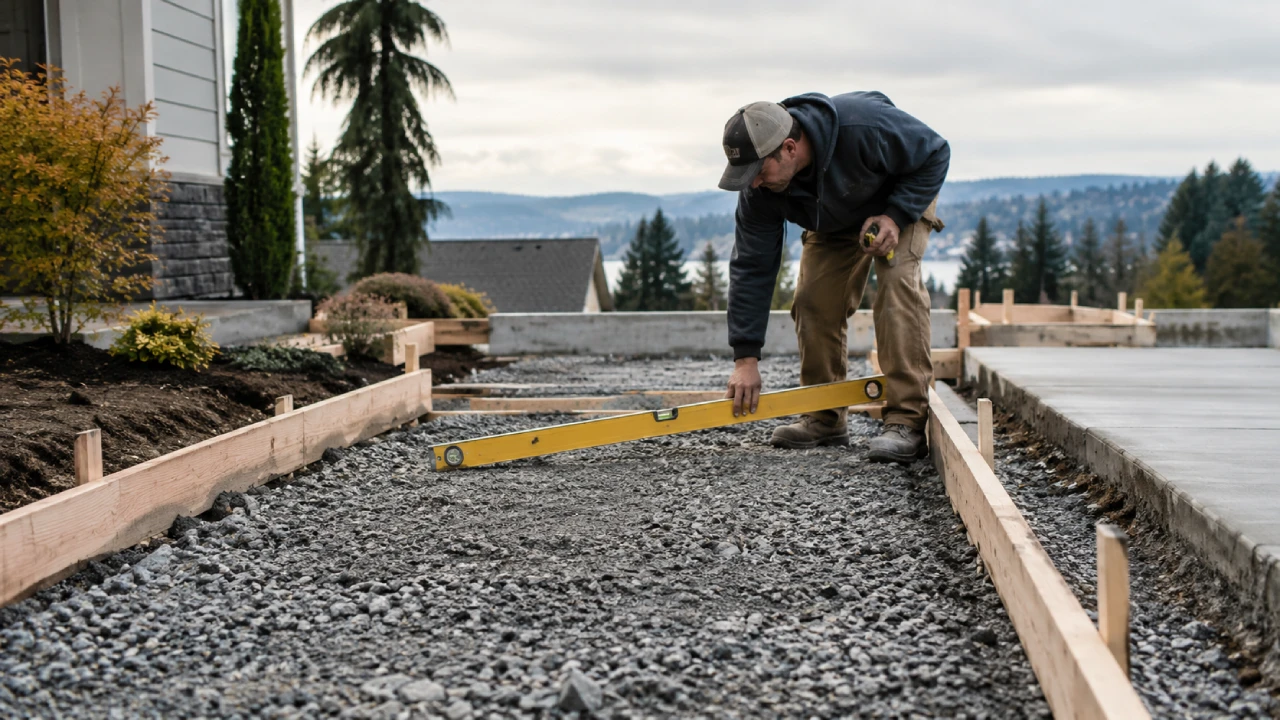
Site preparation can involve removing unsuitable materials, establishing appropriate elevations, preparing the subgrade, installing or adjusting drainage components, placing aggregate, and compacting the base.
Each stage influences what comes afterward.
If one area of the subgrade is substantially weaker than another, the finished pavement may not perform uniformly. Likewise, inconsistent compaction can create areas that settle differently once heavy truck traffic begins using the site.
The problem may not become visible immediately.
A newly paved loading zone can appear smooth and uniform when it first opens. Months or years of repeated heavy traffic may gradually expose weaknesses that were present beneath the surface from the beginning.
This is why planning before paving is so important.
Grading Helps Control Both Truck Movement and Water
A loading zone needs grading that accomplishes more than one objective.
The pavement should support practical truck movement while also directing water toward appropriate drainage or collection points.
Poor grading can allow water to collect in wheel paths, sit near loading docks, drain toward buildings, or remain trapped along pavement edges.
At the same time, excessive or poorly positioned changes in elevation can make truck maneuvering more difficult.
A loading area must therefore balance operational needs with drainage requirements.
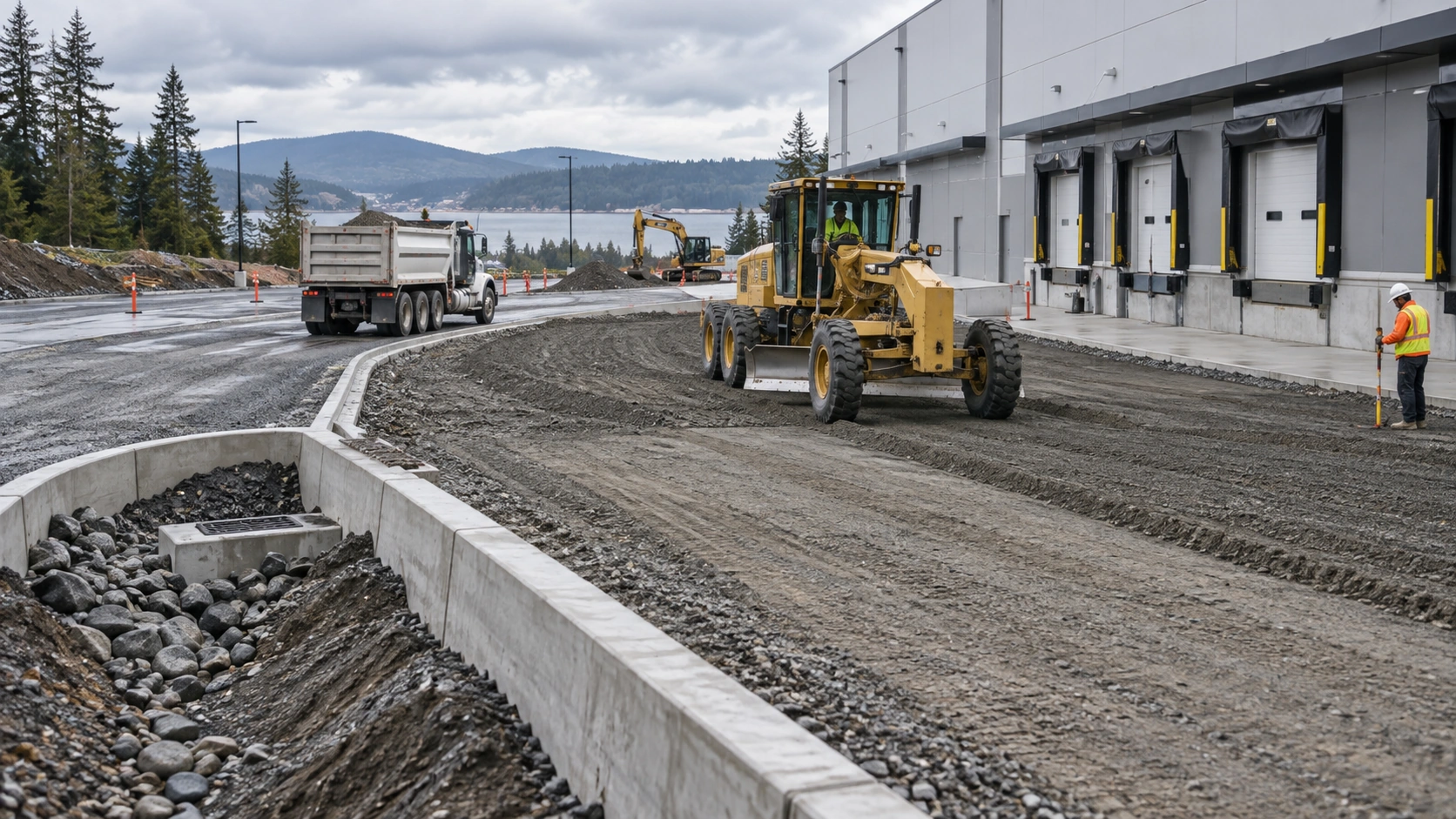
That is why land grading services can be closely connected to loading-zone pavement planning.
Imagine a loading area where the pavement itself appears reasonably intact, but water repeatedly collects in the same low spot after rainfall. Delivery trucks continue driving through that area, and moisture remains present for extended periods.
Simply resurfacing the pavement may improve appearance without changing the reason water collects there.
Evaluating elevations and drainage patterns before paving makes it easier to address the underlying site condition.
Drainage Should Be Planned Before the Loading Zone Is Paved
Loading docks often sit beside buildings, curbs, retaining features, sidewalks, ramps, landscaped areas, utilities, and other elements that influence how runoff moves through the site.
Because of that, drainage should be considered during the planning stage rather than after paving is complete.
A drainage review may examine:
- Existing pavement slopes
- Low areas where water collects
- Catch basin locations
- Surface drains
- Building elevations
- Curb lines
- Roof runoff
- Truck wheel paths
- Existing drainage failures
- Runoff leaving adjacent pavement
For properties already experiencing standing water or pavement deterioration associated with poor drainage, commercial drainage solutions may need to be evaluated before reconstruction.
Where stormwater is collected directly within the paved loading area, the condition and placement of catch basins can also affect how efficiently water leaves the site.
Drainage structures should also be considered in relation to truck movement.
A catch basin located directly in a frequently traveled wheel path may experience different demands from one positioned outside the primary truck route. Site layout, drainage performance, access, and pavement structure should therefore be reviewed together.
Water Can Affect More Than the Pavement Surface
Standing water is often treated as a surface inconvenience, but its effects can extend below the asphalt.
Cracks, failed joints, damaged pavement edges, or deteriorated areas may allow moisture to reach supporting materials.
Once the pavement foundation is affected, repeated heavy truck traffic can become more damaging.
This is particularly important in loading zones because vehicles may repeatedly travel through the same moisture-affected section.
The combination of heavy loading and weakened support can be more problematic than either condition by itself.
For that reason, drainage problems should not be viewed separately from pavement deterioration.
If a loading zone repeatedly develops damage in the same location, the surrounding drainage pattern should be part of the investigation.
Pavement Thickness Should Follow the Site Conditions, Not a Generic Rule
One of the most common questions about loading zone asphalt design is how thick the pavement should be.
There is no single thickness that is appropriate for every commercial loading zone.
The correct pavement section depends on the conditions of the specific project.
Important considerations may include:
- Vehicle types
- Expected truck weights
- Number of truck movements
- Frequency of deliveries
- Repeated wheel paths
- Existing soil conditions
- Subgrade strength
- Aggregate base condition
- Drainage
- Existing pavement structure
- Climate exposure
- Turning and stopping activity
- Intended service life
- Surrounding site conditions
This is why copying the pavement section from a standard parking area can be a poor planning approach.
Two paved areas located only a few feet apart may perform very different functions.
A customer parking area may primarily carry passenger vehicles. The adjacent loading zone may receive loaded commercial trucks throughout the day.
Even though both surfaces are asphalt, their design considerations are not necessarily the same.
A heavy-use pavement assessment should therefore come before universal thickness recommendations.
Existing Loading Zones Need More Than a Surface Inspection
When a loading zone begins cracking, rutting, settling, or holding water, the visible damage does not always identify the underlying problem.
Surface distress can involve the asphalt layer itself, but it may also point toward base movement, weak support, drainage issues, repeated heavy loading, poor transitions between pavement sections, or several problems occurring together.
Before selecting a treatment, the pavement should be evaluated to determine how deep the deterioration appears to extend.
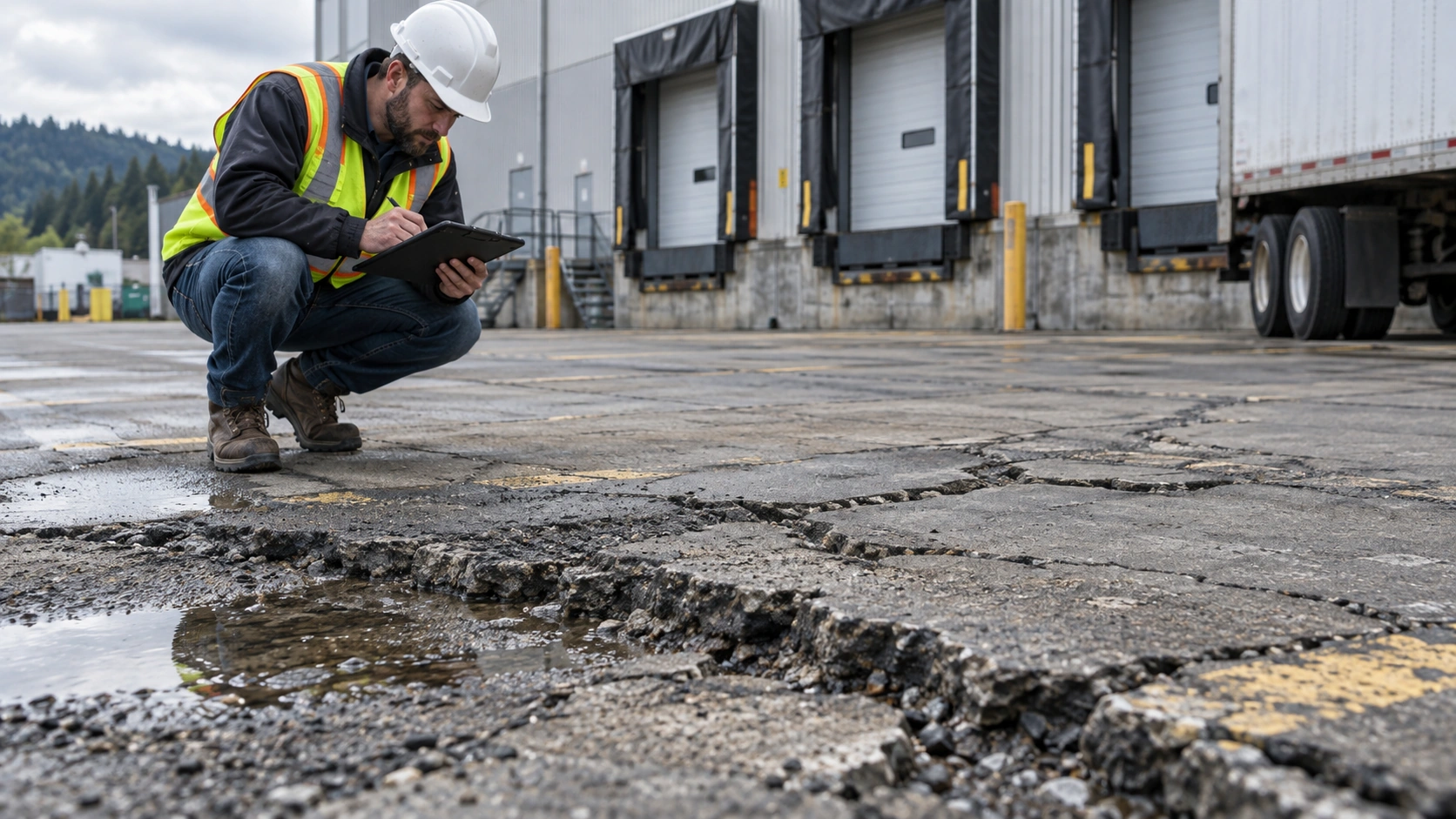
Localized repair may work in some situations
If deterioration is confined to a particular area and the surrounding pavement remains suitable, asphalt pavement repair may be considered.
The important question is why that area failed.
For example, if the same section repeatedly deteriorates because water continues entering the pavement structure, repairing only the surface may not provide a lasting solution.
Resurfacing may be appropriate when support remains suitable
In other situations, an asphalt overlay may be considered for pavement that has surface deterioration but still retains suitable underlying support.
An overlay can improve the driving surface and extend the usefulness of an existing pavement system when conditions are appropriate.
However, resurfacing should not automatically be selected simply because it is less disruptive than reconstruction.
If structural support beneath the pavement has failed, placing new asphalt over the surface may leave the underlying problem unresolved.
Reconstruction may be necessary when failure extends deeper
Where pavement deterioration is connected to weak base material, significant settlement, poor drainage, or unsuitable underlying conditions, deeper corrective work may be required.
This is why visual appearance alone should not determine the repair strategy.
The pavement should be evaluated as a complete system.
Loading Zone Layout Affects More Than Pavement Durability
Pavement structure and operational layout should be planned together.
A loading area needs enough room for trucks to enter, maneuver, stop, load or unload, reverse, and leave without unnecessary conflicts.
Potential conflicts may involve:
- Passenger vehicles
- Employee parking
- Pedestrian routes
- Building entrances
- Curbs
- Sidewalks
- Dumpster areas
- Utility equipment
- Fences
- Landscaping
- Fire access
- Other delivery vehicles
The connection between the loading zone and the surrounding commercial parking lot deserves particular attention.
For example, parking spaces located directly across from a truck backing area can reduce available maneuvering room.
A curb island may force trucks into a tighter turning radius than intended.
A loading lane positioned across a busy customer traffic route can create unnecessary operational conflicts.
These issues are difficult to solve through pavement construction alone.
Understanding truck circulation before paving begins allows the layout and pavement strategy to support one another.
Loading Dock Approaches Need Careful Coordination
The pavement approaching a loading dock performs an important operational role.
Truck drivers need enough room to align the vehicle, reverse safely, and position the trailer correctly at the dock.
The approach area may also interact with dock levelers, retaining walls, ramps, curbs, drainage structures, building foundations, or other fixed features.
Small elevation differences can matter.
If the pavement settles unevenly or drainage changes the approach area over time, truck alignment may become more difficult.
For this reason, the area immediately surrounding the loading dock should not be treated as an isolated paving patch.
It should be evaluated in relation to the building, drainage, grading, and truck maneuvering area.
Pavement Edges Can Become Vulnerable in Heavy-Use Areas
Loading areas frequently include pavement edges beside curbs, shoulders, landscaped strips, gravel areas, or unpaved property sections.
These transitions deserve attention because trucks may track close to the edge while maneuvering.
If heavy vehicles repeatedly drive partially off the supported pavement or place wheel loads close to an inadequately supported edge, deterioration may begin along that boundary.
Once an edge starts breaking down, water can enter more easily and the damaged area may continue expanding.
The layout should therefore give trucks enough usable pavement width to complete expected movements without repeatedly leaving the intended travel surface.
Striping and Markings Should Reinforce the Traffic Plan
Once pavement geometry and circulation have been established, markings help communicate how the loading area is intended to function.
Depending on the property, this may include:
- Loading-zone boundaries
- Directional arrows
- No-parking areas
- Truck lanes
- Staging areas
- Pedestrian crossings
- Fire lanes
- Adjacent passenger parking
- Restricted zones
- Dock numbering
Parking lot striping should support the physical layout rather than trying to correct an unsuitable circulation pattern with paint alone.
For example, changing an arrow may help communicate where trucks should travel, but it cannot create enough physical room for a vehicle to make a turn that the site does not accommodate.
Likewise, striping can establish a clear loading zone boundary, but parked vehicles may still interfere if the surrounding parking layout does not account for truck maneuvering needs.
Planning pavement, traffic movement, and markings together usually creates a more practical result.
Loading Zones Should Be Evaluated as Part of the Entire Property
A loading area rarely functions independently from the rest of the site.
Trucks may travel through a shared entrance, cross a parking lot, use a private roadway, pass drainage infrastructure, and maneuver beside buildings before reaching the loading dock.
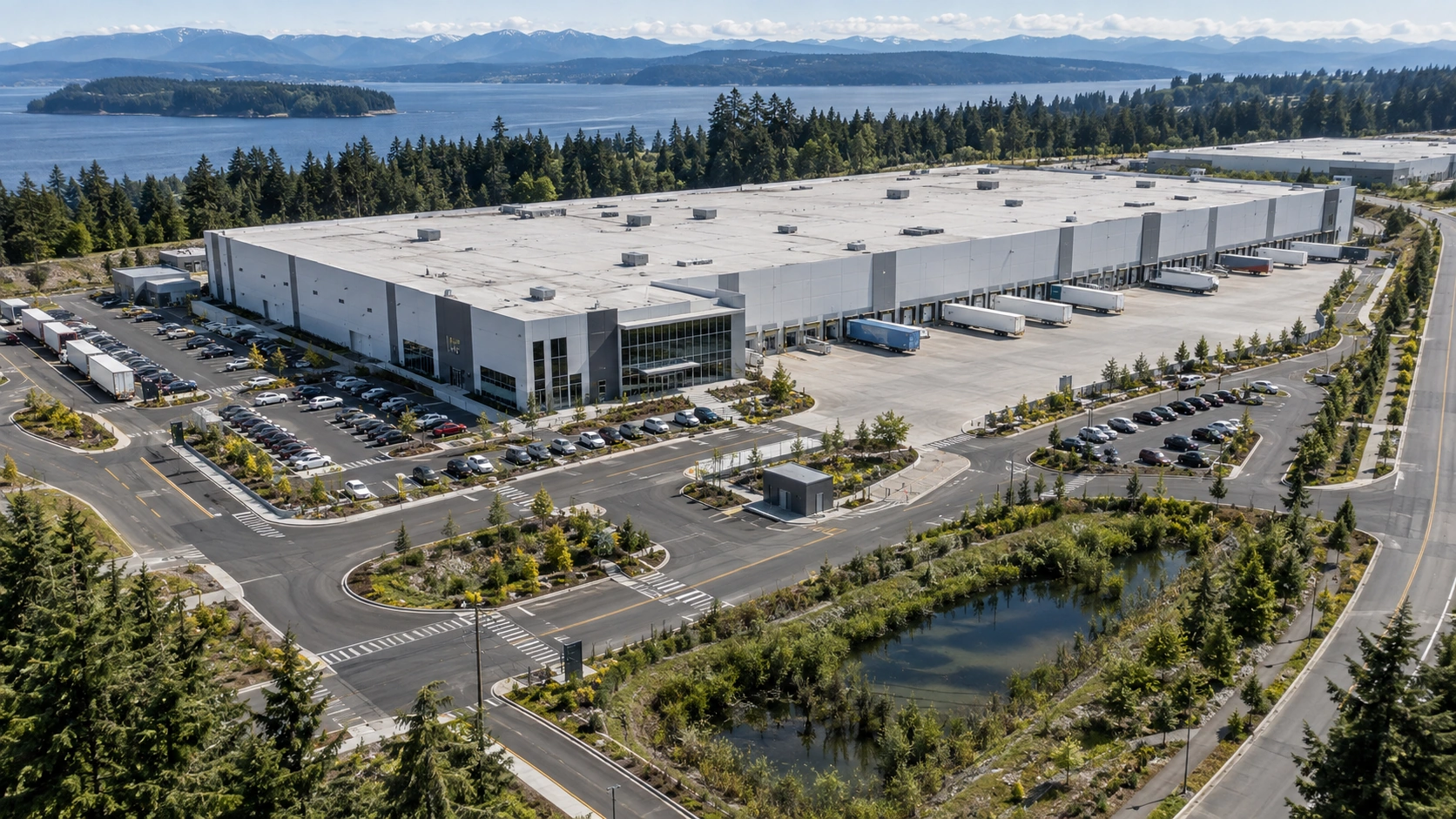
That means pavement problems upstream from the loading zone can affect operations as well.
A deteriorated truck entrance, inadequate access road, poorly graded approach, or standing water along the delivery route can create issues even if the loading area itself is newly paved.
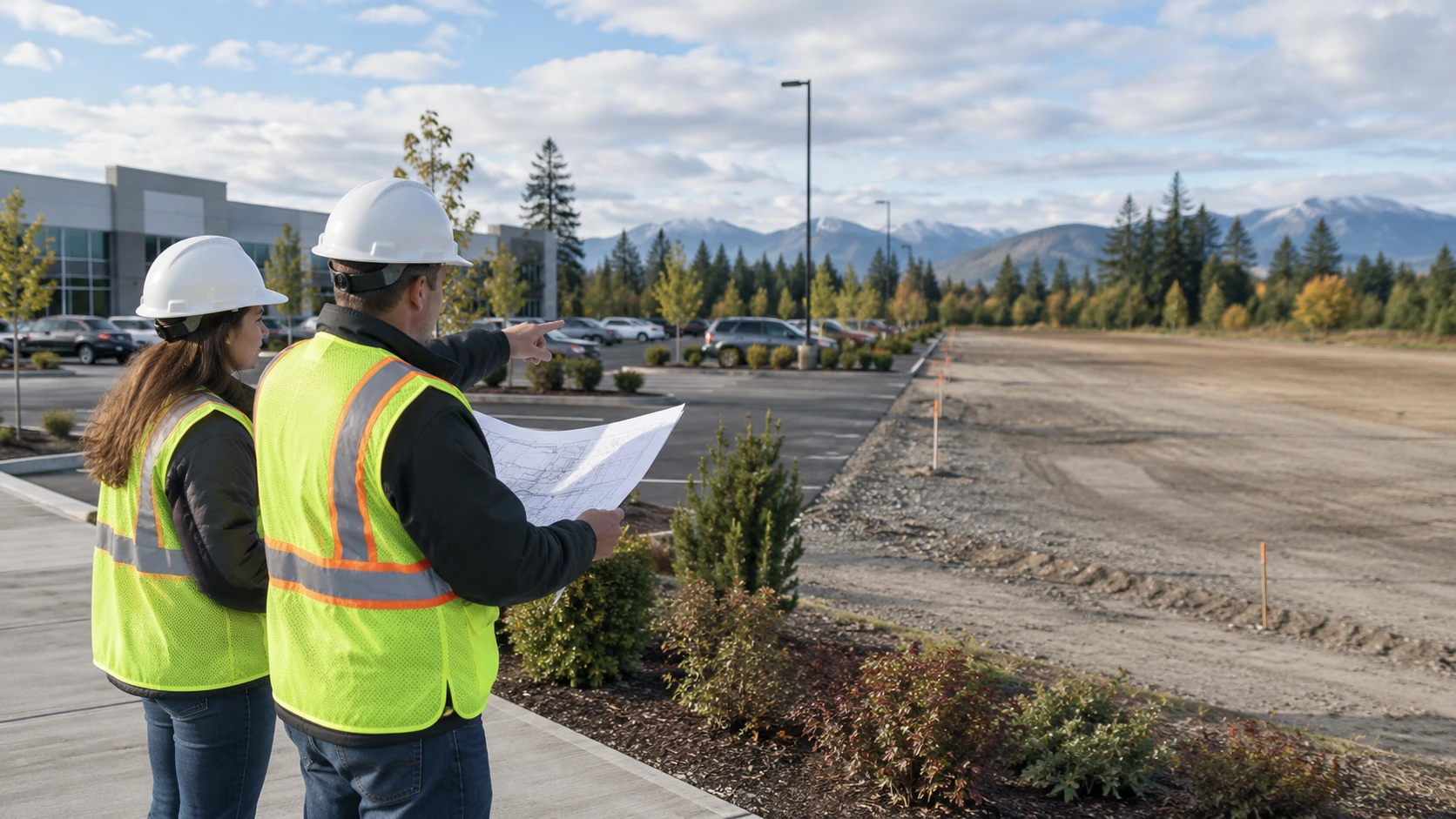
A complete assessment should therefore look at the truck route from the property entrance to the loading point.
This provides a clearer picture of where heavy-use pavement conditions occur across the site.
Maintenance Planning Matters After Construction
Good loading-zone planning does not end when the asphalt is installed.
Heavy-use pavement should be monitored over time so developing problems can be identified before they become more extensive.
Property managers may want to watch for:
- New cracks
- Depressions
- Rutting
- Ponding water
- Edge deterioration
- Settlement around drains
- Surface movement near loading docks
- Damage near turning areas
- Repeated deterioration in previously repaired sections
The pattern of the damage can provide useful information.
For example, deterioration appearing repeatedly in a truck wheel path may suggest a different issue from random surface cracking across the entire area.
Similarly, recurring ponding near a catch basin may point toward grading or drainage concerns rather than an asphalt-only problem.
Early evaluation can make it easier to determine whether maintenance, repair, drainage improvements, or more substantial reconstruction should be considered.
Heavy-Use Pavement Planning Starts With the Actual Operation
Two businesses can have loading zones of exactly the same size and still require very different pavement planning.
A retail building receiving a few deliveries each week is not used the same way as a warehouse with truck traffic throughout the day.
A property served primarily by delivery vans has different conditions from a facility receiving heavily loaded commercial trucks or tractor trailers.
Before pavement work is specified, useful questions include:
- What types of trucks use the property?
- How frequently do they arrive?
- Where do they enter?
- Where do they turn?
- Where do they brake?
- Where do they reverse?
- Where do they remain stationary?
- Are the trucks typically loaded when entering or leaving?
- Do they repeatedly follow the same wheel path?
- Does water collect anywhere in the loading area?
- Is the pavement already showing recurring distress?
- Are there known drainage or settlement problems?
- Will truck traffic increase in the future?
These questions help identify where the pavement is working hardest.
They also make it easier to distinguish cosmetic surface deterioration from conditions that may require a deeper investigation.
Planning a Loading Zone That Can Handle Repeated Truck Traffic
A durable loading area begins with understanding how trucks actually use the property.
Traffic loading, vehicle type, delivery frequency, wheel paths, turning movements, braking locations, subgrade support, aggregate base, grading, drainage, existing pavement condition, loading-dock geometry, and surrounding site layout can all influence the pavement plan.
Treating a loading zone exactly like ordinary passenger vehicle parking can overlook many of the conditions that make heavy-use commercial pavement demanding.
The pavement section should therefore be selected only after the site and expected truck activity have been evaluated.
For some properties, the work may primarily involve new asphalt paving. Others may require base preparation, grading, drainage corrections, excavation, pavement repair, resurfacing, or more extensive civil improvements before the loading area is ready for regular truck traffic.
Adams Asphalt & Construction can assess heavy-use commercial pavement conditions and help identify which parts of the site should be addressed as part of the project.
Request a heavy-use pavement assessment to discuss the loading area, delivery traffic, pavement condition, drainage concerns, and project goals.