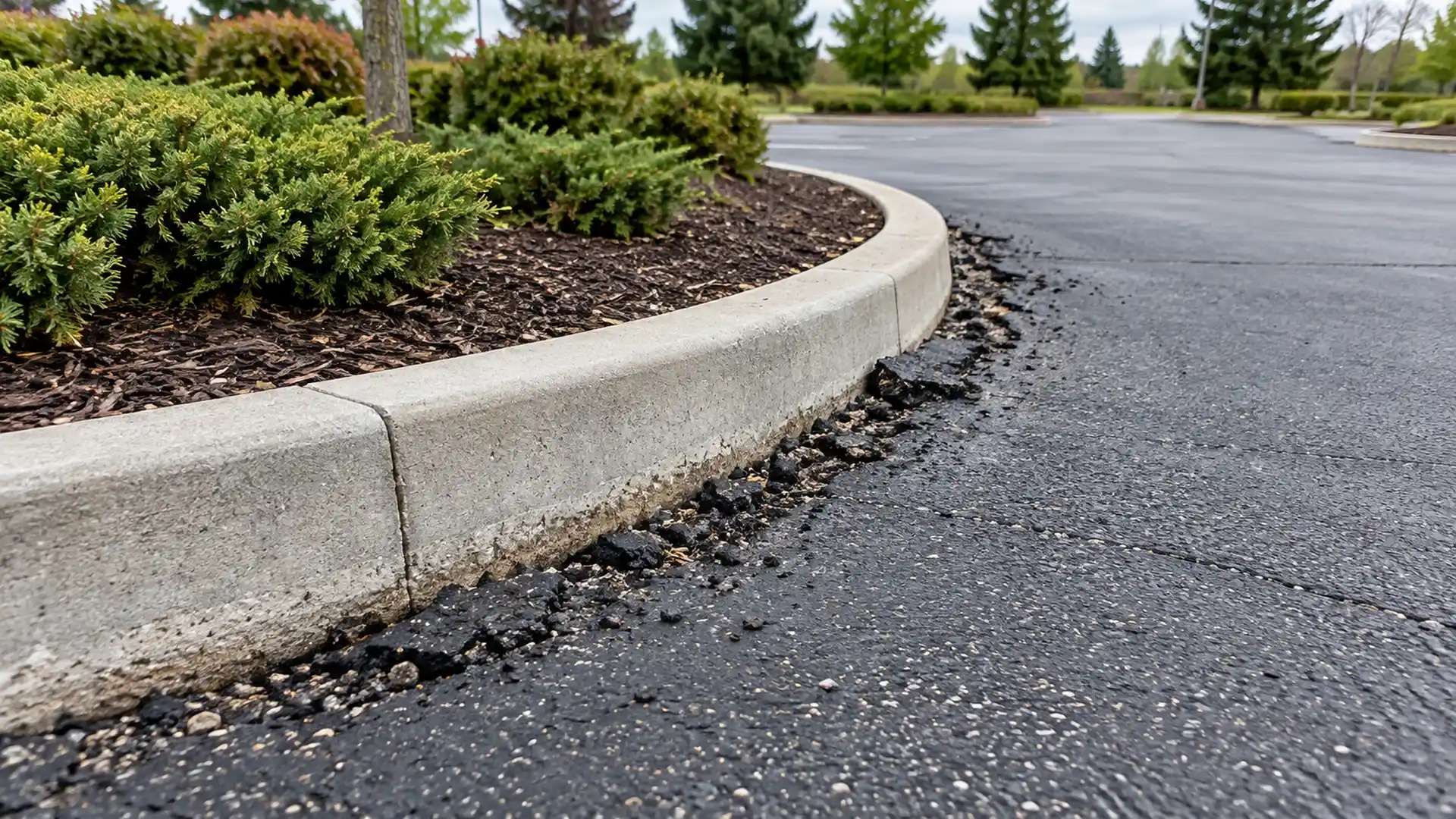
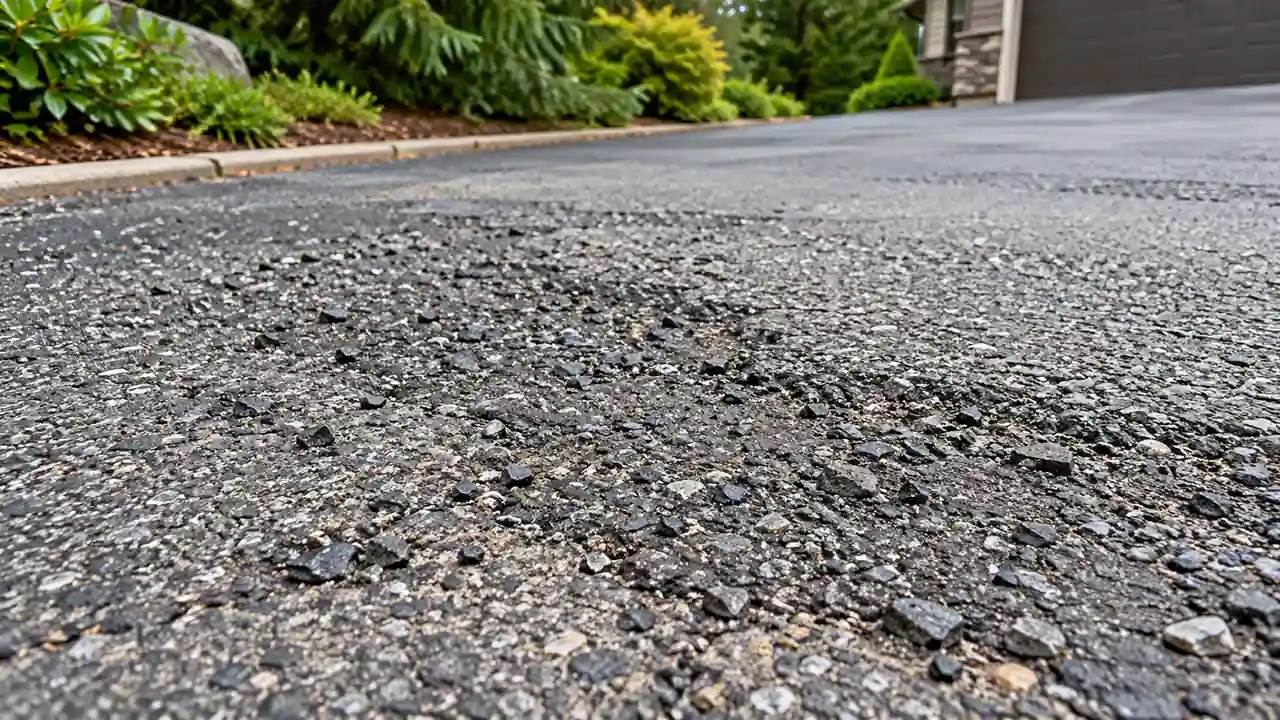
Common asphalt raveling causes include binder aging, insufficient binder, poor compaction, uneven material distribution, moisture damage, and abrasive wear. As the pavement loses its ability to hold aggregate, sand and stones work loose from the surface. The result can range from a grainy texture to visible pits and continuing material loss.
If gravel keeps appearing on your driveway or parking lot, the useful question is where it came from. Debris carried onto sound pavement needs a different response from stones breaking out of the asphalt itself. Once surface loss is confirmed, its extent and underlying cause should guide the treatment.
What Raveling Means for an Asphalt Surface
Asphalt pavement contains aggregate, including stone and sand, held together by asphalt binder. Raveling is the progressive loss of those particles from the pavement surface.
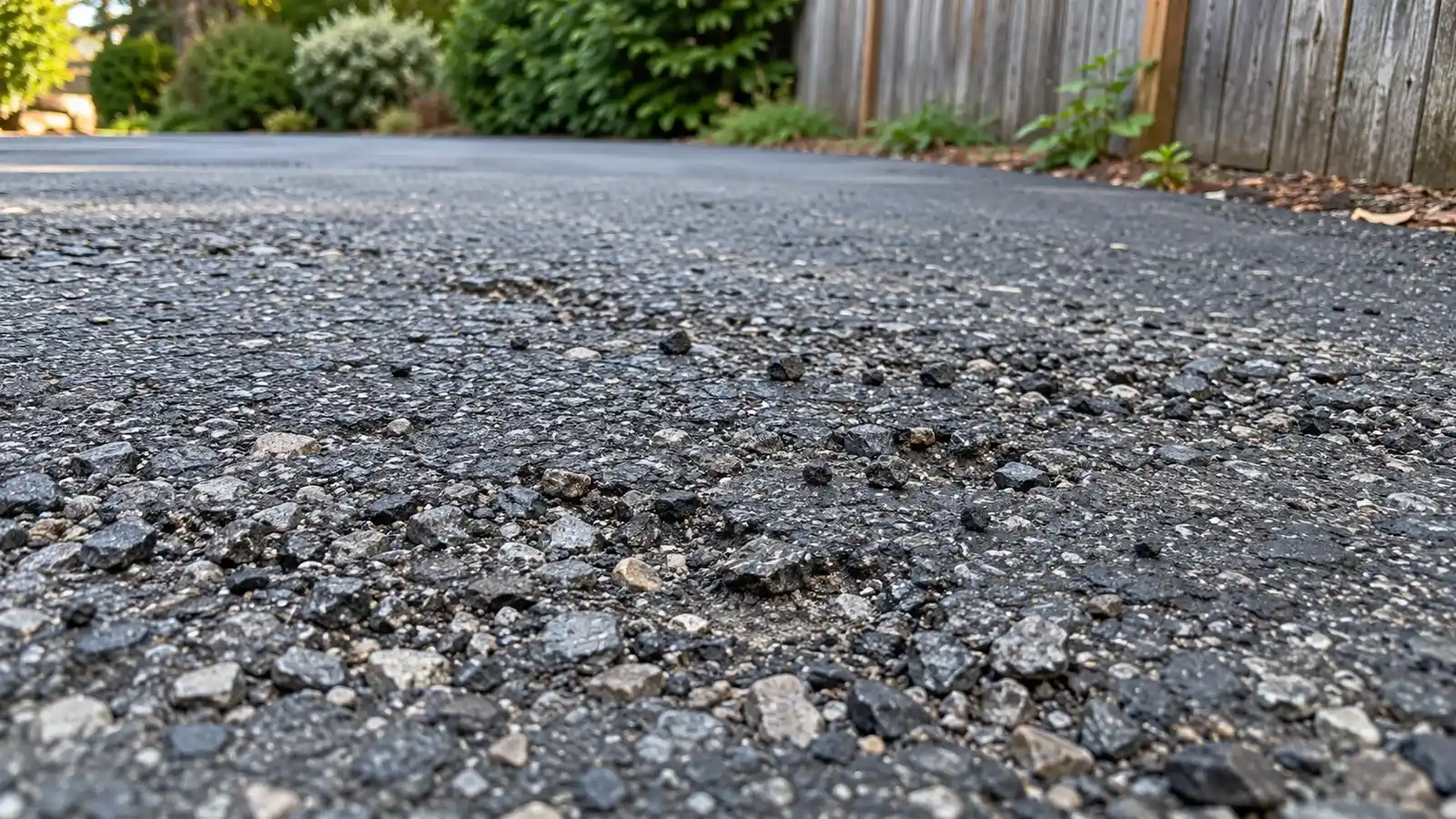
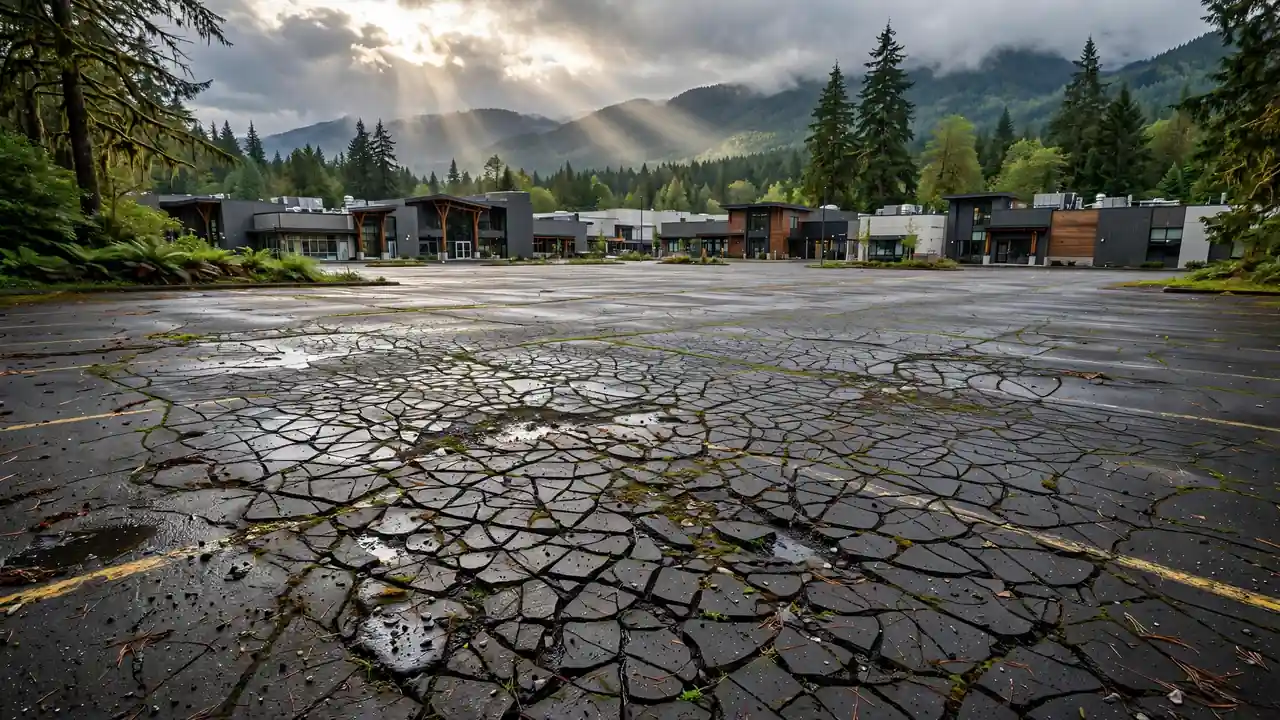
Early deterioration may leave a coarse or sandy texture. As more material loosens, small cavities appear where particles once sat. Advanced deterioration can leave a visibly pitted surface.
A rough appearance alone does not explain the cause. Two similar-looking areas can have different problems, such as aging at the surface in one location and poorly compacted material in another. That distinction matters when deciding how much pavement can remain in place.
Common Asphalt Raveling Causes
Several conditions can contribute to surface stone loss. More than one may be present, so a diagnosis should account for the pavement’s age, construction history, exposure, and use.
Binder Aging or Insufficient Binder
Oxidation changes asphalt binder over time, making it harder and more brittle. Weathering can contribute to a surface that gradually loses particles under traffic.
A mixture with insufficient binder can also struggle to retain aggregate. These are different situations: one concerns how the material ages, while the other concerns the mixture placed during construction. Color alone cannot establish either cause.
Poor Compaction and Uneven Material Distribution
Compaction presses the asphalt mixture into a dense, connected layer. Inadequate compaction leaves excessive air voids and can reduce durability.
Segregation means the coarse and fine components are distributed unevenly. Coarse patches may have too little fine material and binder to form a durable surface. Uneven cooling during placement can also create areas that are difficult to compact properly.
These problems can produce localized deterioration rather than uniform wear. A rough patch beside otherwise sound asphalt is therefore worth documenting, particularly on recently installed pavement.
Moisture Damage Within the Asphalt Mixture
Water can contribute to a loss of adhesion between asphalt binder and aggregate. This moisture-related bond failure is called stripping.
Stripping and raveling describe different things. Raveling is visible surface material loss; stripping is a bond failure that may occur within the pavement. They can occur together, but loose surface stones do not prove that deeper stripping is present. Samples may be needed to investigate it.
Abrasion and Mechanical Wear
Studded tires, scraping snowplow blades, and tracked equipment can dislodge material. Traffic can also expose weaknesses in an already vulnerable surface.
Look at where the deterioration occurs. Damage concentrated along an equipment route calls for a different discussion from gradual surface loss across an entire parking area. The location is a clue to investigate, not proof of a particular cause.
Loose Gravel Does Not Always Mean Raveling
Before choosing a treatment, establish whether the debris is actually coming out of the asphalt.
Stones can be carried from a gravel shoulder, landscaping, or nearby work. A recently chip-sealed surface also needs a different assessment because that treatment uses aggregate spread into binder at the surface. Confirm what was installed before comparing it with conventional asphalt pavement.
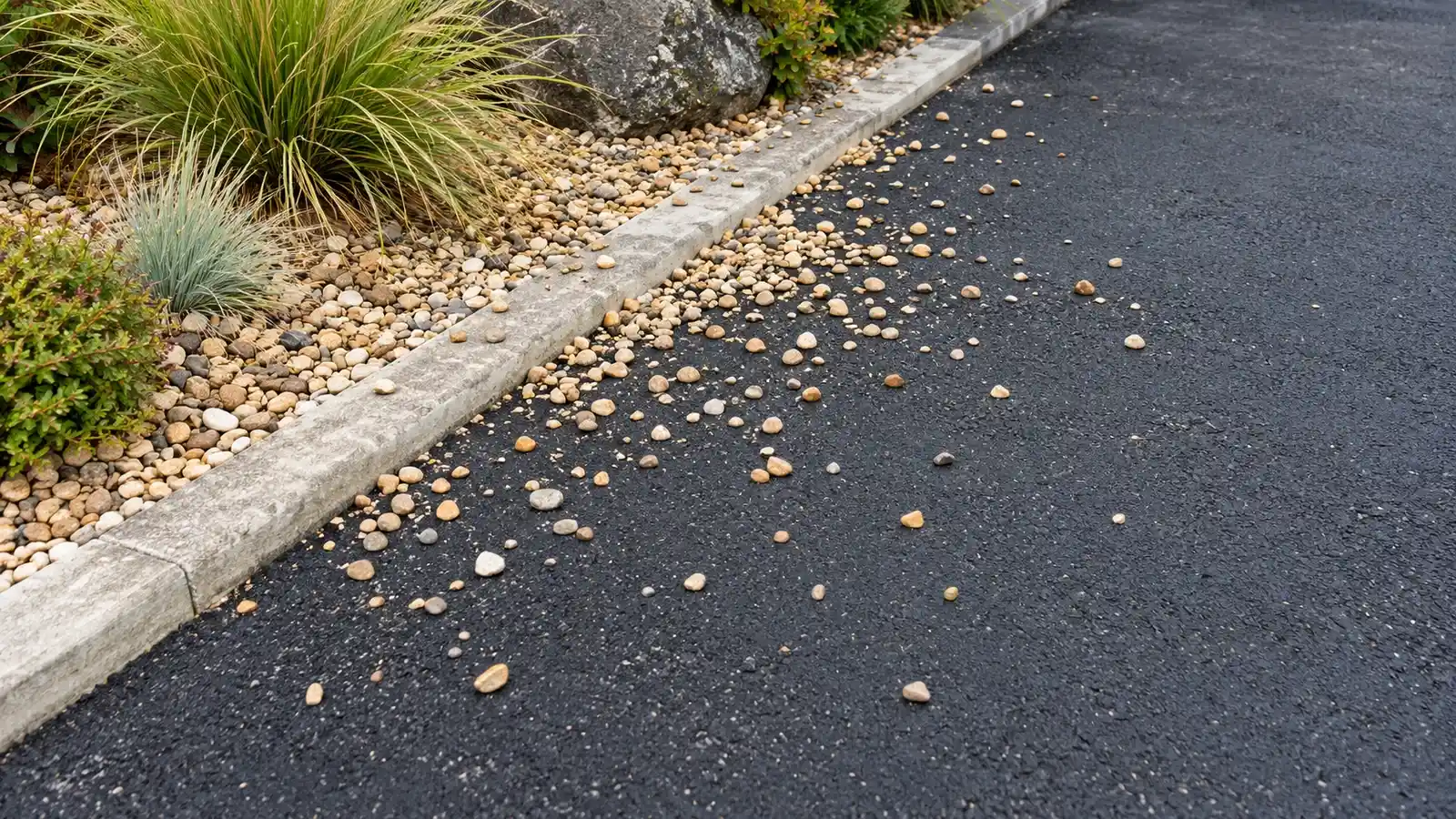
Where access is safe, gently clear loose debris from a small area and photograph what remains. Are there cavities where particles have detached? Does the same area continue to shed material? Those observations give a contractor more useful information than a photograph of a pile of gravel alone.
Raveling also differs from alligator cracking and rutting. Alligator cracking forms an interconnected crack pattern; rutting creates depressions along wheel paths. Record those conditions separately if they appear alongside surface loss.
Signs of Worsening Surface Loss
These FHWA reference photographs show different degrees of aggregate loss. They are examples of pavement distress, not Adams Asphalt & Construction projects. A photograph cannot establish the condition of the underlying layers.
Loss of Fine Material
Fine material has worn away, changing the surface texture.
Fine Material and Larger Stones Missing
Loss extends beyond fine material to some larger particles.
More Pronounced Coarse Aggregate Loss
Larger missing particles leave a more irregular surface.
Use the following observations to organize an assessment. These are practical descriptions, not formal engineering severity grades or automatic treatment rules.
| What You Observe | What the Assessment Should Establish | Possible Direction |
|---|---|---|
| Slight texture change with limited particle loss | Whether the remaining surface is sound and deterioration is shallow | Monitor and consider a suitable preservation treatment |
| Repeated shedding and visible missing stones | How deep and widespread the weakened material extends | Local repair or surface removal and resurfacing |
| Surface loss accompanied by potholes, settlement, or interconnected cracks | Whether deeper pavement or support layers are failing | Repair failed layers before selecting any surface treatment |
Extent and progression matter together. A small area that is rapidly changing may deserve attention before a larger area with shallow, stable wear. Photographing the same locations over time helps make that comparison.
What a Pavement Assessment Should Establish
A useful assessment should explain both the observed distress and the proposed response. Ask the contractor to distinguish what is visible from what remains uncertain.
The discussion should address:
- Where material loss occurs and whether it is isolated or widespread.
- Whether deterioration is limited to the surface or extends deeper.
- Whether cracks, depressions, or drainage problems are also present.
- How traffic and equipment use relate to the damaged areas.
- What preparation is needed before a coating, patch, or overlay can bond to sound pavement.
If internal moisture damage is suspected, pavement cores can help reveal conditions that a surface photograph cannot. Testing is a project-specific decision, not a requirement for every rough patch.
When requesting asphalt pavement repair, ask what material must be removed and why. A clear scope should identify the limits of the work and explain how the proposed repair addresses the suspected cause.
When Surface Maintenance Can Still Help
Minor surface deterioration may be suitable for preservation if the pavement remains sound. The treatment must match the condition, surface texture, traffic, and material requirements.
A fog seal is a light asphalt-emulsion application that can help retain aggregate in some raveling surfaces. It requires controlled application and adequate curing before traffic returns; excess binder can reduce surface friction.
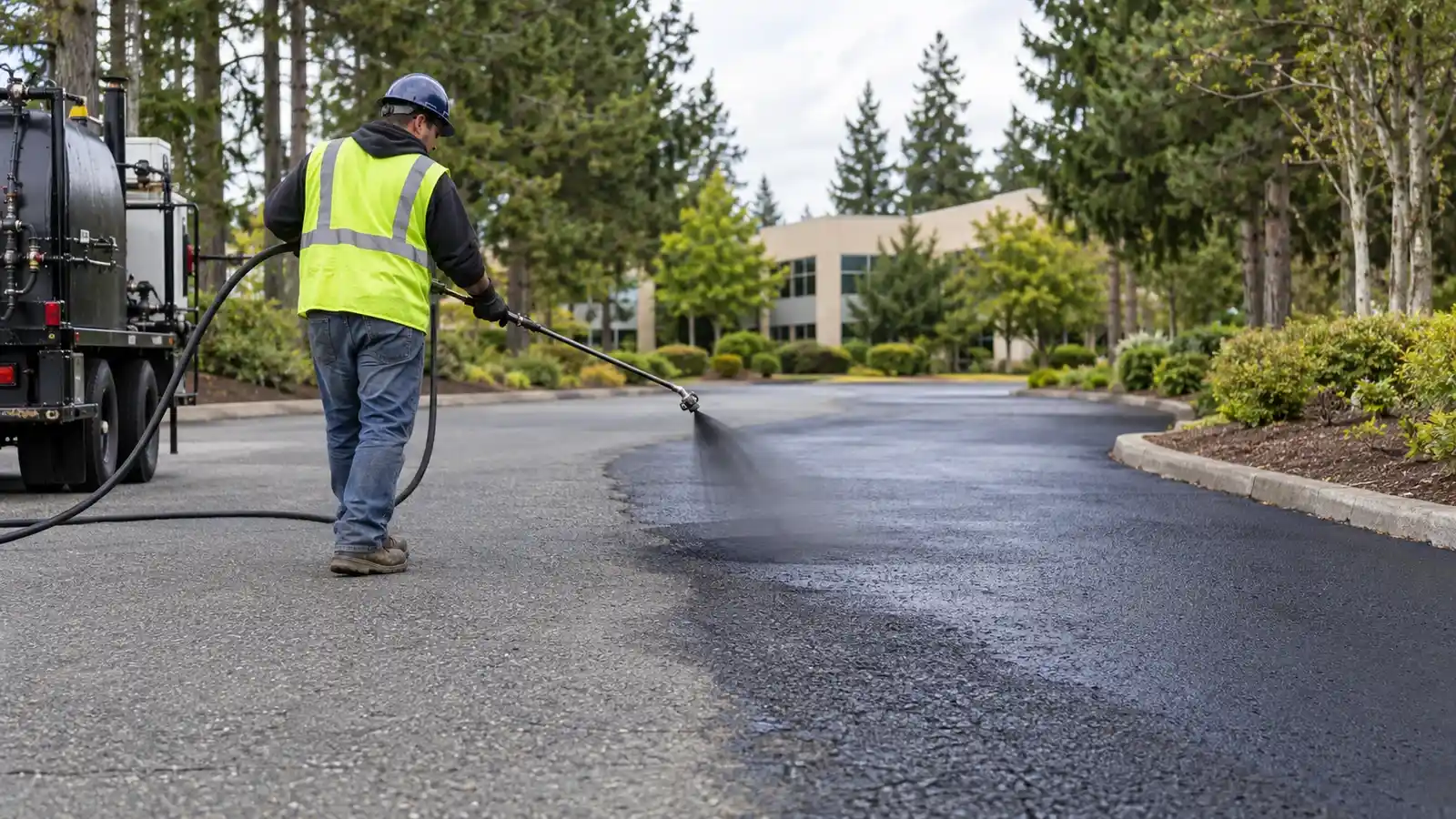
The word “seal” covers different treatments. A fog seal, chip seal, slurry seal, and conventional driveway or parking lot sealcoat are not interchangeable specifications.
For a driveway or parking area, asphalt sealcoating may be part of an appropriate maintenance plan after the pavement is evaluated and necessary repairs are completed. It does not replace missing pavement thickness or repair failed support layers.
Ask which product is proposed, what it is expected to accomplish, and whether loose material must first be removed. Continuing aggregate loss should not be hidden beneath a coating without addressing why it is happening.
When Milling and an Asphalt Overlay Make Sense
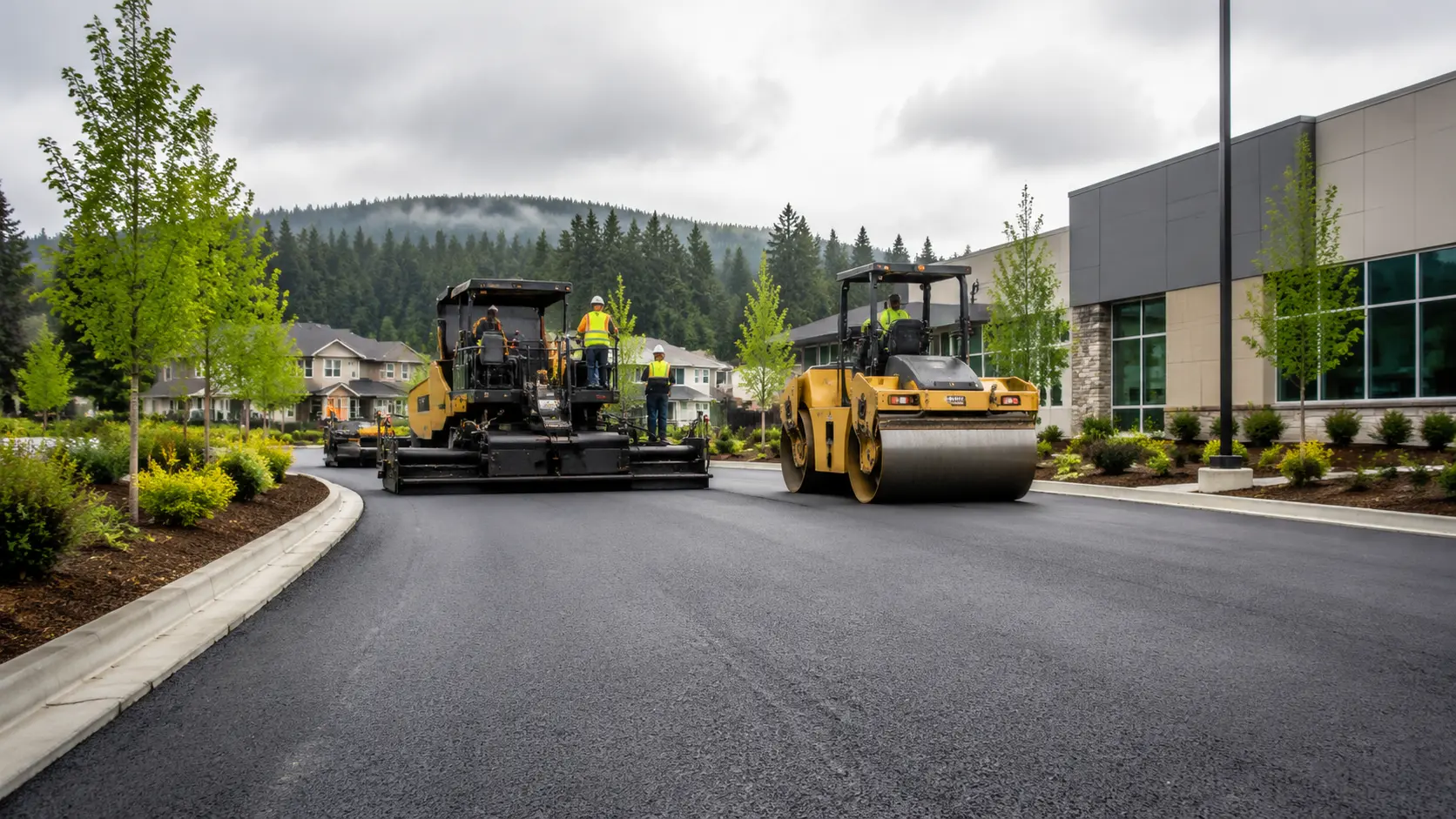
Resurfacing may be appropriate when surface deterioration is too extensive for preservation but the pavement beneath it can support rehabilitation.
Milling removes an existing asphalt layer to a planned depth. It can remove deteriorated material and help manage finished elevations before new asphalt is placed. The necessary removal depth depends on where sound material begins, rather than on appearance alone.
Asphalt overlay services should begin with an evaluation of the existing pavement. Weak areas need attention, the prepared surface must support bonding, and transitions at drains and adjoining surfaces need to be considered.
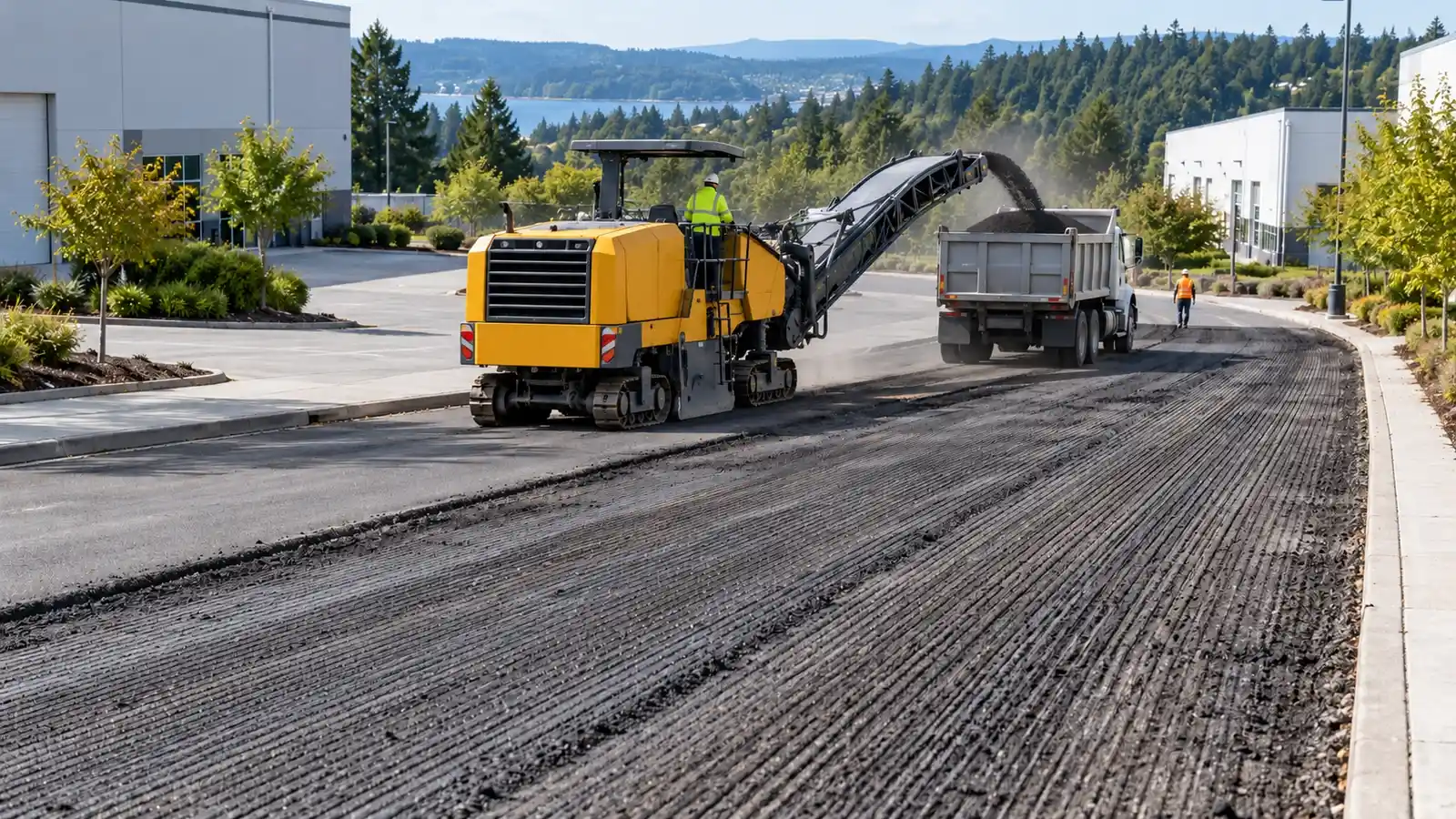
A thin preservation overlay is intended to renew surface performance. It should not be assumed to correct a structural deficiency. If the assessment identifies deeper failure, the scope needs to address that failure before resurfacing.
Imagine two parking areas with similar surface roughness. One has sound pavement beneath the worn layer; the other has recurring depressions and failing patches. Their appearance may be comparable, but the second property needs an explanation for those additional symptoms before an overlay is selected.
When Local Repairs or Replacement Are Needed
Localized deterioration may be addressed by removing weakened material and installing a properly compacted patch. The repair should extend through the affected material and meet sound pavement at its boundaries.
Where damage reaches deeper layers, a surface-only patch may leave the cause in place. Moisture-damaged asphalt or unstable support can require more extensive removal and correction.
Widespread failure may make new asphalt pavement installation more appropriate than a series of isolated repairs. That decision should follow an assessment of the remaining pavement and its intended use.
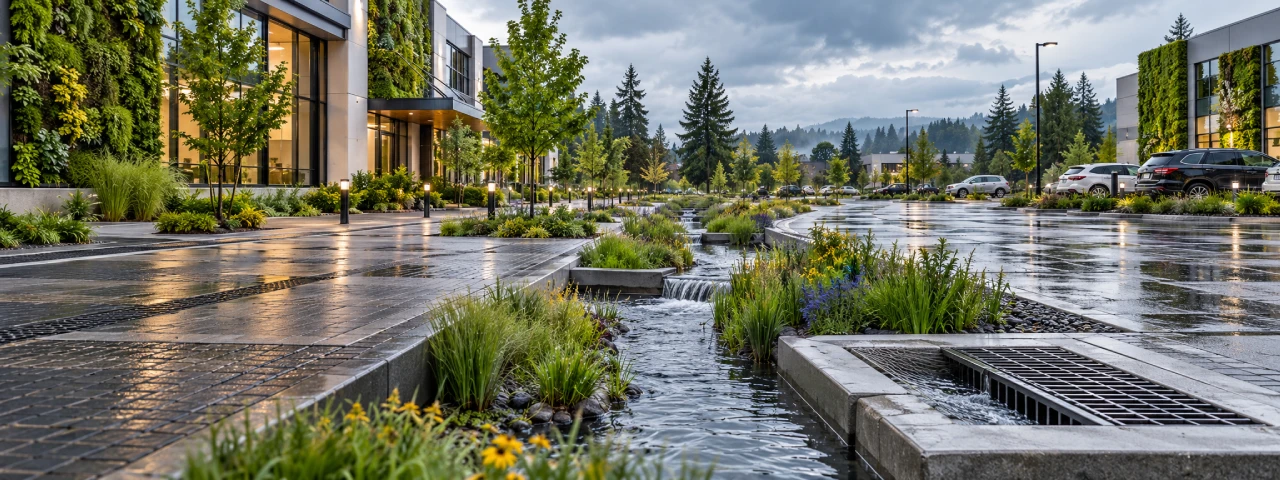
Drainage deserves particular attention when deterioration coincides with persistent ponding or evidence of moisture damage. Appropriate pavement drainage solutions may need to be included in the repair scope. Replacing asphalt without addressing a contributing water problem can leave the new work exposed to similar conditions.
What to Do Before the Assessment
You can make the inspection more useful without trying to diagnose the pavement yourself.
- Photograph the pattern. Take an overall view and closer images of representative areas. Record the date and location.
- Record what changes. Note recurring loose stones, growing pits, standing water, and new cracks.
- Gather the history. Find paving, resurfacing, and maintenance records if available, including when the problem first appeared.
- Explain how the area is used. Identify delivery routes, equipment movements, parking activity, and access that must remain available during work.
Avoid aggressive scraping or cleaning that removes more of an already weakened surface. If loose aggregate or broken pavement creates an access hazard, arrange appropriate temporary controls while the condition is assessed.
For newly installed asphalt, contact the original installer with photographs and a factual description of the changes. Early deterioration warrants investigation, but photographs alone cannot establish responsibility or the correct remedy.
Preventing Repeat Surface Deterioration
Prevention starts with understanding the cause. If inadequate compaction or segregation contributed to the failure, replacement work should address those construction issues. If water contributed, the drainage condition needs attention. If equipment is damaging the surface, discuss how future use can be managed.
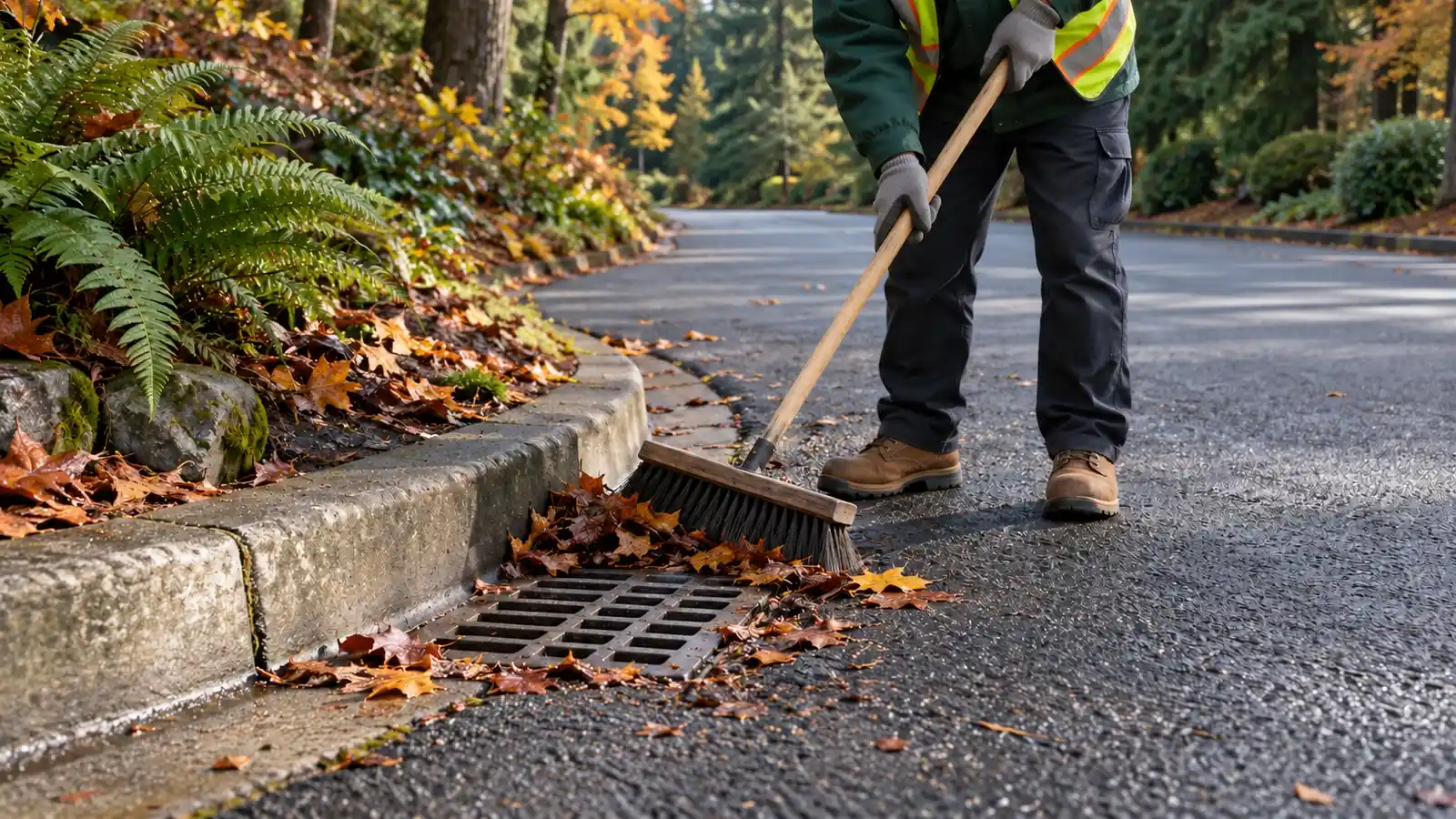
Maintenance should then follow the pavement’s condition. Keep drainage paths functional, monitor repaired areas, and respond to changes before choosing the next surface treatment.
Appropriate crack filling can address suitable discrete cracks as part of that plan. It does not treat broad areas of missing aggregate, and interconnected structural cracking requires a different evaluation.
Property managers can incorporate raveling checks into a broader parking lot maintenance plan. Marking affected areas on a simple site plan makes it easier to compare inspections, track repairs, and identify recurring problems.
Questions About Loose Aggregate and Raveling
Does Raveling Mean the Entire Pavement Must Be Replaced?
No. Limited surface deterioration may be suitable for preservation or localized repair. More extensive surface loss may warrant resurfacing, while deeper or widespread failure can require replacement. The relevant questions are how much material is affected and whether the remaining pavement is sound.
Is Raveling Normal on New Asphalt?
Continuing loss of embedded aggregate should be investigated. First distinguish pavement deterioration from loose construction debris or aggregate associated with a surface treatment. Document whether new cavities are forming and ask the installer to assess the area before applying a coating.
Can Sealcoating Permanently Fix Crumbling Asphalt?
A conventional sealcoat cannot rebuild missing asphalt or restore a failing base. Some shallow deterioration may be suitable for a selected preservation treatment, but deeper material loss requires repair. Ask what the treatment will address and which underlying conditions, if any, remain.
What Determines the Cost of Raveling Repair?
The scope matters more than the label. A proposal should explain the area involved, removal depth, preparation, replacement material, drainage work, access requirements, and whether resurfacing follows local repairs. Compare those details before comparing totals, because two prices may cover substantially different work.
Get Surface Deterioration Checked Before Choosing a Treatment
An assessment should leave you with a clear explanation of what is failing, what can remain, and what work is needed. Bring your photographs and maintenance history, and ask for the proposed preparation and repair limits in writing.
Adams Asphalt & Construction offers asphalt repair, sealcoating, and overlay services. If your pavement is shedding aggregate, request an evaluation to discuss the condition and an appropriate next step.