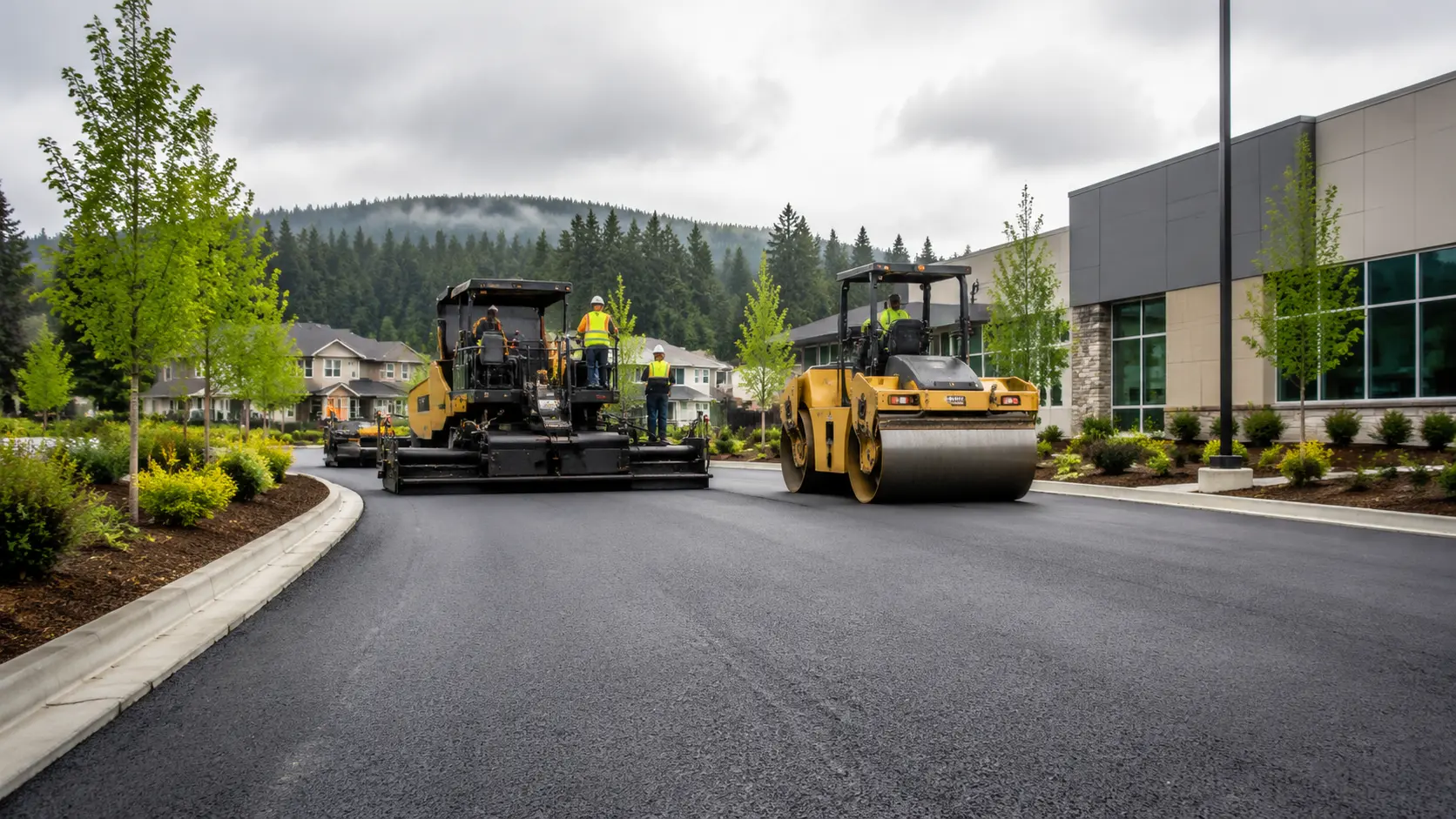

A commercial parking lot does not always have to close completely just because paving work is underway. With careful parking lot paving phasing, a property can often remain operational while the contractor completes the work in planned sections.
The challenge is not simply dividing the pavement into several rectangles. Each phase has to account for vehicle movement, customer parking, tenant access, deliveries, pedestrians, construction equipment, drainage features, striping, and the sequence in which finished areas can be returned to use.
For an occupied commercial property, a good phasing plan is therefore both a paving plan and an operations plan. The goal is to give the paving crew enough room to complete quality work without creating unnecessary confusion for the people who still need to use the property.
Can a Commercial Parking Lot Be Paved in Sections While the Business Stays Open?
Yes. Many commercial properties can complete parking lot paving in sections while maintaining access to at least part of the site.
The feasibility depends on the property’s layout, the type of paving work required, the number and location of entrances, traffic volume, available temporary parking, drainage structures, pedestrian routes, and how the businesses on the property operate.
Phasing tends to work best when the contractor and property manager treat access as part of the project from the beginning rather than trying to solve access problems after construction has started.

When phased paving makes sense
Phasing can be particularly useful for properties where a complete shutdown would interfere with customers, tenants, employees, deliveries, or daily business operations.
A typical approach is to isolate one work zone while keeping another part of the lot open. Once the first area is completed and ready for traffic, operations can shift before work begins on the next section.
The exact sequence should come from the site itself. A shopping center with several storefronts may need a different plan from an office building, warehouse, apartment complex, medical property, or industrial facility.
When a full closure may still be more practical
Keeping a property open is not automatically the right choice.
A small lot with only one entrance, extensive pavement failure, major excavation, or site-wide drainage work may not provide enough room to separate construction activities from normal traffic safely and efficiently.
Breaking a small project into too many phases can also create additional transitions, mobilization, traffic changes, and coordination problems. A contractor should compare the operational benefit of staying open against the practical consequences of dividing the work.
Start With How the Property Actually Operates
A phasing plan should begin with people and vehicles, not asphalt.
Before drawing phase boundaries, identify how the property functions during a normal business day. Where do customers enter? Where do employees park? Which businesses receive deliveries? Which entrances carry most of the traffic? Where do pedestrians move between parking areas and buildings?
Those answers determine where closures are realistic.
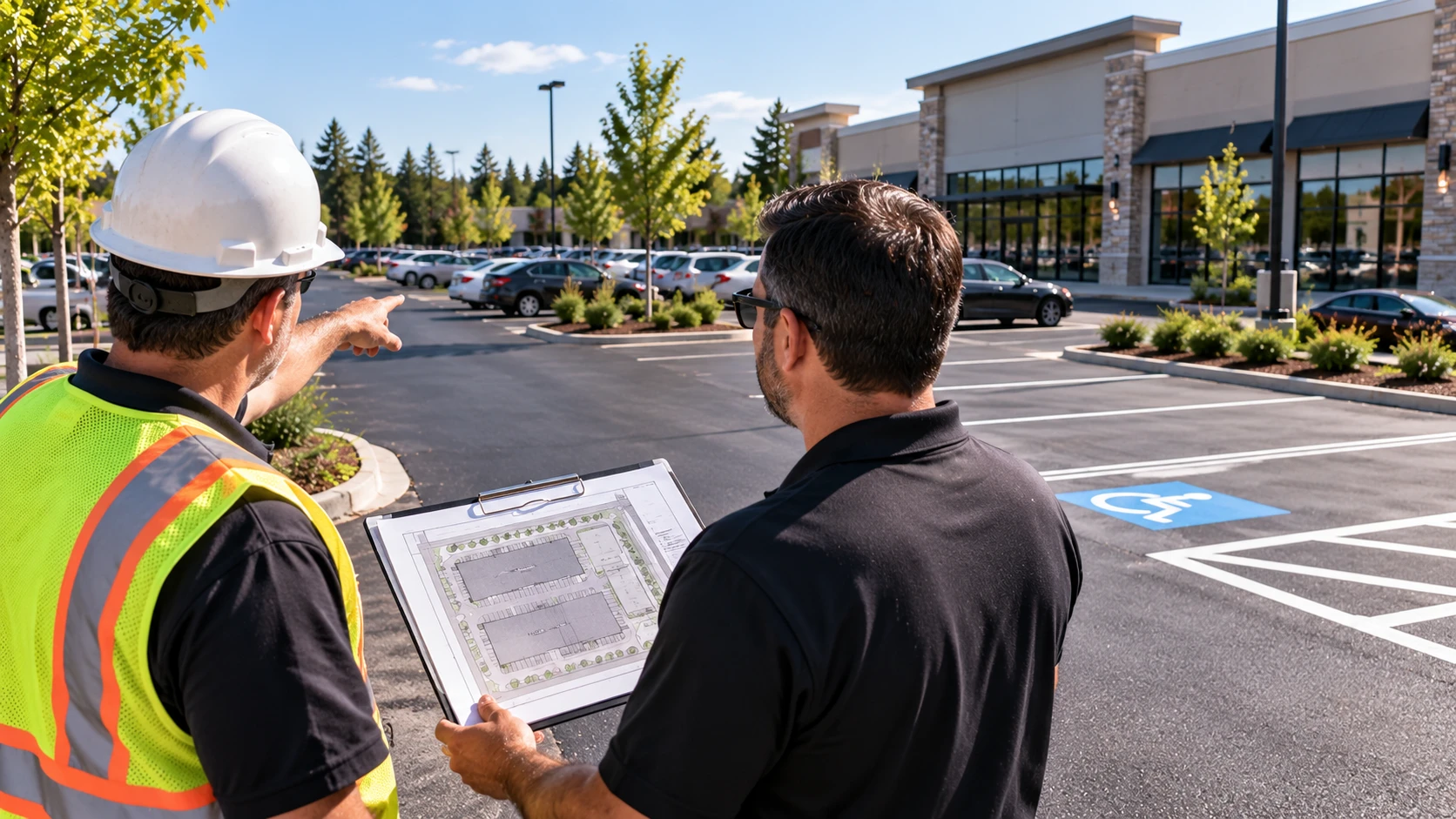
Map critical access points
Start by identifying access that cannot simply disappear when paving begins.
This may include:
- Main vehicle entrances
- Secondary entrances
- Loading areas
- Service roads
- Building entrances
- Pedestrian routes
- Delivery locations
- Waste collection areas
- Emergency access
- Accessible parking and access routes
A phase that looks efficient on a pavement drawing can become impractical if it blocks the only usable route to an important part of the property.
Identify peak operating periods
The contractor should also understand when different parts of the site are busiest.
A retail property may experience heavier customer traffic during different periods than an office complex. An industrial site may depend heavily on scheduled deliveries or shift changes. A multi-tenant property can have several competing traffic patterns at once.
Knowing these patterns helps determine which areas can be temporarily unavailable and which should remain accessible during particular phases.
Look beyond parking capacity
Counting remaining parking spaces is useful, but it does not tell the whole story.
Imagine that half of a parking lot remains open, but the closure separates those spaces from the property’s main entrance. There may technically be enough parking, yet the remaining layout may still create unnecessary confusion.
Access, circulation, visibility, pedestrian movement, and parking capacity have to work together.
Build the Phase Plan Around Traffic Flow, Not Just Pavement Area
The simplest-looking construction sequence is not always the easiest sequence for property users.
A practical phased plan should maintain understandable traffic movement while also providing enough uninterrupted working area for the paving crew.

Keep entrances connected to usable parking
Each open entrance should lead somewhere useful.
Drivers should not enter the property only to discover that the spaces they expected to reach are behind barricades. Likewise, temporary traffic patterns should avoid directing vehicles toward dead ends whenever the site layout allows another approach.
The goal is to create an open portion of the property that still functions like a parking area, rather than leaving disconnected pieces of pavement available simply because they are outside the active work zone.
Reduce conflicts between construction and normal traffic
Pavers, rollers, trucks, workers, customers, employees, and delivery vehicles should not all be competing for the same narrow space.
Good phasing creates separation between construction activity and occupied portions of the property. That may affect where trucks enter, where equipment stages, and which part of the property is paved first.
For projects involving broader asphalt paving services, the construction sequence should be discussed before mobilization so the crew’s work area and the property’s active traffic pattern support each other.
Avoid creating too many small phases
Smaller phases can appear less disruptive because each closure affects less pavement at one time. In practice, too many small phases may make the project harder to manage.
Every additional phase can introduce another closure change, another traffic transition, another communication requirement, and another boundary between completed and unfinished pavement.
The better question is not, “How small can each phase be?” It is, “What is the largest practical work area we can close while keeping the rest of the property functional?”
Resolve Repairs, Drainage, and Site Work Before Finalizing the Sequence
Phasing should not be finalized until the contractor understands what is beneath and around the pavement.
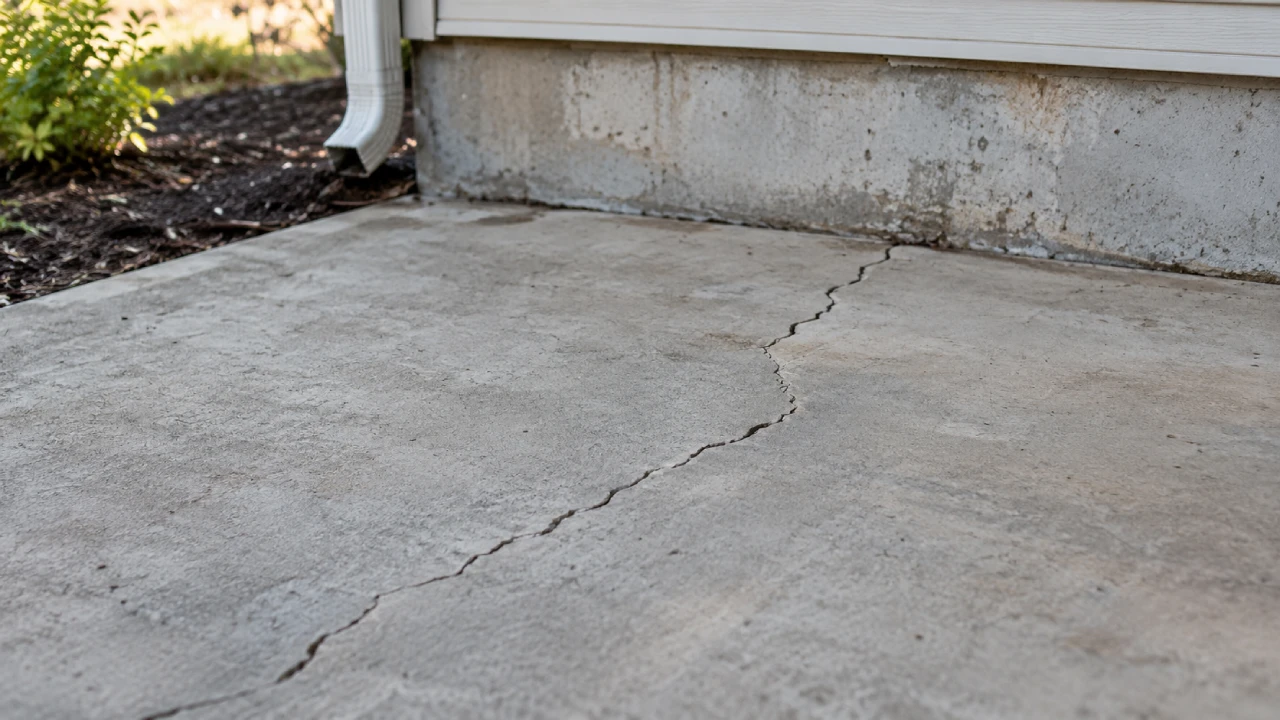
A parking lot project may involve more than placing new asphalt. Failed pavement areas, base problems, drainage issues, catch basins, curbs, utilities, or site preparation can change how long a particular section needs to remain under contractor control.

Identify pavement failures before scheduling around them
If isolated areas require deeper asphalt pavement repair, those locations may require a different construction sequence than areas receiving more straightforward paving work.
A phase drawn around surface dimensions alone may no longer make sense once underlying repair needs are identified.
Pre-construction assessment helps the contractor organize repair work and paving work together rather than discovering conflicts after traffic has already been redirected.
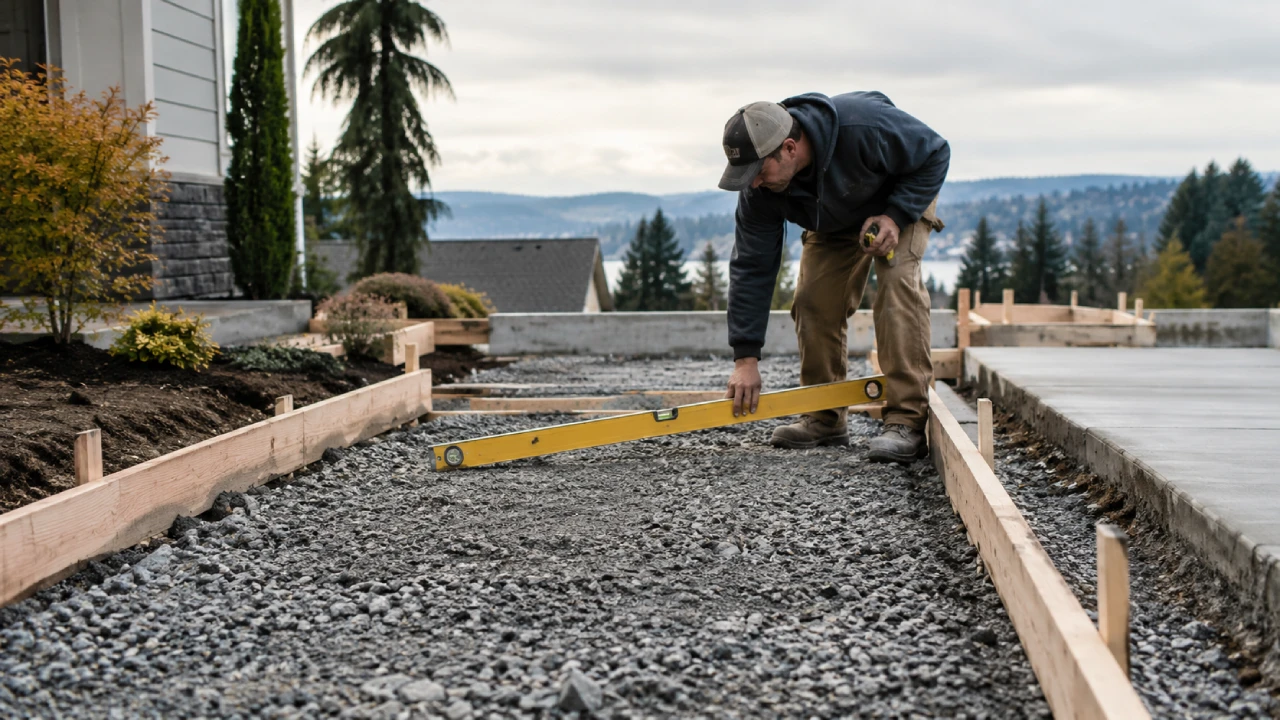
Coordinate site preparation with paving
Some commercial projects require additional civil site work before final paving can occur.
Site preparation, grading, utility coordination, or infrastructure work may require access that is different from what the paving equipment needs. Completing those operations in the right order can reduce the likelihood that newly paved areas need to be crossed repeatedly by construction traffic.
Do not isolate drainage from the phasing plan
Water movement affects pavement performance, but drainage features can also affect construction sequencing.
Existing low areas, surface slopes, drains, and other collection points should be understood before sections are closed. When the project includes drainage solutions, drainage work should be coordinated with the paving phases rather than treated as an unrelated task.
The same principle applies when catch basin installation or repair is required within the parking area. A catch basin located near a critical drive aisle can influence both construction access and temporary traffic flow.
Give Every Phase Its Own Parking, Delivery, and Pedestrian Plan
A drawing that shows “Phase 1” and “Phase 2” is only the beginning.
Each individual phase should answer a practical question: How will the property function while this specific area is unavailable?

Decide where displaced vehicles will go
Closing one section pushes its normal users somewhere else.
Those vehicles may shift into another part of the property, temporary parking, employee areas, or another approved location. That change should be anticipated rather than left for drivers to figure out when they arrive.
When several tenants share the property, the plan should also consider whether one closure disproportionately affects a particular business.
Protect delivery and service access
Delivery vehicles often need more turning room than passenger vehicles.
A temporary route that works for customer cars may not work for larger service or delivery vehicles. Loading locations, dumpster access, service entrances, and other operational areas should therefore be reviewed separately.
If a particular delivery area will become inaccessible, the property manager can coordinate an alternative before the closure begins.
Keep pedestrian movement understandable
Vehicles are only part of the circulation problem.
Customers and employees still need a clear way to move between open parking areas and building entrances. Temporary pedestrian routes should not require people to wander through active paving operations or guess where they are expected to walk.
The simpler the temporary route is to understand, the easier the phase is likely to be for users.
Communicate the Closures Before They Become a Surprise
Even a well-designed paving sequence can create frustration when people do not know what is happening.
Property managers, tenants, employees, vendors, and contractors should understand the planned sequence before the first active closure begins.

Give tenants phase-specific information
A general notice that says “parking lot work is coming” does not tell a tenant enough.
Useful communication explains which area will be affected, what access remains available, where people should park, whether deliveries are affected, and how users should enter or leave the property during that phase.
Each change in the construction sequence may require a new notice.
Make temporary traffic changes easy to recognize
Barricades and temporary directional information should support the approved site plan and clearly separate active work areas from areas that remain open.
Drivers should be able to determine where they can go without stopping in the middle of the property to interpret a complicated arrangement.
Simple traffic patterns usually create fewer questions than temporary routes with several unexpected turns or changes.
Establish one point of coordination
Multi-tenant projects can become difficult when different parties receive different instructions.
A designated property representative can coordinate information between the paving contractor, tenants, vendors, and other stakeholders. That person can also distribute schedule changes if site conditions require the phasing plan to be adjusted.
Reopen Each Area Based on Site Conditions, Not an Assumed Clock
A phase is not finished simply because asphalt placement has stopped.
The completed section needs to reach the appropriate condition for its intended use, and any remaining work within that phase has to be considered before traffic returns.
Let the contractor determine when traffic can return
Asphalt temperature, weather, pavement structure, construction activities, and the types of vehicles using the property can all affect reopening decisions.
For that reason, property managers should avoid promising tenants an exact reopening point before the contractor has confirmed it.
A general asphalt paving planning guide can help property owners understand the larger installation process, but the reopening decision for a particular project should come from actual site conditions.
Think about the next phase before opening the previous one
Reopening should support the upcoming construction sequence.
For example, an area may be ready for normal vehicles but still be needed for contractor access to the next work zone. Opening it immediately could create another conflict only a short time later.
The transition between phases should therefore be treated as part of the project schedule, not simply as the end of one paving activity.
Consider heavier traffic separately
A section that is suitable for passenger vehicles may require different consideration when the property regularly receives heavier trucks or commercial traffic.
The contractor should know what types of vehicles are expected to use each reopened area so that the reopening plan reflects the actual operation of the property.
Coordinate Striping and Accessible Markings With the Reopening Plan
Fresh pavement is only one part of returning a commercial parking lot to normal operation.
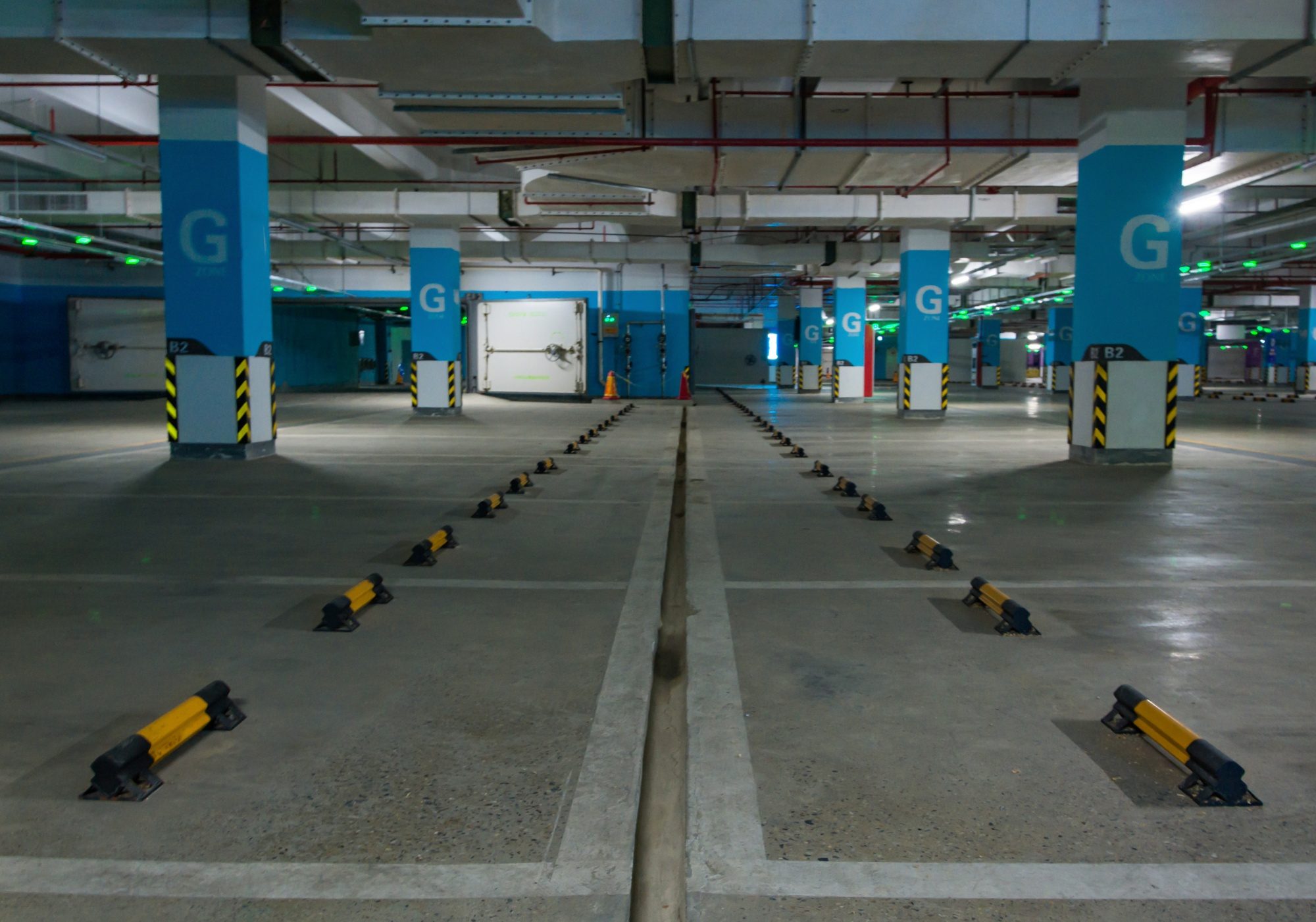
Drivers also depend on parking stalls, directional markings, loading zones, fire-lane markings where applicable, and other visual cues that make the lot understandable.
Decide how striping fits into each phase
If a newly paved area is reopened before the planned markings are complete, drivers may create their own parking patterns.
Coordinating parking lot striping with the phase schedule helps restore an orderly layout as each area returns to use.
The contractor and property manager should determine whether markings will be completed phase by phase or coordinated differently based on the scope and site conditions.
Account for accessible parking during temporary closures
Accessible parking and related pavement markings need deliberate attention whenever the normal parking layout changes.
If a paving phase affects existing accessible spaces or routes, the temporary operating plan should address how accessibility will be maintained according to the requirements that apply to the property.
Final ADA parking lot markings should also be coordinated with the completed parking layout rather than treated as an afterthought.
Restore understandable circulation
Striping is not only about defining individual parking spaces.
Directional arrows, drive aisles, no-parking areas, and other pavement markings can help restore the intended circulation pattern after a phase is completed.
This becomes particularly important when drivers have spent part of the project following temporary routes.
Build Contingencies Into the Schedule
A phasing plan should be specific, but it should not be so rigid that one change makes the entire schedule unusable.
Commercial paving happens within an active environment. Weather, unexpected pavement conditions, equipment movement, access needs, and other site factors can require adjustments.

Identify which phases are dependent on each other
Some phases can move independently. Others cannot begin until another section is completed and reopened.
Those dependencies should be identified before work begins.
For example, if Phase 2 can only be reached across Phase 1, the contractor needs to account for that relationship when planning equipment and truck movement.
Decide what happens if a phase cannot open as planned
Suppose a property expects to move employee parking from one side of the lot to the other, but the receiving area is not yet ready.
Without a fallback plan, the next closure may affect both areas at once.
A better approach is to decide in advance which work can continue, which closure should be delayed, and which temporary parking arrangement can remain in place until the completed area is available.
Keep operational flexibility without creating confusion
Plans can change, but constant unplanned changes create their own problems.
The contractor and property manager should agree on how schedule changes will be communicated and who has authority to adjust traffic or parking arrangements.
That keeps necessary changes controlled instead of allowing several people to make conflicting decisions during the project.
Adjust the Phasing Strategy to the Property Type
The same paving sequence will not work equally well for every commercial property.
The business model, traffic pattern, vehicle type, and layout can change what “minimal disruption” actually means.

Retail and customer-facing properties
Retail properties depend heavily on clear customer access.
A phase that saves construction time but makes storefronts appear inaccessible can create unnecessary confusion. Entrance visibility, customer parking, pedestrian routes, and simple temporary directions may therefore have more influence on the sequence.
For property owners evaluating larger commercial paving decisions, reviewing the broader benefits and considerations of commercial asphalt paving can provide additional context.
Office and multi-tenant properties
Office properties may have more predictable employee parking patterns, but several tenants can create competing needs.
One company may receive regular visitors while another depends on service vehicles. Property management should therefore understand how each portion of the parking lot is used before assigning temporary parking or closing an entrance.
Staggering affected areas can help prevent one tenant from carrying most of the inconvenience throughout the project.
Industrial and warehouse properties
Industrial properties can place greater emphasis on truck circulation, loading areas, employee shifts, and service routes.
Large vehicles need enough room to maneuver, so simply narrowing an aisle may not be a workable temporary solution. The paving contractor should understand those vehicle movements before equipment staging and phase boundaries are finalized.
Properties undergoing several exterior improvements
Parking lot paving sometimes happens alongside other construction work.
When several exterior systems are being addressed, sequencing the paving with the rest of the work can reduce conflicts. The contractor should avoid completing an area only to have another trade repeatedly cross it afterward.
A review of previous work in the Adams Asphalt & Construction project gallery may also help property decision-makers think about the types of site conditions and finished commercial surfaces involved in paving and construction projects.
Turn the Phase Map Into a Contractor-Ready Schedule
Before approving a phased parking lot project, the owner or property manager should be able to understand more than where the colored sections appear on a drawing.
The plan should explain how the site operates during each closure and how one phase transitions into the next.
Questions to answer before work begins
A useful pre-construction discussion should address questions such as:
- Which area closes first?
- Which entrances remain open during each phase?
- Where will customers and employees park?
- How will deliveries reach the building?
- What pedestrian routes remain available?
- Where will paving equipment and trucks operate?
- Are pavement repairs required before new asphalt is placed?
- Does drainage work affect any phase?
- How will catch basins or other site features be handled?
- When will striping occur?
- How will accessible parking be addressed during the work?
- What determines when each completed area can reopen?
- What happens if the planned sequence changes?
- Who communicates updates to tenants and property users?
If these questions do not have clear answers, the project may need more planning before closures begin.
Watch for a phasing plan that looks good only on paper
Several warning signs can indicate that a schedule has not been developed far enough.
A plan may need additional review if open entrances lead into closed areas, delivery vehicles have no workable route, pedestrian access is unclear, every phase depends on an exact reopening point, or temporary parking consumes the space required for the next construction zone.
Another concern is a plan that treats drainage, repairs, striping, and traffic movement as separate projects even though each one affects when the pavement can be used.
Plan a Phased Paving Schedule
The strongest phasing strategy is usually created before crews and equipment arrive on the property.
Adams Asphalt & Construction can review the paving scope, property access, operating needs, related site conditions, and planned work areas to help develop a practical sequence for the project.
If your commercial parking lot needs paving but closing the entire property is not practical, contact Adams Asphalt & Construction to discuss the site and plan a phased paving schedule.