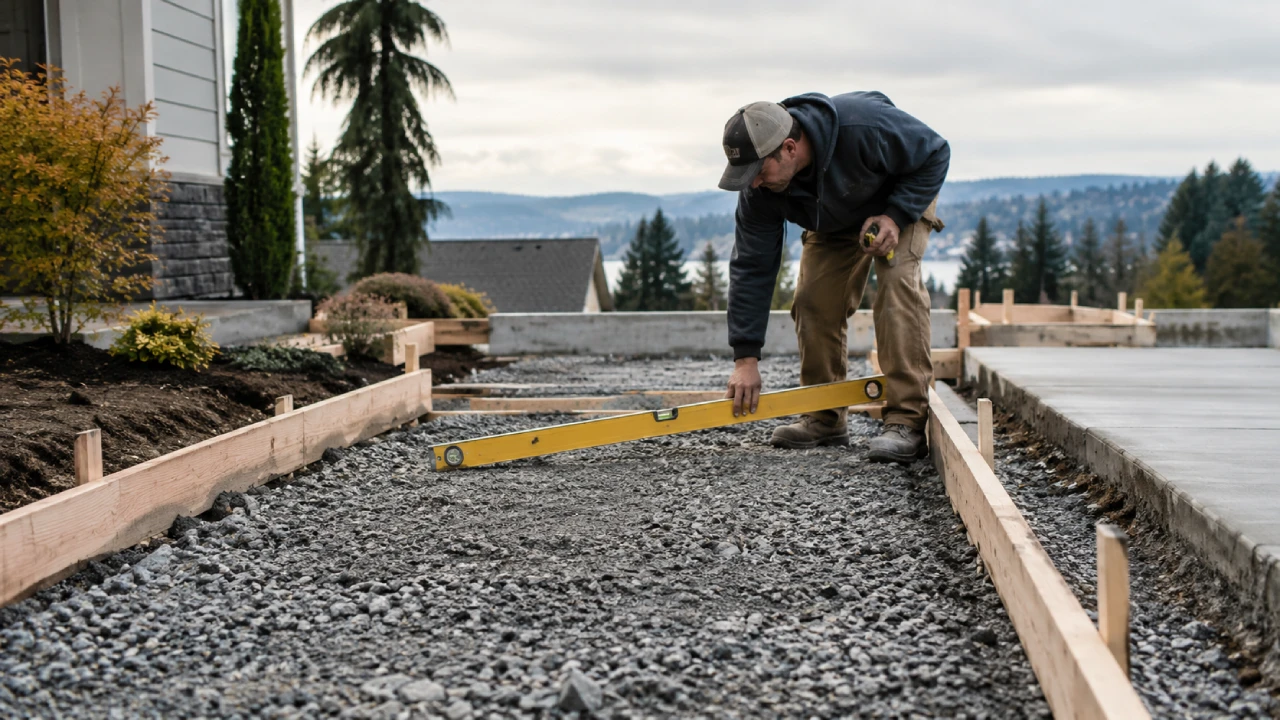
Concrete can be strong at the surface and still perform poorly if the material beneath it is unstable. Concrete Base Preparation creates the support system that helps a slab, sidewalk, curb, or pad carry loads evenly, shed water, and limit avoidable movement over time.
For property owners and facility managers in Kent and the Greater Puget Sound region, that support matters because exterior concrete is exposed to traffic, moisture, changing site conditions, and repeated use. Good Concrete Base Preparation is not about following one universal recipe. It starts with evaluating the soil, grades, drainage, intended use, and project requirements before concrete is placed.
What Is Concrete Base Preparation?
Concrete Base Preparation is the process of preparing the soil and supporting layers beneath a concrete placement so the finished surface has uniform, stable support. Depending on the project, it can involve excavation, removal of unsuitable material, grading, compaction, placement of aggregate, and drainage coordination.
The goal is not simply to create a hard surface underneath the concrete. The goal is to reduce weak spots and inconsistent support that can contribute to settlement, cracking, rocking slabs, or uneven elevations.
| Factor | Standard Commercial Areas | Industrial Roadways |
| Typical traffic | Cars, vans, light deliveries | Trucks, trailers, fleet and industrial vehicles |
| Load pattern | Moderate and distributed | Repeated, concentrated, or slow-moving |
| Turning stress | Usually lower | Often higher near docks and intersections |
| Base evaluation | Based on traffic and site conditions | Greater attention may be needed where heavy loads repeat |
| Drainage | Important | Critical where water can weaken support under heavy traffic |
| Operations | Customer and employee access | Truck routing, staging, loading, and facility access |
A proper base for concrete slab work varies by site. Soil conditions, expected loads, slab use, drainage, and project plans all influence what preparation is appropriate.
Why the Subgrade Matters Before Concrete Is Placed
The subgrade is the soil or prepared earth directly beneath the supporting layers or concrete system. If that soil is soft, loose, saturated, disturbed, or inconsistent, the concrete above may not be supported evenly.
Concrete subgrade preparation may include identifying soft areas, bringing the site to the required elevation, correcting obvious drainage concerns, and compacting suitable material. Subgrade preparation for concrete slab work should be based on actual site conditions rather than a fixed depth or universal material specification.
The concrete slab subgrade also needs to support the intended use. A pedestrian sidewalk, a commercial pad, and a vehicle-loaded area can place very different demands on the soil below.
Subgrade, Subbase, and Base: What Is the Difference?
These terms are related, but they are not interchangeable. The subgrade is the prepared soil. A subbase is a supporting layer placed above the subgrade when the project calls for one. The base is the layer directly supporting the slab or pavement system, depending on the design.
Concrete subbase preparation can help create more uniform support where site conditions or project requirements call for an additional layer. An aggregate base for concrete may also improve workability, drainage, and load distribution when it is appropriate for the application.
Some projects use a crushed stone base for concrete, while others may use different approved materials. The right material and thickness depend on the project, not on a one-size-fits-all rule.
Why Compaction Is Critical to Uniform Support
Concrete Base Preparation is incomplete if loose supporting material is left beneath the slab. Compaction reduces voids and helps create a more consistent platform for the concrete above. Concrete base compaction should be appropriate for the selected material, lift thickness, equipment, moisture condition, and project requirements. Subgrade compaction for concrete is equally important because a dense aggregate layer cannot fully compensate for weak or unstable soil underneath it.
This is also why simply adding more gravel under concrete slab work is not a reliable fix for every site. The condition of the soil below still matters.
Does Every Slab Need a Gravel Base?
No. Whether a gravel base under concrete slab construction is appropriate depends on the project design, soil, drainage, load, and local requirements. Where aggregate is used, the purpose may include creating a stable working platform, helping distribute loads, improving uniformity, or supporting moisture management. Concrete slab base preparation should therefore be based on the complete site condition rather than a rule such as “every slab needs the same amount of gravel.”
For property managers, the practical takeaway is simple: material choice should follow the site evaluation, not precede it.
How Drainage and Moisture Affect the Base
Water can change the behavior of soil and supporting layers. Poor drainage may soften certain soils, wash fine material, create localized settlement, or keep the slab edges and base wetter than intended.
Concrete slab drainage starts with understanding how water reaches and leaves the area. Surface grades, downspouts, nearby paved areas, catch basins, soil conditions, and low spots can all influence performance.
In the Puget Sound region, frequent rainfall makes drainage a practical part of Concrete Base Preparation for exterior flatwork. This does not mean every wet site needs the same solution. It means runoff and moisture conditions should be considered before concrete is placed.
What Happens When Base Preparation Is Poor?
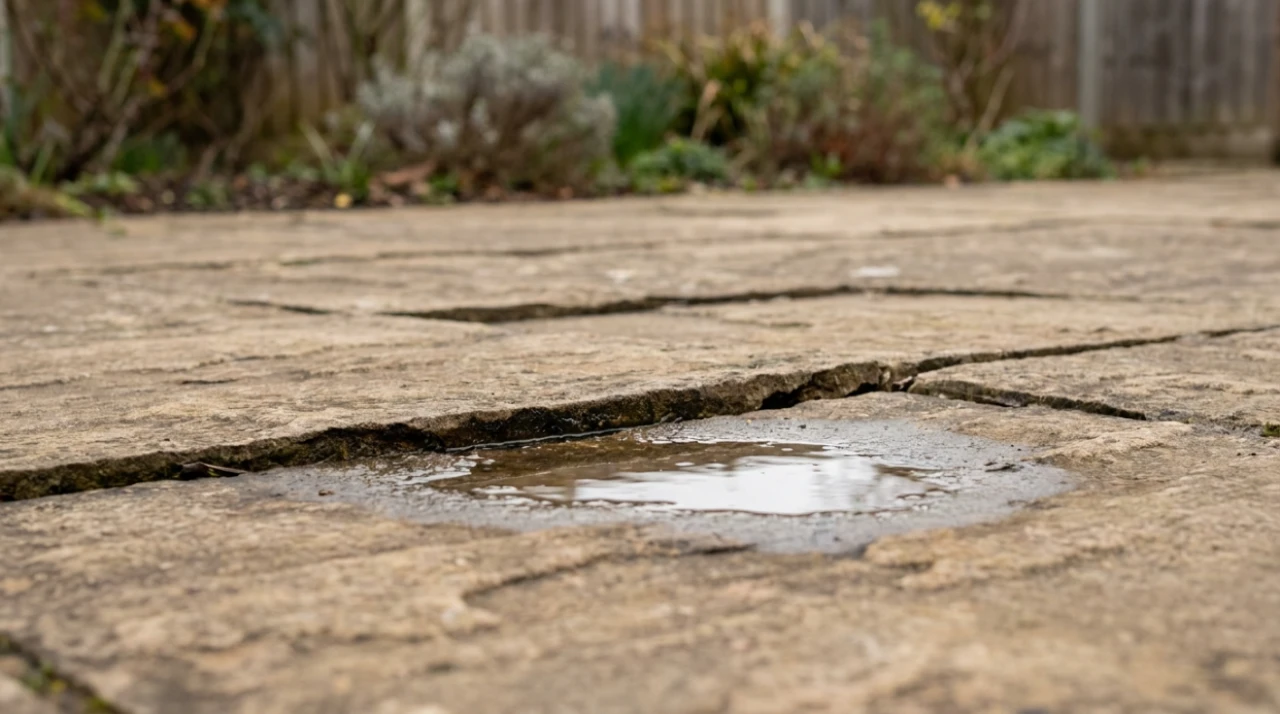
Poor Concrete Base Preparation can show up later as movement, settlement, cracking, ponding, or uneven transitions. The visible defect may appear in the concrete, but the actual cause can be below the surface.
A settled slab, for example, may reflect weak soil, inadequate compaction, loss of support, drainage problems, or a combination of factors. That is why diagnosis matters before deciding whether the right response is maintenance, localized repair, replacement, or work on the underlying site.
Concrete settlement prevention is not a guarantee that movement will never occur. It is a planning approach that reduces avoidable risks by improving support, drainage, grading, and construction quality.
Can Stronger Concrete Make Up for a Weak Base?
No. A higher-strength concrete mixture, added reinforcement, or a thicker slab does not automatically correct unstable support. The concrete and the base do different jobs. Concrete carries and distributes loads across the slab, while the support beneath it helps keep the slab uniformly supported. If the foundation below moves or settles unevenly, the concrete can still crack or shift.
This is one reason Concrete Base Preparation should be planned before reinforcement, forming, and placement decisions are finalized.
How Base Needs Change by Concrete Application
Commercial concrete base preparation should reflect how the finished surface will be used. A sidewalk mainly carries pedestrian loads. A concrete pad may support equipment or service vehicles. Curbs interact with traffic, drainage, and adjacent pavement. Other flatwork may need to tie into existing elevations and accessible routes.
Concrete flatwork base preparation also has to consider the surrounding site. Existing asphalt, drainage structures, slopes, utilities, curb lines, and finished elevations may affect excavation and grading.
For broader projects, AAC can coordinate relevant civil site work, excavation, grading, drainage, and concrete work when those services are part of the approved scope.
What Should Property Owners Ask Before Concrete Is Poured?
Before placement, property owners and managers should understand what is supporting the slab and why. Useful questions include whether unsuitable material was found, how the subgrade was prepared, what base material is being used, how drainage is handled, and whether the prepared area matches the intended loads and finished elevations.
Concrete slab preparation should also account for access, sequencing, adjacent surfaces, and future use. If a site has recurring settlement or drainage problems, simply replacing the visible concrete without evaluating the underlying cause may repeat the same failure pattern.
A site review can help determine whether base preparation for concrete slab work should include additional grading, excavation, drainage correction, or support improvements.
Why Base Preparation Supports Long-Term Performance
Concrete Base Preparation matters because concrete performs as part of a system. The slab, reinforcement, joints, supporting layers, soil, grades, and drainage all influence how the finished work responds to use and environmental conditions.
Adams Asphalt & Construction has served Kent and the Greater Puget Sound region since 1971. When a concrete project also involves excavation, grading, drainage, or site coordination, AAC can evaluate the existing conditions and discuss an appropriate scope without treating every property as though it needs the same solution.
Careful Concrete Base Preparation cannot eliminate every future crack or movement, but it can reduce avoidable problems by giving the concrete a more stable, uniform foundation from the start.
Frequently Asked Questions
What is the best material to put under a concrete slab?
There is no single best material for every slab. The appropriate support depends on soil conditions, drainage, expected loads, slab use, and project requirements. Suitable compacted aggregate is common in many applications, but the material and depth should follow the actual site and design needs.
How do I know if the soil under concrete is properly compacted?
Visual appearance alone is not enough to confirm compaction. The preparation method depends on the material, lift thickness, moisture condition, equipment, and project requirements. Where specifications call for testing, the required verification should be completed before concrete placement.
Can concrete be poured directly on soil?
In some applications, concrete may be placed over a properly prepared subgrade, while other projects require a subbase or aggregate layer. The correct approach depends on site conditions, loads, drainage, and the project documents.
Why does concrete settle after installation?
Settlement can be related to weak or poorly compacted soil, loss of supporting material, drainage problems, erosion, or changing site conditions. The concrete surface may show the symptom, but the underlying cause should be evaluated before selecting a repair.
Does a thicker concrete slab solve base problems?
No. Thickness can be an important design factor, but it does not replace stable support. If the subgrade or base is weak, saturated, or inconsistent, increasing slab thickness alone may not address the cause of movement.
When should a property owner request a site evaluation?
An evaluation is useful when there are soft areas, repeated settlement, drainage problems, failed adjacent pavement, significant load changes, or uncertainty about existing support. Reviewing those conditions before placement can help define a more appropriate project scope.